admin
admin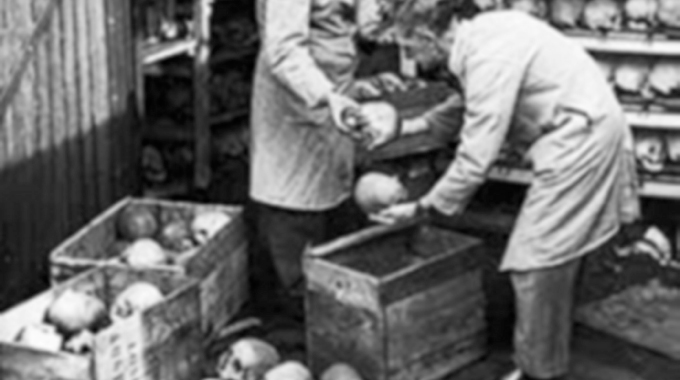
THE engagement to repatriate the remains of the First Chimurenga/Umvukela fighter-leaders from Britain could begin as early as next month (April).
Britain last month announced the end of its national Covid-19 lockdown measures, signalling the greenlight for Zimbabwe to re-engage in preparation for the homecoming of the human remains of First Chimurenga/Umvukela fighter-leaders against colonial occupation.
Initially there were plans to undertake the visit to Britain earlier but, these fell by the wayside because of the onset of the Covid-19 pandemic.
That visit would have been to conduct an analysis and create an understanding of what the British have in their custody in relation to what Zimbabwe is seeking to repatriate.
While the National Museums and Monuments of Zimbabwe(NMMZ) will lead the process, which is due diligence and scientific, it is already apparent that there are limitations in terms of their scope and competence.
This is because the repatriation process necessarily involves cultural and spiritual aspects, where others, and not the NMMZ, have authority to lead the processes.
National Museums and Monuments of Zimbabwe executive director, Dr Godfrey Mahachi, confirmed the impending visit during an interview with New Ziana.
“We have been in touch with the United Kingdom on the matter; we are in touch with the Natural History Museum (NHM) in London, which did confirm that they are holding some human remains of Zimbabwean origin.
“Part of the engagement with the Natural History Museum is to do with them presenting to us details of what they have so that we can look at what they have against what we are looking for — that is looking at the records and documents and tracing them back to confirm that the remains originate from this country.
“We started on the basis of the Government’s request to the British.
“The request was very specific in its terms, which were that Zimbabwe was seeking to repatriate the remains of these individuals that are all associated with the First Chimurenga/Umvukela — Nehanda Nyakasikana; Makoni Chingaira; Sekuru Kaguvi; Chinengundu Mashayamombe, Kadungure Mapondera; Chitekedza Chiwashira, Chikare, Chigavazira, Mashonganyika, Mukwati . . .
“What we are trying to do now through the visit, which we anticipate to take place soon, is to give us an opportunity to study the documents they have and establishing if they could be the remains of the leaders of First Chimurenga/Umvukela . . . ”
Dr Mahachi said the initial agreement was that the visit be undertaken by the first quarter of 2022.
“We are not sure whether it’s this March or April. But the Natural History Museum has confirmed its readiness to accommodate us for the purpose of us conducting that due diligence exercise,” he explained.
The starting point will be the documentary evidence, then after that DNA tests would be conducted on material (remains) once the NMMZ is certain it is from Zimbabwe.
Dr Mahachi said part of the discussions will be to establish the degree to which there will be co-operation on the DNA profiles.
There is acknowledgement in the UK that human remains held in British museums and other institutions are scattered, thereby requiring the NMMZ to broaden its search because it could be possible that some of the remains of individuals the NMMZ will be seeking are not necessarily in the collection of the Natural History Museum in London.
Information from documents and reports gleaned from museums and other institutions put the human remains from all over the world in their “thousands”. It is, therefore, likely that some of the material Zimbabwe is looking for could be elsewhere.
There are, however, several positives driving the NMMZ engagement process. Among them are that the British appear to have adopted a policy of repatriating the human remains in institutions in their country to the countries of origin.
The second positive is that there is acknowledgement that there are ethical, cultural and spiritual issues at play, if communities believe they are short-changed when the requests for repatriation are not met.
The third positive is that the issue of reburial of these human remains is one that most communities take very seriously for the purposes of closure.
The fourth is that the human remains are no longer being used for any meaningful purposes. They are just being kept in museum storage cases, and the argument is, in such cases, why not return the remains to communities that are seeking them?
Dr Mahachi says that in the case of the British Natural History Museum, they have indicated that once Zimbabwe is satisfied that the remains are from Zimbabwe, the country can make a formal request to the trustees of the Natural History Museum in London.
So, the role of the NMMZ is to conduct the due diligence exercise and follow this up with DNA tests, where it is confirmed the remains in British institutions are positively from Zimbabwe.
However, once this task is completed, there will be a requirement of a different level of leadership — that of others from the cultural and spiritual realms.
“These will be able to take over and lead the repatriation process, as well as advise what will happen once the remains land at Robert Gabriel Mugabe International Airport, as well as subsequent processes on the final resting places of the remains of the First Chimurenga/Umvukela fighter-leaders.
Zimbabwe could be guided by the Namibian precedent; In 2011, Germany handed over human remains of the Herero and Nama indigenous groups that for decades had been used for racial scientific experiments as part of Germany’s brutal colonial legacy in Namibia.
In the case of Britain, the remains were kept as war trophies, resulting from the uprising/Chimurenga/Umvukela against colonial settlers during the 19th century. — New Ziana.


 Online Reporter