

 admin
admin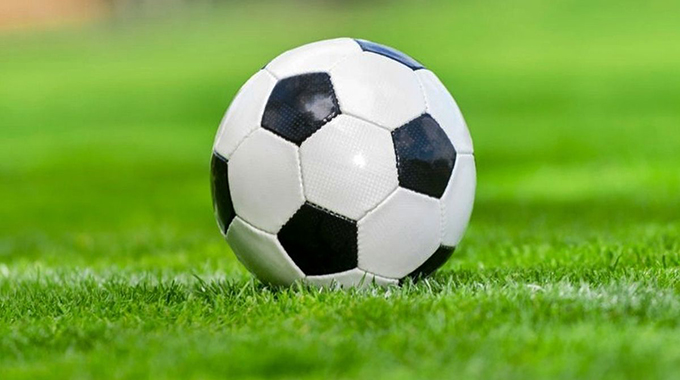
The long history of sports in Zimbabwe is intertwined with the country’s development and its involvement with the international community. Many sports were imported by the country’s colonisers, and this has led to the emergence of Zimbabwean teams in many international sports in the modern day. Likewise, sports culture and have similarly evolved. An understanding of the country’s history in sports will provide insight into both.
A Brief History of Football in Zimbabwe
Today, football is undoubtedly the most popular sport in Zimbabwe. The country has achieved an acknowledged level of skill and professionalism in the world of international football. As the country’s most popular sport, it’s important for fans as well as historians to understand the extent of the sport’s national influence.
Early History of Football in Zimbabwe
Football was first introduced to colonial Zimbabwe —then known as Southern Rhodesia— by the British at the tail-end of the 19th century. Since 1892, different organisations have served as the sport’s governing body in the country; these include the National Football Association of Rhodesia, Southern Rhodesia Football Association, and —most recently— the (ZIFA).
Although the first clubs set up back then were segregated between the British settlers and the local populace, the sport was quickly popularised among the local communities and supported by African welfare societies as a healthy and productive form of entertainment. During the British occupation, football was already more popular in the territory than any other sport — some early estimates put its popularity at five times that of rugby.
Recent History
It took over half a decade for the Zimbabwean national team to begin admitting African players. This happened in 1958. Impressively, soon after the integration, the notable African-Zimbabwean football club, , went on to win the , which was previously unavailable to integrated teams.
In 1965, the Southern Rhodesia Football Association (SRFA) . Then, in 1970, Zimbabwe made its first international appearance in the world of football as a sovereign state when it competed against Austria in the qualifiers for the 1970 World Cup. The Zimbabwe Football Association’s first admittance to FIFA was, however, short-lived due to international sanctions then in place. It wasn’t until 1979 that Zimbabwe, now represented by ZIFA, was readmitted to .
Zimbabwean Football Today
Today, the Zimbabwe Football Association is organised across the country’s ten provinces, divided into four regions: Central, Northern, Eastern, and Southern. Each region operates autonomously and organises its own games and tournaments. These regions collaborate whenever the country competes internationally, whether within greater Africa or on the world stage.
Zimbabwe’s provinces are divided among ZIFA’s four regions as follows:
- Central: Matabeleland South, Midlands
- Northern: Harare, Mashonaland Central, Mashonaland West
- Eastern: Manicaland, Mashonaland East, Masvingo
- Southern: Bulawayo, Matabeleland North
Outlook
There have been some recent controversies regarding the management of the country’s football clubs. While ZIFA has done much to elevate international regard for Zimbabwean FCs, recent controversies in 2010 and 2015 have somewhat marred the association’s reputation. Despite these, Zimbabweans’ love for football and their competitive spirit has persisted. Sports enthusiasm is high in the country, with many seeing football as a favourite pastime.


 Online Reporter
 Bongani Ndlovu