Online Reporter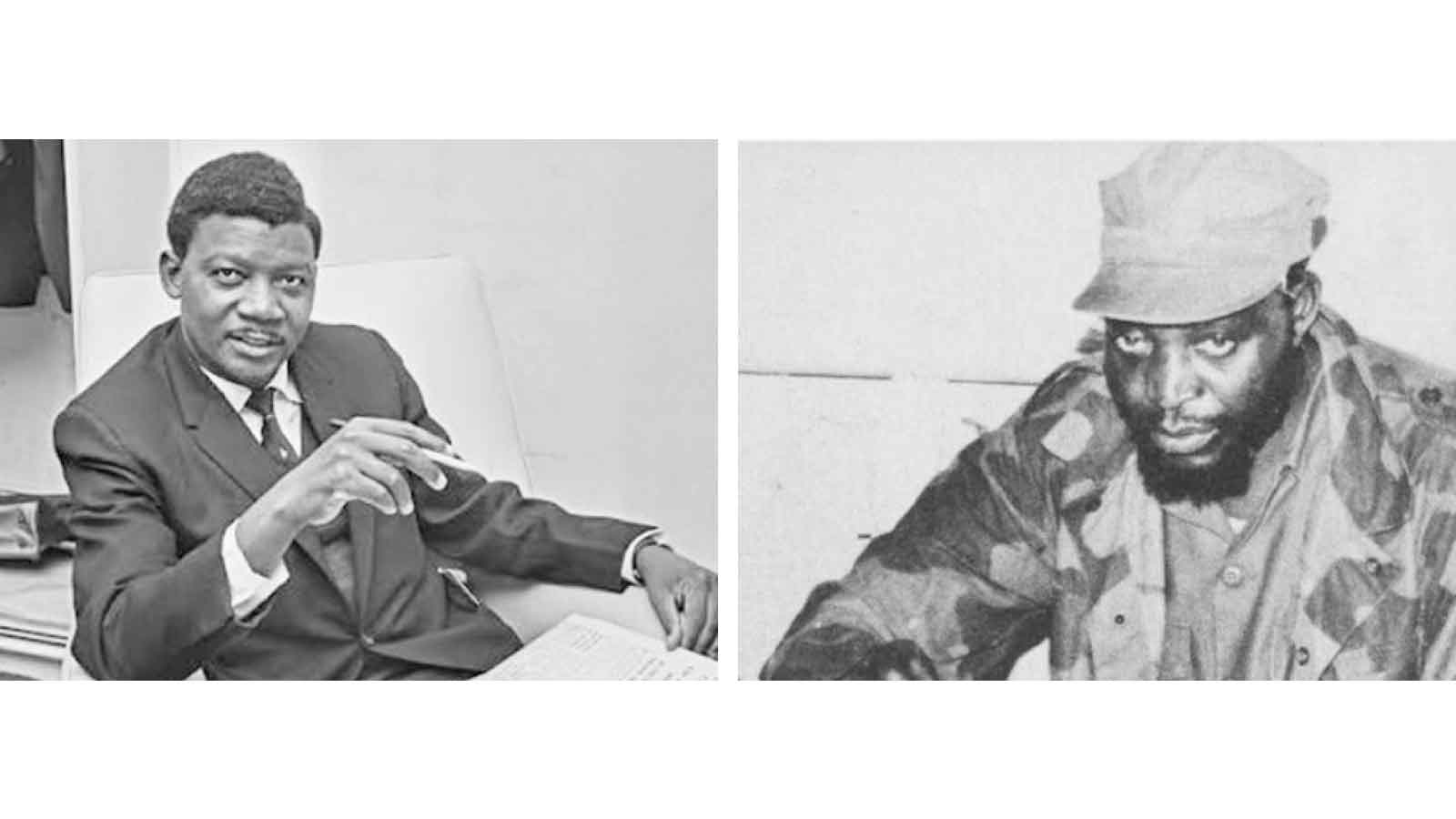
Professor Simbi Veke Mubako
THE day the charges against General Josiah Tongogara and his two co-accused were withdrawn in the High Court of Zambia was more than a legal victory.
It was, in my view, a moment that helped preserve the leadership of Zanu and the liberation struggle at a time when the party was facing one of its most serious crises. That was in 1976.
Had the case proceeded on the basis of the evidence presented before the court, three important members of the liberation movement faced the death penalty.
But to understand how we reached that point, it is necessary to go back to March 18, 1975, and the death of Comrade Herbert Chitepo.
At the time, I was a lecturer at the University of Zambia while also serving as the party’s legal advisor.
My responsibility was to provide legal assistance to Zanu whenever legal issues arose during the liberation struggle.
In March 1975, Zanu was already facing serious internal problems.
There had been a rebellion within the party, which we believed had been instigated and assisted by the Rhodesians in an attempt to disrupt the armed struggle in the north-eastern areas of the country.
After the rebellion was suppressed, the situation took an even more dangerous turn.
On March 18, 1975, Chitepo, the chairman of Zanu and one of the principal leaders directing the armed struggle, was killed when a bomb planted in his car exploded in Lusaka.
One of his advisors who was travelling with him also died.
In the aftermath of the assassination, allegations emerged that Chitepo had been killed by members of his own party.
General Tongogara, then commander of the armed wing, was among those implicated.
The allegations had serious consequences. Tongogara and a number of other senior ZANU officials were detained in Zambia, while investigations into the circumstances surrounding Chitepo’s death continued.
Eighteen members of the High Command were among those detained, together with members of the party structures responsible for directing the armed struggle.
The effect on the liberation movement was immediate. The detention of senior leaders came at a critical time and disrupted the party’s efforts to prosecute the war.
Tongogara was eventually brought before the High Court of Zambia together with Cde Joseph Chimurenga and Cde Sadat Kufamazuva.
The three were accused of participating in the planting of the bomb that killed Chitepo.
As the party’s legal adviser, I was responsible for helping to assemble the defence.
This was not an ordinary criminal case.
The outcome had the potential to affect the leadership of the party and, to a large extent, the continuation of the liberation struggle.
We assembled a team of lawyers and began examining the evidence presented before the court.
Among those involved in the defence was British lawyer John Platts-Mills, whose participation was made possible through funds raised by supporters overseas.
We believed the allegations against the three accused were unfounded, but that belief had to be tested through the proper legal process.
Our task was to examine the evidence and present the strongest possible defence before the court.
A major part of the prosecution case involved statements said to have been made by the accused during their detention.
We challenged the circumstances under which those statements had been obtained.
Evidence was presented concerning the treatment of the detainees during their period in custody, including allegations of physical mistreatment and injuries.
There were also questions surrounding the preparation and authenticity of some of the documents relied upon by the prosecution. The court carefully considered the evidence before it.
Ultimately, the judge ruled that the statements relied upon by the prosecution had not been freely obtained and could not form the basis of the case.
The confessions were therefore rejected.
This was a decisive development because the prosecution had little evidence remaining upon which to proceed.
The prosecutor was asked whether there was additional evidence available to sustain the charges. After consideration, the prosecution withdrew the case.
The High Court subsequently discharged Tongogara, Chimurenga and Kufa Mazura.
For us, it was a major legal victory.
The three men had faced a very serious charge at a time when the death penalty existed in Zambia.
Their release therefore removed an immediate threat to three important members of the liberation movement.
My relationship with Tongogara had begun well before his detention.
As the party’s legal adviser, I knew him well.
He would sometimes come to my home to brief me and others about developments in the war, seek advice and discuss matters requiring legal assistance.
After his arrest, I continued visiting him in prison in my capacity as his lawyer.
I also visited other detained ZANU leaders.
Our responsibilities extended beyond the courtroom. Many of the detainees had families outside who needed assistance.
We therefore worked to mobilise food, money and other support for their families while also attending to the legal needs of those in detention.
Communication during this period was maintained through several channels.
As lawyers, we were able to visit the detainees and communicate with them directly.
Written messages were also passed out of detention and brought to us.
These communications enabled us to understand the circumstances in which the detainees were being held and to convey information to their families and the party.
We also maintained communication with comrades in other camps, including those in Tanzania and Zambia. Support from outside the country was equally important.
We communicated with supporters in Britain and elsewhere in Europe, particularly when funds were required for the legal defence and the welfare of detainees’ families.
That support ultimately helped make it possible for Platts-Mills to travel from England and join the defence team.
Throughout the case, our objective was to ensure that the accused received a fair legal defence and that the evidence against them was properly tested before the court.
The case eventually ended with the withdrawal of the charges and the discharge of all three accused.
Looking back, I regard the outcome as an important moment in the liberation struggle.
It demonstrated the importance of the legal process at a time when political circumstances were placing enormous pressure on the leadership of ZANU.
The story began with the death of Chitepo in Lusaka on March 18, 1975.
It passed through a period of arrests and detention before reaching the High Court, where the evidence against Tongogara, Chimurenga and Kufa Mazura was subjected to legal scrutiny.
For me, the most important lesson from those events is that even during a period as turbulent as the liberation struggle, the law remained an important avenue through which the truth could be tested and justice pursued.
This story was based on an interview conducted by The Herald reporter Remember Deketeke.