Online Reporter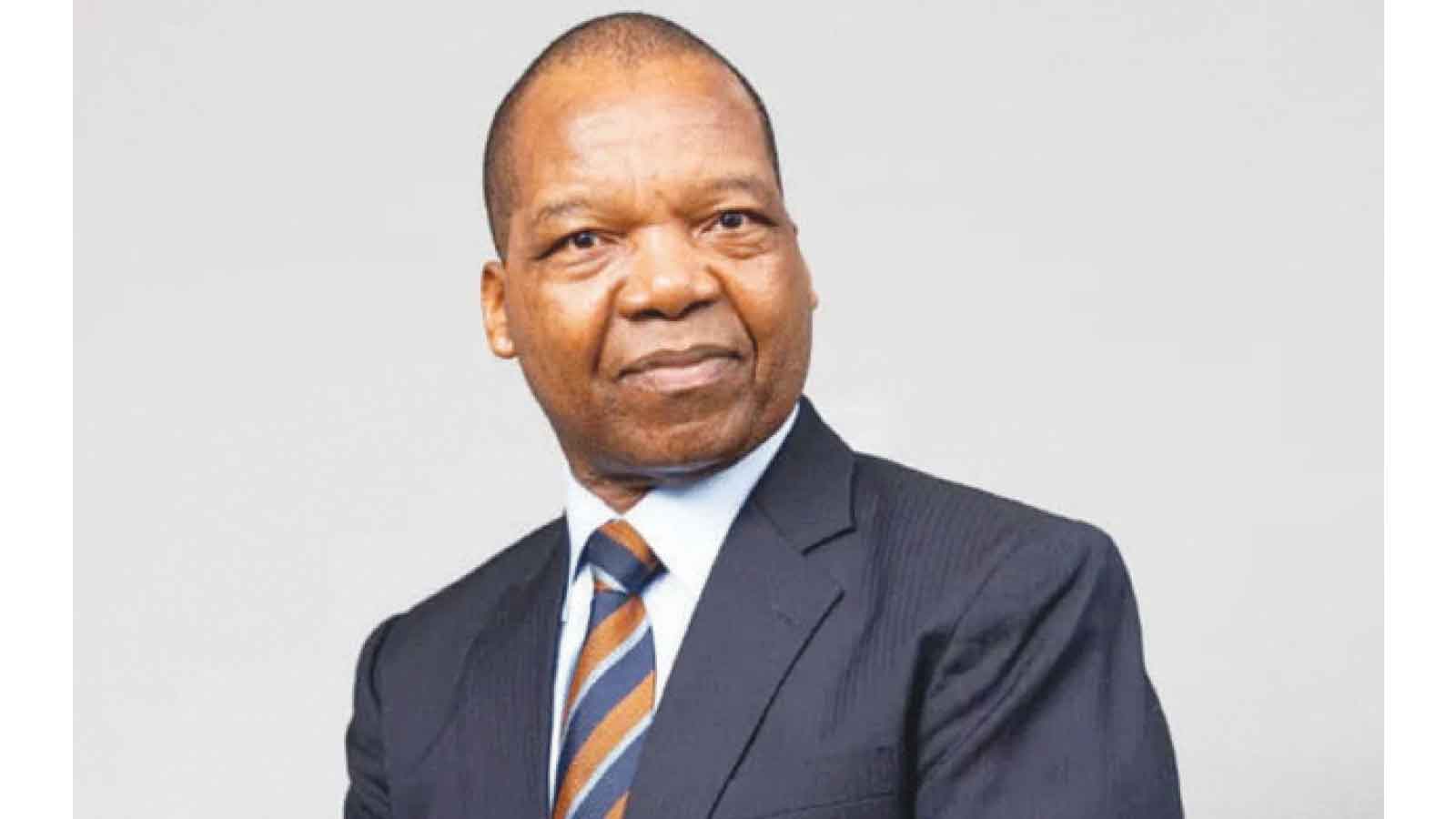
Kuda Bwititi-Zimpapers Politics Hub
FOR years, Zimbabwe’s State-owned enterprises were synonymous with inefficiency and a seemingly unshakeable dependence on Treasury bailouts.
The Auditor-General’s reports read like an autopsy of failed entities and the term “parastatal” became a byword for fiscal haemorrhage. But a quiet, determined revolution is now underway.
At its helm is the Dr John Mangudya-led Mutapa Investment Fund (MIF), Zimbabwe’s sovereign wealth vehicle, which is systematically transforming loss-making entities into competitive and commercially viable national assets.
Through aggressive capitalisation, surgical governance reforms, and a long-term strategic vision, the Fund is not merely patching up broken institutions — it is building a new generation of “national champions” capable of driving Zimbabwe’s upper-middle-income ambition.
A new mandate for a new era
The Mutapa Investment Fund was originally established in 2014 through an Act of Parliament as the Sovereign Wealth Fund of Zimbabwe, intended to be capitalised using royalties, dividends and fiscal surpluses.
However, that model gained little traction.
The game-changer came on September 19, 2023, when the Finance Act No. 13 of 2023 remodelled and renamed the entity as the Mutapa Investment Fund. Under its bold new strategy, the Fund is capitalised not by abstract surpluses, but by the direct transfer of thirty State-owned enterprises and investments from the Government’s portfolio.
This structural shift allows MIF to manage and enhance the performance of key national assets actively, rather than simply holding passive stakes.
As MIF chief executive Dr Mangudya recently said, the Fund is aligned with global best practices, drawing comparisons with sovereign wealth giants such as Ethiopian Investment Holdings, Mubadala Investment Authority of the UAE, Dubai Investment Authority, and Singapore’s Temasek Holdings.
That is rarefied company, and Zimbabwe’s Fund is already showing that it belongs in that league.
Breaking the cycle of fiscal bleeding
The numbers speak volumes. In 2025, the Mutapa Investment Fund’s surplus after tax leaped from a modest US$3,6 million in 2024 to an impressive US$21,7 million — a more than six-fold increase.
This financial health is driven by growing dividend income and management fees from its investee companies, signalling that the reform medicine is working at the portfolio level.
But the real test lies in the performance of individual parastatals.
Dr Mangudya has been characteristically direct: the goal is to transform these entities from perennial loss makers into “cash cows” that generate significant benefits for the economy. To that end, the Fund has already disbursed at least US$40 million to support key holdings, including the Cold Storage Company (CSC), ZUPCO, Silo Foods, and the National Railways of Zimbabwe (NRZ).
Take the National Oil Infrastructure Company (NOIC). MIF is expanding its capacity to handle larger fuel volumes, from an original 1,8 billion litres to a current 3 billion litres, with a target of 5 billion litres.
That is not incremental tinkering; it is a strategic leap that will secure the nation’s fuel supply resilience.
Similarly, Zesa Holdings is being re-bundled and will soon be transformed into Zesa Private Limited, with existing entities becoming divisions under a streamlined structure.
“The process has already started,” Dr Mangudya confirmed.
For ordinary Zimbabweans, that means the prospect of reliable power, not the rolling blackouts of the past.
At the National Railways of Zimbabwe, the Fund is providing capital for the refurbishment of wagons, rail tracks, and communication lines.
And Air Zimbabwe, long a symbol of national embarrassment, is also earmarked for capacitation.
As Dr Mangudya put it: “If you see improved Zesa, if you see improved NRZ, if you see Air Zimbabwe working, know that the Mutapa Investment Fund is working.”
Governance: the missing link restored
Perhaps the most praiseworthy aspect of Mutapa’s work is its ruthless focus on corporate governance — what Dr Mangudya correctly calls the “major missing link” in the viability of state enterprises.
The Fund is a product of extensive research by the State Enterprises Restructuring Agency (SERA), designed to eliminate bureaucracy and red tape. Its operational philosophy is anchored on strong governance values: accountability, transparency, excellence, commitment, integrity, and sustainability.
This is not mere rhetoric. MIF has moved swiftly to appoint new, professional boards for its portfolio companies based on merit and rigorous due diligence. New boards are now in place for Air Zimbabwe, Allied Timbers, and others.
The Fund’s own leadership has signed integrity pledges with the Zimbabwe Anti-Corruption Commission (ZACC), publicly committing to zero tolerance for graft.
By ensuring timely production of audited results and embedding robust oversight, Mutapa is systematically dismantling the governance deficiencies that have for decades been highlighted in Auditor General’s reports.
A diversified portfolio for a diversified economy
The Mutapa Investment Fund operates across multiple sectors, reflecting Zimbabwe’s economic complexity. Its portfolio includes thirty investee companies and more than thirty subsidiaries, clustered into Mineral Resources, Energy & Trading, ICT, Transport & Logistics, Agriculture & Industrials, Financial Services, and Real Estate.
In mining, the Fund holds critical assets such as Kuvimba Mining House, Bindura Nickel Corporation, Freda Rebecca Gold Mine, Great Dyke Investments, Zimbabwe Consolidated Diamond Company (ZCDC), and Hwange Colliery Company.
These are not marginal players; they are the bedrock of Zimbabwe’s resource extraction and export earnings. The Fund’s commitment to responsible and sustainable mining practices promises to balance economic growth with environmental stewardship.
In energy and trading, the Fund oversees ZESA, Zimbabwe Power Company, Fidelity Gold Refinery, Genesis Energy, and Petrotrade. In telecommunications, it holds NetOne, TelOne, and once outstanding issues are resolved —Telecel Zimbabwe.
The Government owns 60 percent of Telecel, but the mobile operator has fallen behind its competitors in market share and revenue. MIF has been clear: it will resolve those “issues” before bringing Telecel formally into its fold.
That prudent, no nonsense approach is exactly what decades of reckless parastatal management lacked.
Agriculture is another priority. Through Cottco, ARDA Seeds, and the Cold Storage Company (CSC), the Fund is promoting sustainable farming practices, food security, and export growth. Manufacturing holdings include Chemplex Corporation, Willowvale Motor Industry Development, Silo Investments, and Allied Timbers — all essential for industrial development and local value addition.
The path to listing and
long term value
Looking ahead, the Mutapa Fund has signalled its most ambitious reform yet: a plan to list some of its top-performing entities on the stock exchange during the lifespan of the National Development Strategy 2 (NDS2).
This move will unlock value, deepen Zimbabwe’s capital markets, and subject these entities to the discipline of public and institutional investors.
It will also signal to domestic and foreign capital that Zimbabwe’s State owned sector is open, transparent, and bankable.
A hopeful horizon for every Zimbabwean
Ultimately, the success of the Mutapa Investment Fund will be measured not in boardroom metrics, but in the daily lives of ordinary citizens.
A profitable, well-governed SOE sector will no longer drain the Treasury, freeing up public funds for roads, schools, and clinics.
It will create decent jobs, stabilise services from transport to electricity, and restore national pride in institutions that have too long been symbols of dysfunction.
The Mutapa Investment Fund is still a young vehicle — only formally renamed in September 2023.
But its early results, its strategic clarity, and its uncompromising focus on governance suggest that Zimbabwe has finally found a model that works.
From a corporate graveyard, a new generation of national assets is rising. And that is something worth praising.