


 Online Reporter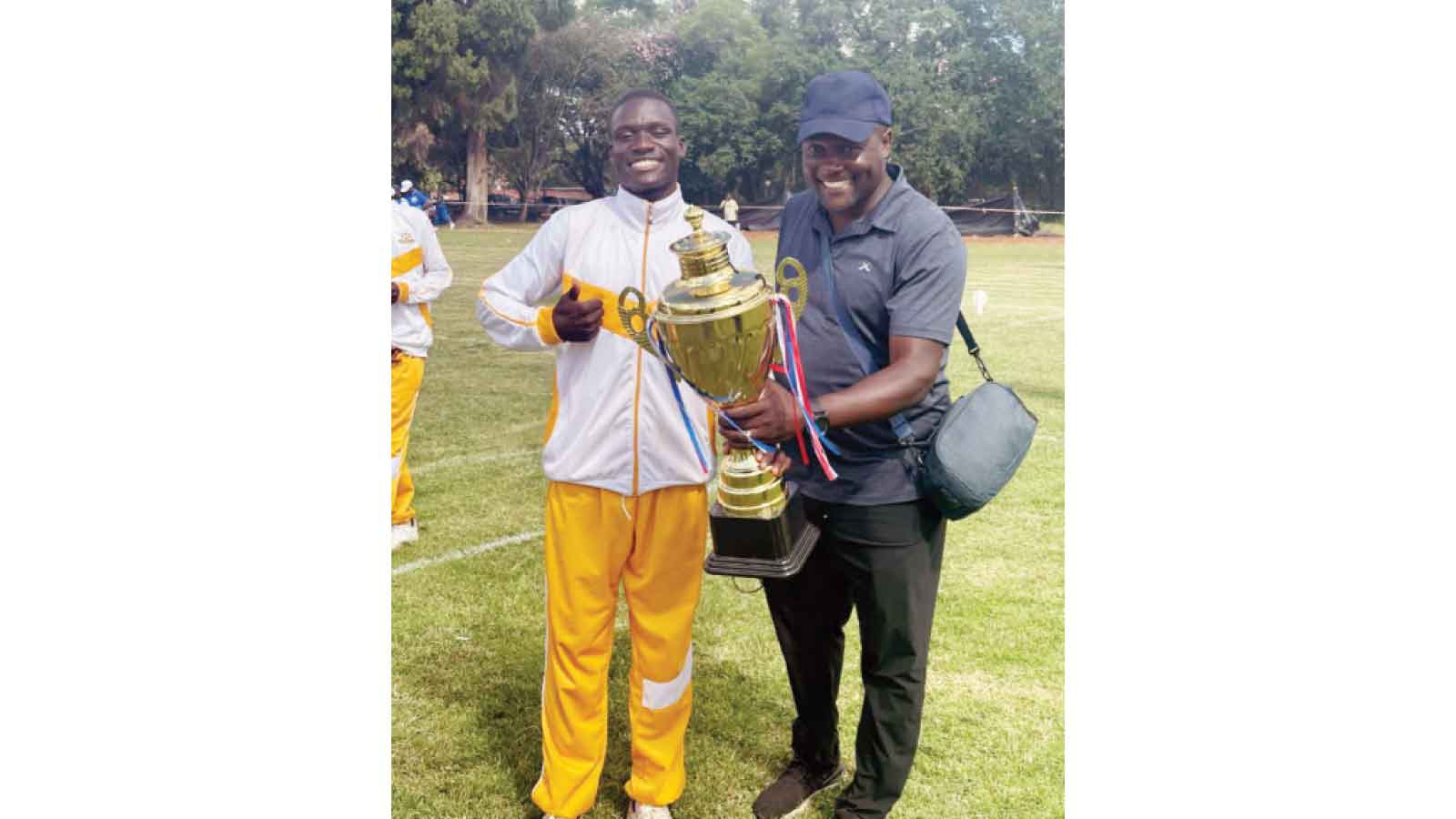
Ellina Mhlanga-Zimpapers Sports Hub
WHEN Emmanuel Uriga first stepped onto the track as a teenager at Sandringham High School, his dreams were measured in the explosive seconds of the 100m and 200m races.
Like many young athletes, he was drawn to speed, to the glamour of the sprint races, to the thrill of being the first out of the blocks and the first across the line.
The 400m, by comparison, felt like punishment. It demanded patience, discipline and an appetite for pain that few teenagers willingly embrace.
Yet today, as he prepares to wear Zimbabwe’s colours at the Southern African Confederation of Athletics Under-18 and Under-20 Championships in Mauritius, it is the race he once resisted that has become the vehicle carrying him towards bigger dreams.
The journey has not been straightforward.
It has involved disappointment, injury, self-doubt and a lesson many young people spend years learning: Sometimes the people guiding us can see possibilities long before we see them ourselves.
For Uriga, the first spark came from watching another athlete.
Back in 2023, while he was still in Form Three, Sandringham High School had a senior learner whose commitment left an impression on everyone around him.
Aldrin Tafa trained relentlessly while balancing the demands of his A-Level studies. Uriga watched from a distance.
The admiration eventually turned into action.
“When I was in Form Three in 2023, he was an Upper Six learner. I used to see him train day in, day out,” recalls Uriga.
“And then I was like, one day I want to be more like Aldrin Tafa.
“I went to him and asked if he would allow me to train with him. He agreed.”
The sessions did not last long because Tafa was preparing for his examinations, but something important had already happened.
A young athlete had discovered what dedication looked like.
It would become a reference point during the difficult moments that lay ahead.
The following year offered Uriga his first taste of competitive athletics beyond the school environment. He excelled at zonal level and advanced to the provincial championships in Karoi. It was there that reality struck.
The competition was tougher. The margins were smaller. The results did not go his way.
He failed to progress to the nationals.
For many teenagers, such disappointment can become a reason to quit.
For Uriga, it became fuel.
“I was angry at my performance but also motivated that I could do better. I had this hunger of trying to train more,” he said.
That response says much about his character.
The easiest reaction to failure is to find excuses. The harder response is to confront shortcomings and decide to improve.
Long before he started breaking records, Uriga was already developing the mindset that often separates talented athletes from successful ones.
Around the same time, another important figure entered his life.
After completing his O-Level examinations, he met coach McGregor Manuhwa.
The relationship would alter the direction of his career.
At first, the young athlete wanted to remain in familiar territory. His identity was tied to the shorter sprint races. The coach had other ideas.
Manuhwa saw a different athlete hidden beneath the surface.
He saw qualities that could flourish over one lap of the track.
More importantly, he saw potential that Uriga himself could not yet recognise.
The challenge was convincing him.
Looking back now, the coach admits he understood exactly how difficult that conversation would be.
“He was doing 100m initially and he hated 400m,” said Manuhwa.
“So I knew if I was to divert him straight to 400m it was going to be something else because he would resent it.”
The coach’s solution was patience.
Rather than forcing change, he guided it gradually. Uriga continued competing in sprint events while slowly becoming familiar with the longer distance.
The transition was as much psychological as physical.
Trust had to be built.
Then came another setback.
Just when opportunities were emerging, injury struck.
The timing could hardly have been worse.
Uriga missed qualification opportunities for the African Union Sports Council Region Five Youth Games in Namibia and the Junior Championships in Nigeria.
While teammates chased places and prepared for international competition, he was left watching from the sidelines.
The disappointment cut deeply.
“I couldn’t go for the competitions to qualify for the Region Five and the Nigeria Junior Championships,” said Uriga.
“I still remember I was like, why God, why me? After all this effort, after all these trainings?”
It is a question many athletes know well.
Sport can be brutally unfair. Sometimes hard work is rewarded. At other times circumstances intervene. Injuries do not care about ambition, preparation or sacrifice.
For a teenager trying to establish himself, the setback felt enormous.
Yet it also became a defining moment.
He could either become trapped by frustration or continue believing in a future he could not yet see. The decision to persevere would change everything.
After returning to training in August and rebuilding his fitness, Uriga entered 2026 with renewed purpose. This time, the progress was impossible to ignore.
The breakthrough arrived at the National Association of Secondary School Heads Championships.
Competing in the 400m, the event he once disliked, he stormed to victory in 47.55 seconds and shattered a longstanding record.
The previous mark of 48.37 seconds disappeared.
Suddenly, the race he had resisted was becoming the event that defined him.
There was more to come.
At the National Athletics Association of Zimbabwe Junior Interprovincial Championships, he produced another statement performance.
Running with electronic timing, he crossed the line in 46.83 seconds.
For the first time in his career, he had broken the 47-second barrier.
For the first time, the possibility of qualifying for the World Under-20 Championships felt real rather than distant.
Most importantly, he finally understood what his coach had been trying to tell him all along.
“Then in the 200m, I was beaten by Trey,” said Uriga.
“I began understanding what the coach had told me, that I should go for 400m.
“I started focusing on 400m fully.”
That moment of acceptance may prove more important than any medal.
Athletes often speak about physical development, but growth is frequently emotional and intellectual. It comes when pride gives way to learning and when certainty gives way to trust.
Uriga’s story reflects a lesson far beyond athletics.
Many young Zimbabweans spend years pursuing one path because it feels comfortable or familiar.
Sometimes a teacher, mentor, parent or coach sees a different possibility. The challenge is having the humility to listen.
In Uriga’s case, listening transformed disappointment into opportunity.
Now Mauritius awaits.
It will be his first significant test outside Zimbabwe and another opportunity to chase faster times and bigger ambitions.
Yet regardless of what happens there, the journey has already delivered something valuable.
A teenager who once measured success by short sprints has discovered a deeper understanding of himself.
A coach who asked him to embrace discomfort has been vindicated.
And a young athlete who once questioned why misfortune had interrupted his progress now finds himself standing on the threshold of opportunities that seemed unimaginable only a short time ago.



