Online Reporter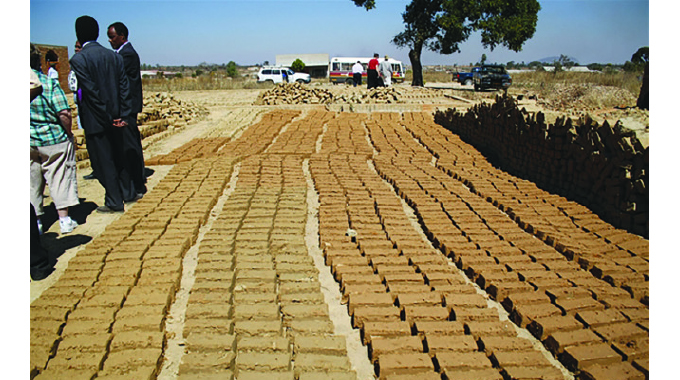
SMEs Corner
ON the outskirts of many Zimbabwean towns, the sight of kilns and drying clay bricks is common.
Brickmaking has long been one of the most accessible industries for small entrepreneurs.
It requires relatively low start-up capital, relies on locally available raw materials and can generate steady demand from both rural and urban housing projects.
But starting even a small-scale operation requires more than just clay and a shovel; it is a business with clear cost structures and regulatory hurdles.
The first requirement is location.
Brickmaking needs land with accessible clay deposits, ideally close to water sources.
A one-hectare plot is usually enough for small operators.
Leasing such land can cost between US$500 and US$1 000 annually, depending on proximity to urban markets.
Entrepreneurs also need permission from local councils and environmental authorities to ensure operations do not damage wetlands or rivers.
Equipment is the next significant expense.
At the most basic level, a brick mould, wheelbarrows and spades are essential, costing about US$500.
More advanced setups include a manual brick press (US$800 to US$1 200) or even a motorised machine (US$3 000 to US$5 000), which can dramatically increase output.
A kiln is critical for firing bricks; traditional clamp kilns can be constructed for around US$2 000 using locally available materials, though more efficient models can cost substantially more.
Labour is also central to operations.
A small brickmaking company typically employs five to 10 workers, with wages ranging from US$150 to US$200 per month per worker.
Labour accounts for one of the largest recurring costs, but it also determines output; manual teams can produce about 5 000 to 10 000 bricks per week, while mechanised setups can push beyond 20 000.
Raw materials add another layer of expense.
Clay is usually free if land is owned or leased, but firewood or coal for burning the bricks is not.
A small company may spend US$200 to US$400 a month on fuel, depending on kiln efficiency and scale.
Transport costs, often overlooked, are critical. Moving heavy bricks to the market can absorb up to 20 percent of revenue, particularly for rural operators.
Altogether, starting a small brickmaking operation in Zimbabwe requires at least US$5 000 to US$7 000 for a basic setup, and upwards of US$12 000 for a more efficient, semi-mechanised plant.
The demand is there. Zimbabwe’s housing backlog ensures a steady market. But success in the sector hinges on more than producing bricks.
It requires managing costs, securing steady fuel supplies and navigating local regulations, factors that determine whether the piles of red clay transform into a profitable business.



 Bongani Ndlovu