Online Reporter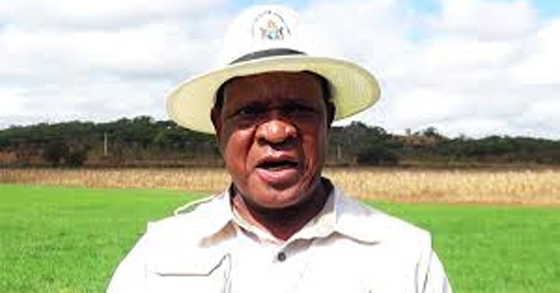
Ray Bande
Senior Reporter
SINCE time immemorial, we have always been reminded that ‘alone we can do so little, together we can do so much’.
In the same vein, corporate citizens in the country are coming to the realisation that when it comes to community development, alone they can do so little, but together with local communities where they operate, they can do so much.
Donating foodstuffs, paying school fees vouchers for rural children, and painting school buildings and clinics are all well and good, but lasting economic empowerment in communities can only be realised through locals’ involvement in the production lines.
It is no wonder, therefore, that the Agricultural and Rural Development Agency (ARDA), is employing the hub-and-spoke model to economically empower locals by incorporating them into production value chains countrywide, where the agency is either operating or in partnership with investors.
The hub-and-spoke model is a system where a central ‘hub’ – which is ARDA or the entity in partnership with ARDA, connects to ‘spokes’ which are multiple outlying points or the local community, creating a network similar to a bicycle wheel.
At the ethanol-producing concern, GreenFuel in Chipinge South, the company produces a silage by-product that is vital for cattle fattening, and locals can now get their cattle fed for a given period under the company’s watch.
After the cattle fattening period, when the beasts are able to fetch a higher price on the market, the farmer has the option to sell the cattle to the company or pay the fattening process costs if they wish to keep their cattle.
This community empowerment plan, implemented by ARDA and the investor, GreenFuel Private Limited, is dubbed the hub-and-spoke model.
It is in addition to the 0.5-hectare plots of irrigated land allocated to 2 300 households in the Chipinge South Constituency.
Addressing attendees during the handover of irrigated smallholder plots to locals in Machona and Vheneka villages, recently, Lands, Agriculture, Fisheries, Water and Rural Development Minister, Dr Anxious Masuka confirmed that the plan is now in motion.
“We have agreed with the authorities here at GreenFuel that they will accommodate your cattle for fattening purposes through the silage by-product that they produce in the ethanol production process,” said Minister Masuka.
“If they take in your beast, for example, at a market value of US$300, it goes through the fattening process until it reaches a stage where it can fetch US$800. The owner then has the option to pay the fattening costs, which could be around US$200, if they want to keep their beast, or sell the beast to the investor at US$800 minus the fattening costs,” he said.
ARDA board chairman, Mr Ivan Craig, weighed in, saying:
“In all our operations, we use the hub-and-spoke model. This is where ARDA or any estate in partnership with ARDA is the hub, and we consider the community around us as the spokes. What we want is to ensure that, while we are doing well on our estate or project, the community in those areas is also benefiting directly.
“We have such projects that are already up and running. If you look at GreenFuel, where we are, you have sugarcane production, which eventually yields ethanol, and there is also value addition from the debris we get from sugarcane after processing. The silage that is being made for livestock feed is being used to feed the cattle on the estate. However, we are also engaging the community around us so that they can have their cattle fed using the same by-product.
“If you look at the project, we also have 1 200ha under irrigation that are being handed over to members of the local community for their own sustainable projects, food security at household level, and income generation. We are looking at farming as a business where farmers have to generate income from their various agricultural activities,” said Mr Craig.
The ARDA board chairman also spoke of similar interventions in other areas around the country where they operate or are in partnership with investors.
“We have similar projects around the country, like Mushumbi Pools, where we produce herbs. We make herbal teas. The hub produces the herbs as well as processing them, and the community is contracted to do similar projects, with the ARDA hub as the buyer. There is also the sinking of boreholes and support for extension services to ensure high productivity for community projects. This also helps ensure that they generate good revenue from their projects,” he added.
“We also have Jotsholo, where we have a similar programme. We have another similar project in Bulawayo, where we are growing pecan nuts.
“The pecan nuts are for the main hub, and we are contracting farmers in the surrounding areas to produce the same pecan nuts to add to what the hub produces.
“In Bulawayo, we also have a centre pivot where we have put 40ha under pasture. The community brings their cattle for rearing, and they feed on the pasture. We also provide veterinary assistance and general management. After three or four months, we calculate the feeding costs. The farmer then has the option to retain their cattle or sell to the hub.
“For example, if the feeding cost is between US$200 and US$300, after feeding, the cattle can fetch between US$700 and US$1 400.
“This is a very lucrative business, and it helps to ensure that as ARDA grows, the community around us also grows,” said Mr Craig.