


 Sundaymail Editor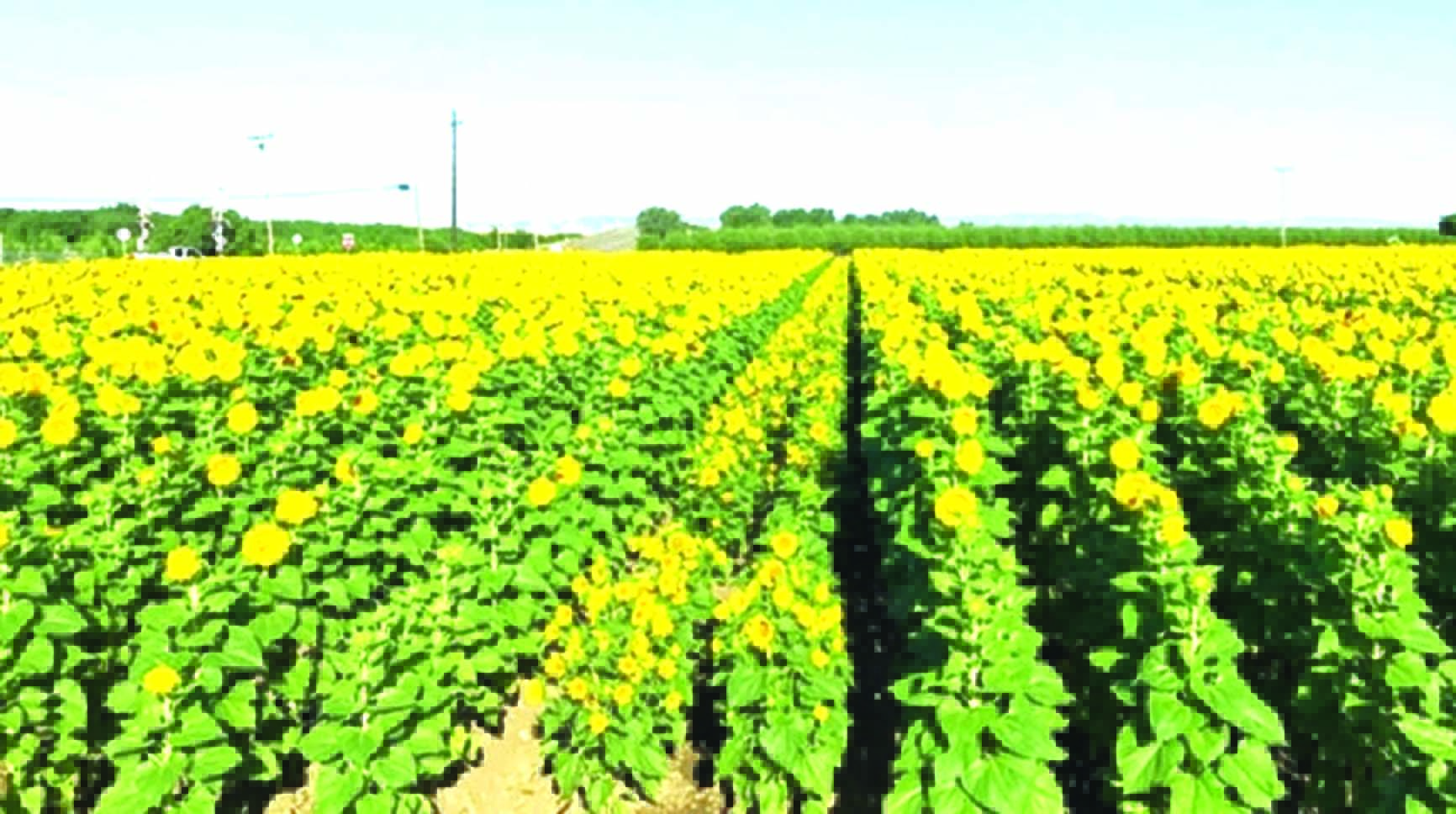
Business Reporter
THERE is huge scope for Zimbabwe to produce sunflower in commercial quantities if local farmers are supported by Government and the private sector, analysts have said.
Sunflower seed is a key ingredient in the production of edible oils and is regarded as the second best after olive oil in terms of health benefits.
Zimbabwe largely extracts edible oils from soyabean and cotton seed but output has not been adequate to feed local mills.
Last year, the country imported crude oil worth approximately U$200 million, according to statistics from the Zimbabwe National Statistical Agency, making it one of the most imported commodities in the country.
Zimbabwe is importing between 55 000 and 65 000 tonnes of sunflower oil from South Africa.
The crude import bill is likely to increase this year as the armed conflict between Russia and Ukraine, the world’s largest producers of the commodity, has pushed prices up.
Ukraine exports 5,4 million tonnes of edible oil per year, or half of the world’s sunflower oil.
But as a result of the conflict, supplies have been interrupted. Russia produces 25 percent of the world’s sunflower oil, and its supply has suffered due to sanctions.
The disruptions in sunflower oil supplies triggered price increases in other edible oils such as olive, soya and palm, although they have now softened. With Zimbabwe having favourable climatic conditions for sunflower production, analysts say the country should come up with incentives to encourage farmers. The crop is good for the drier parts of the country. It also has immense benefits that arise from short growing periods and tolerance to dry conditions.
“Our climate condition favours production of sunflower and we implore the Government and the private sector to come up with incentives to boost production,” the president of the Zimbabwe Farmers Union Abdul Credit Nyathi said.
He noted that limited availability and high cost of seed are among factors deterring farmers.
Hybrid sunflower seed is imported which makes it beyond the reach of many farmers.
Sunflower production peaked at 60 000 tonnes and the decline forced the oil expressers and seed houses to put more focus on alternatives such as soyabean and cotton. Estimates show that local industry requires 50 000 to 70 000 tonnes annually.
A small survey conducted by the Agricultural Marketing Authority (AMA) to gauge availability gaps in the sunflower value chain showed perceived lack of market for the crop and highly informalised value chain as some of the factors affecting production.
“With the nation not producing sufficient edible oil to meet local requirements, venturing into sunflower farming presents an opportunity to increase income and livelihoods,” AMA said.
“Furthermore, farmers can realise more income by engaging in value addition,” it added.
Pure Oil, the producer of Zimgold cooking oil, is working with AMA and ARDA to contract farmers across the country in a bid to improve the availability of the seed oil.
According to officials, the company is targeting 35 000 hectares and contracted farmers will be receiving free inputs. Pure Oil is already rolling out outreach programmes to thousands of rural farmers across the country which have shown huge interest.
“The interest is quite huge,” a Pure Oil official said.
“While this helps us to improve the availability of feedstock for our plant, we also see it as an empowerment initiative.”
Recently, Oil Expressers Association of Zimbabwe president Busisa Moyo said a combination of foreign currency shortages and reduced supplies of oil seed has seen output of cooking oil in Zimbabwe declining by as much as 50 percent. He said cooking oil companies were failing to get enough foreign currency to import crude oil.
“We are not getting enough foreign currency to import crude oil while the supplies of oil seeds; soyabean and sunflower have been very low,” said Moyo.
“This has resulted in production falling significantly . . . I would say by between 40 and 50 percent.”
The Government said it will ramp up support for farmers under its State-assisted farming scheme.
AFC Holdings, a State-owned financial group, said it will finance production of 65 000 ha of various crops including sunflower.
“Such in interventions are critical and this will certainly push production of sunflower up,” Harare based analyst Carlos Tadya said. “But what is also important is to mechanise the (sunflower production) processes to achieve efficiency.”
Under a normal season, the planting period for sunflowers is from mid-December to late January. But as a result of climate change, the planting periods have been affected.
It has a short duration of maturity of between 90 and 120 days depending on variety and can be adapted into different cropping patterns, according to experts.
The seed rate is 3 to 5kg per hectare when using a planter and increases to about 8kg when planting manually. The crop does well in climates ranging from arid under irrigation to temperate under rain-fed conditions. According to experts, natural region 3 is regarded as the most ideal to produce sunflowers in Zimbabwe. The region is found in some parts of the Midlands, Mashonaland East, Mashonaland West, Manicaland, Masvingo, and Matabeleland North provinces.
Yield per hectare depends on variety from about 1,5 for OPVs to 3,5 tonnes for hybrids. Common pests are cutworms at early emergence and bollworms at head formation.
Sunflower production is lucrative and the average market price is US$440 per tonne.
Apart from edible oils, the seed can also be used in livestock feed and confectionery products.
Sunflower cooking oil is of greater quality as compared to oil from soya and cotton.



 Bongani Ndlovu
 Online Reporter