admin
admin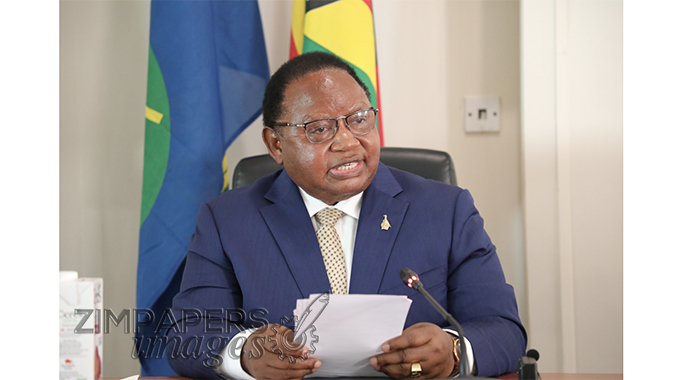
Victoria Ruzvidzo in NEW YORK, United States
THE Government has made huge strides in empowering women economically, while also addressing such constraints as gender-based violence, a Cabinet Minister has said.
ALSO READ :
https://www.herald.co.zw/govt-commits-to-empower-women/
https://www.herald.co.zw/women-empowerment-pivotal-to-vision-2030-attainment/
https://www.herald.co.zw/pledge-to-support-women-empowerment-drive/
In his opening remarks at the Accelerating Women’s Entrepreneurship Development in Africa seminar on the sidelines of the ongoing United Nations General Assembly here, the Minister of Foreign Affairs and International Trade, Dr Frederick Shava, said it was important to harness African women’s potential as key drivers of sustainable development.
The speech was read on his behalf by Women’s Affairs, Community, Small and Medium Enterprises Development Minister Monica Mutsvangwa.
Dr Shava said the Government was thus actively supporting women’s increased participation in the socio-economic discourse.
The meeting was co-hosted by Government and the United Nations Development Programme.
“In Zimbabwe, the Government has witnessed a remarkable rise in women entering traditionally male-dominated industries such as construction, mining, security, and the iron and steel value chain. Additionally, Micro, Small, and Medium Enterprises (MSMEs) have become key contributors to our national economy, accounting for over 60 percent of GDP, with 56 percent of these enterprises owned by women.
“Guided by our National Development Strategy 1 (NDS1), we have established institutions like the Zimbabwe Women’s Microfinance Bank (ZWMB) and the Small and Medium Entrepreneurs Development Corporation (SMEDCO) to enhance women’s access to affordable finance.
“Our National Financial Inclusion Strategy has further strengthened access to bank loans for women by creating a collateral registry, allowing movable assets to serve as collateral for securing loans,” he said.
The meeting acknowledged that Zimbabwe was one of the countries on the continent that was running effective empowerment programmes for women. Africa’s Agenda 2063 laid out a clear vision for harnessing the potential of African women as key drivers of sustainable development.
African Heads of State had also committed to several protocols for the realisation of this objective. Dr Shava said Zimbabwe’s Rural Electrification Fund was implementing solar home systems and biogas energy projects that impacted women’s livelihoods directly as efforts to empower women moved a gear up.
Furthermore, Government has actively supported women entrepreneurs’ entry into regional and international markets, including the African Continental Free Trade Area (AfCFTA), and promoting export readiness through ZimTrade’s Next-She Exporters programme.
“Recognising that Gender-Based Violence (GBV) hinders progress, we have signed the High-Level Political Compact to criminalise all forms of GBV.
“Zimbabwe is addressing the vagaries of climate change, particularly its disproportionate impact on women, by implementing policies that promote climate-smart agriculture, clean energy solutions, and resilience-building initiatives like solar and biogas technologies to underpin the viability of women entrepreneurs,” Dr Shava said.
To smoothen the terrain, Government, in partnership with UN Agencies in Zimbabwe led by UNESCO, had mobilised US$10 million from the UN SDG Fund.
“Local companies, led by Old Mutual, have committed to increasing the capacity of the Fund to US$45 million. I am glad to announce that this Renewable Energy Fund will focus on projects that address the specific needs of women and the youth and several SDGs.
“Improving access to energy, especially in the Sub-Saharan African region, is critical given that the majority of the population is still outside the reach of the national power grids. As such, we are also working on developing a ‘Viability Gap Funding Mechanism’ to address this critical area often hampered by high upfront costs.
“The role of women in driving economic development is undeniable. If ‘behind every successful man is a woman’, it is also true that “behind every successful woman is a man who believed in her”. This underscores the fact that the contributions of both women and men are essential in shaping the future and progress of any nation. Indeed, inclusive development leaves no one and no place behind for sustainable development as we build the ‘Africa We Want’, brick upon brick, and stone upon stone,” said Dr Shava.
In her keynote address, Minister Mutsvangwa said women were a critical cog in development.
“It is fact that entrepreneurship fuels economic growth, and women entrepreneurs are playing an important role in this regard. Female entrepreneurship is key to promoting economic diversity and sustainability which results in long-term growth that benefits society and the environment. In particular, women’s entrepreneurship is contributing to human resource optimisation and eradication of poverty,” she said.
Africa was richly endowed with natural resources, talent, and immense potential for growth and prosperity although women remain disproportionately underrepresented in the entrepreneurial landscape.
“The journey for women entrepreneurs is fraught with challenges which include lack of access to adequate financing, the inability to secure loans or investment due to lack of collateral or credit history, lack of training, gender based violence, and limited access to appropriate technology, among others.
“In a bid to ensure the success of female entrepreneurs, our Government in collaboration with the UNDP and other development partners, has implemented various strategies and programmes in Zimbabwe,” Minister Mutsvangwa said.
She highlighted that Government had established the Zimbabwe Women’s Micro Finance Bank in 2017, to advance affordable loans to women entrepreneurs, with over 50 000 women having benefited through access to micro credit loans and capacity building of their enterprises.
“I therefore wish to appeal to the UN Family, Development Partners, the private sector and Governments to collaborate and establish regional, sub-regional and national funding facilities that are tailor made to suit the needs of our women entrepreneurs.”
Minister Mutsvangwa also bemoaned Gender-Based Violence which she said had been on the increase on the continent, particularly during the COVID-19 era.
UN Women in 2021 reported that in 2021 at least 45 percent of women reported that they or a woman they know experienced some form of Gender-Based Violence.
“This has retarded progress in terms of women’s participation in economic activities and their productivity.
“Therefore, a multifaceted approach is critical to bring redress to Gender-Based Violence.”
Other speakers from Rwanda, US and other African countries said education, technology and climate change initiatives are critical to fostering women entrepreneurship.


 Online Reporter