Online Reporter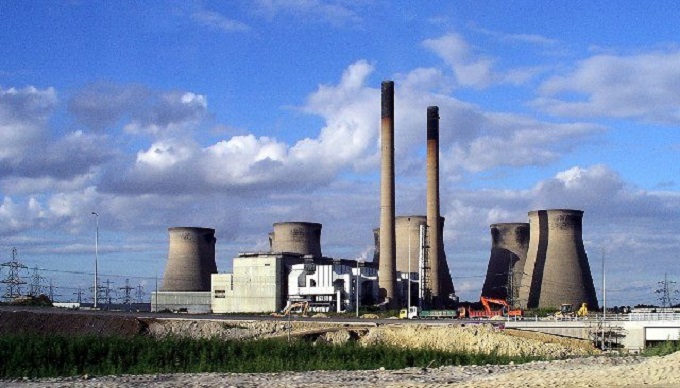
Rutendo Nyeve, Victoria Falls Reporter
THE Hwange Thermal Power Station Expansion Project has set a new power generation record of generating more than 498 million Kilowatt hours (kWh) in a single month, providing a massive boost to the national grid and the country’s economic prospects.
According to official statistics released by ZESA Holdings authorities, the new Units 7 and 8 achieved a landmark in August, generating a staggering 498 million kWh in a single month.
“Zimbabwe Hwange Power Station Expansion Project achieved a landmark in August, generating 498 million kWh in a single month, its highest since operations began in 2023—up 2.5 percent month-on-month and 5.1 percent year-on-year.
“Cumulative output for the year has now reached 3.561 billion kWh, providing critical support for the national grid, easing Zimbabwe’s chronic electricity shortages, and bolstering the country’s economic growth,” reads the update.
In a recent interview with Zimpapers, Hwange Electricity Supply Company’s acting facility site manager, Engineer Ngonidzashe Dzumbira, confirmed that the new units are performing optimally and are firmly on track to meet their annual production goals.
“I am responsible for the operations and maintenance of the two units, Unit 7 and Unit 8. The units are designed to generate, each one of them, 335MW, giving us a total of 670MW,” said Eng Dzumbira.
“Currently, we have managed to meet our production targets for the year and we anticipate that as we get into December, we should be able to meet the full year’s production targets.”
The generation process, as explained by Eng Dzumbira, begins with coal supplied by two major local mines.
This coal is pulverised and burned to produce high-pressure steam, which drives massive turbines spinning at approximately 3000 revolutions per minute.
The electricity produced is then fed directly into the national grid.
Beyond sheer power output, the new units are also a leap forward in environmental responsibility.
They feature advanced emission-control technology, including a Flue Gas Desulphurisation plant that captures sulphur dioxide using limestone.
This process produces gypsum, a by-product sold to cement manufacturers and the agricultural sector.
Additionally, Low NOx burners are installed to reduce nitrogen oxide emissions, ensuring full compliance with environmental standards.
The significance of this project to the nation cannot be overstated.
Eng Dzumbira highlighted its pivotal role.
“In the year 2024, this facility produced 53 percent of Zimbabwe’s energy requirements. Thus, it bridged the gap that was left as a result of the droughts we experienced and the low water levels at Kariba,” he said.
This record generation from Hwange marks a critical turning point, moving Zimbabwe away from power import dependency and towards a more secure, self-sufficient energy future, providing the stable electricity required to fuel industrial and economic growth.