Vusumuzi Dube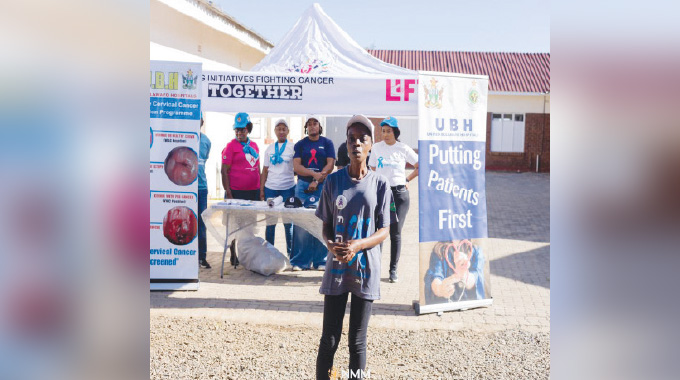
Tanaka Nkala, [email protected]
WHEN Ms Precious Mpofu was told she had cancer in her mid-30s, it felt like a death sentence.
Today, now 45, Ms Mpofu is living proof that there is life after cancer, even eight years after undergoing a mastectomy, chemotherapy and radiotherapy.
Her story is one of resilience, family support, systemic challenges and a determination to help others walk a journey she once feared would end her life.
Zimbabwe on Wednesday joined the rest of the world in commemorating World Cancer Day, which ran under the theme “United by Unique.” It defines the crucial role of personalised, patient-centred care in the fight against cancer.
Ms Mpofu was diagnosed with breast cancer when she was 32 years old which was far below the recommended age for routine mammography.
The diagnosis plunged her into depression, which was compounded by the painful memory of losing her mother to liver cancer years earlier.
“I had already buried my mother because of cancer hence my fear but I also had the will to live, so I told myself, ‘I will beat this’,” she says.
In 2018, Ms Mpofu underwent a mastectomy, which was a lifesaving decision she does not regret.
“I could not keep something that was going to kill me. Yes, losing a breast was painful but losing my life would have been far worse,” she said.
Her treatment journey exposed her to a harsh reality that many cancer patients in Bulawayo face due to constant breakdown of radiotherapy machines.
Ms Mpofu had to travel to Harare, the only place in the country that had operational machines for radiation treatment, a move that brought emotional and financial strain.
“It is very painful to be sick and away from home at the same time. You are learning new people, new places, a new language, when all you want is your family,” she said
Her sister Ms Linda Mbiba recalls the diagnosis vividly throughout the whole journey.
“When we were told she had cancer, it was terrifying because our mother had died of cancer in 2012, so it felt like history repeating itself,” she said.
Ms Mbiba said the family chose hope as their coping mechanism even when finances were strained and the physical effects of chemotherapy became visible.
“Her complexion changed, her strength faded but we would laugh about it, pray and we stayed together,” she says.
“I had to be strong for her and the pain was sometimes worsened by society’s reaction.”
She described how people from her neighbourhood would ask her why she did not tell them that her sister was late when she was alive, sentiments that pained her.
Today, Ms Mpofu speaks openly about her journey, challenging the stigma and myths surrounding cancer in African communities.
“Some people think cancer is witchcraft which if you speak about it, someone will make you sick again. Cancer is simply genes gone wrong and it can be treated,” she said.
Her survival transformed her into an advocate for early detection which she believes saved her life.
“Early detection saves lives and when cancer goes deep, doctors can’t remove the breast or the cervix. Treatment becomes harder and more expensive,” said Ms Mpofu.
United Bulawayo Hospitals (UBH) MaternityMatron, Mrs Nobuhle Thaka urged women to know their bodies and seek medical attention if there are any changes.
“Cancer does not only affect the breast, there is blood cancer, lung cancer and cervical cancer. If cancer is detected early, survival rates are high but if its late, we can only manage pain and wait for God’s time,” she said.
Ms Mbiba said supporting her sister inspired her to create a cancer patients support network.
“We formed a WhatsApp group called Cancer Fighters and Supporters which now has over 170 members from Bulawayo, Harare, Gweru and beyond,” she said.
The group connects survivors and caregivers so that they share information on cancers.
Cancer has been identified as one of the top diseases that is causing premature deaths around the world.
Mr Lovemore Makurirofa, the Cancer Association of Zimbabwe (CAZ) Information, Research and Evaluation officer, said treatment of cancer differs from person to person.
“The uniqueness of how cancer affects individuals calls for an adaptive and individualised approach to treatment and care,” he said.
Mr Makurirofa said this year’s World Cancer Day commemorations theme calls upon everyone to act in the prevention and control of cancer by focusing on reducing various inequalities in cancer care and promoting person centred care.”
He said the theme reminds communities of the importance of working together to promote “Health Equity” in cancer care.
“Access to cancer information and appropriate management services remains limited globally. The theme urges individuals, corporations, civil society and governments to unite in reducing the global cancer burden through improved, comprehensive cancer care for all,” said Mr Makurirofa.
He said it stresses the need to tailor cancer interventions to address the unique needs of individuals.
“This call for personalised cancer interventions aligns perfectly with Zimbabwe’s national drive towards achieving universal health coverage (UHC) by 2030,” said Mr Makurirofa.


 Online Reporter