Vusumuzi Dube
THE armed struggle for Zimbabwe’s Independence was launched in the 1960s, and by then, many were in doubt that it would achieve its objectives of bringing freedom to the black majority as there was a feeling that Rhodesians were invincible on the battle field.
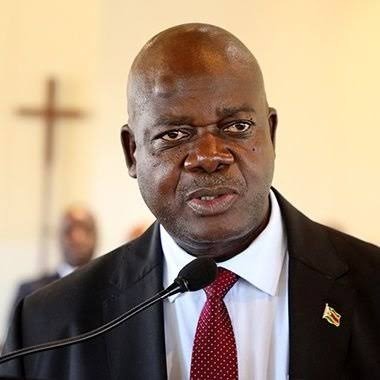
However, some youngsters were prepared to take the “bull” by its horns and one of the brave ones to do so is former Cabinet Minister and current Zanu-PF Secretary for Administration Dr Obert Moses Mpofu who, still being a teenager, found himself being entrusted with relaying critical information between Zapu officials across the Zambezi River in Zambia and those working from home.
Later on, Dr Mpofu whose pseudo name was Cde Mzandeki was forced to flee the then Rhodesia for Zambia with the racist Ian Smith regime on his trail and at that time he was only 17.

He was to become part of the early guerrillas as he was sent to the famous Morogoro, a ZPRA training camp which became a conveyor belt, churning out hard trained cadres, who besides taking head-on the Rhodesians in the battlefield, laid the foundation for the intensification of the armed struggle in the 70s that culminated in the ceasefire in 1979.
In fact, a then young Dr Mpofu trained ahead of the likes of Cdes Abel Mazinyane, Jevan Maseko, Masala Sibanda, Stanley Gagisa and Eddie Sigoge. On Friday last week our Assistant Editor Mkhululi Sibanda (MS) had a conversation with Dr Mpofu on his exploits during the armed struggle.

He spoke about his early political activities while still at school as he was growing up in Jambezi, in Hwange District, how he fled the country to join the armed struggle in Zambia and eventually receiving military training at Morogoro in Tanzania where he was in the same group as now National Heroes General Solomon Mujuru (Rex Nhongo) and Cephas Cele as well as the last ZPRA Political Commissar Colonel (Retired) Richard “Gedi” Dube.
Dr Mpofu also touched on the Zapu internal problems pitting Jason Ziyaphapha Moyo/George Silundika on one hand and James Chikerema/George Nyandoro on the other. He also spoke about some guerrillas within Zapu, an educated elite later to be known as the March 11 Movement whose unbridled ambition saw them trying to grab power from the party leadership but were thwarted with the help of the Zambian security forces.
After Independence, Dr Mpofu was one of the first former fighters who initiated the formation of the Zimbabwe National Liberation War Veterans Association (ZNWLA). He chaired the association’s Bulawayo Province chapter. Below are excerpts of the interview. Read on….
MS: Dr Mpofu, you are a well-known political figure in the country who needs little introduction but for the sake of this interview I will be glad if we can start by you giving us your background. Where and when were you born?
Dr Mpofu: I was born at a place called Sidobe (Chidobe) in Hwange District and at that time it was referred to as the new area as it was a settlement for people who had been relocated from other parts of the country, from areas such as the Midlands, Tsholotsho and some parts of Matabeleland South. It was when the whites were removing people from the land which was suitable for farming. So, I was born there on the 12th of October 1951.
Perhaps as you might know the area was infested with tsetse flies, wild animals and had high cases of malaria.

MS: Where was your family relocated from?
Dr Mpofu: My family was relocated from a place called Mayindi Bulala in the Shangani area near Nkayi.
I was born in a family of eight children; three sisters and five brothers. I being the fifth. I went to school at Chidobe Primary School for Sub-A and Sub-B. That was in 1958 and I was seven years old, but my father had passed on in 1957. My father was called Mswelangubo while my mother was Josephine Maud Dube. Later on, we relocated from Chidobe to a place called Makonjongweni.
It was at BH56, that is borehole 56, that’s where I continued with my schooling. That is where I did Standard One at Chewungwe Primary School, then Standard Two and Three at Jabula Primary School.
For Standard 4 to 6 I attended Sacred Heart Mission, a Catholic Mission School, it still is. While I was in Standard Five, we started noticing some political activities in the area because I was one of the few, you know fairly educated at that time and together with some other youths, it was at a time that we started reading newspapers, publications like Moto Magazine which was published in Gweru in the Midlands.
We got very interested in politics and there was also the nationalism talk eyaboJoshua Nkomo. The teachers were very active in conveying some of the political messages to us. I remember some of the teachers, Joseph Mpande who was a local from Jambezi, Judea Ncube and laboSikuka. There were also Catholic priests, the fathers, Father Cunwell and Father Renato. These were Spanish nationals running that school. Because of their political consciousness and contacts which I was not aware of at the time they sent me to Zambia.
MS: You were being sent to do what?
Dr Mpofu: During the holidays they would give me letters, travel documents to make contacts with the guerrillas and nationalists based there. In other words, I was a courier for sensitive information, which on its own was risky and dangerous.
I delivered some messages in Zambia and also collected some propaganda material from Zambia. The people that I was dealing with then that was in 1965, 66 and 67 were at the Lusaka office and they included cadres such as Cde Luke Mhlanga who died not long ago and Phephezela Ncube.
I would go there and spend some time with them. There was Zimbabwe Times, a Zapu newsletter printed in Tanzania, whose contributors were comrades like now National Hero and former journalist Cde Saul Gwakuba Ndlovu.
I would actually come back with those papers and at the same time there was some activity as South Africa had sent its reserve forces to patrol the border area. We used to spy on those people during the holidays as they would engage us to polish their boots.
They had camps and we would go there under the guise of seeking piece jobs but our intention was to try and find out what was happening there. We wanted to find out who they were and how many they were. We would then relay this information of the set up to Zambia.

We would spend the day working in their camps and the next day we would be in Zambia to relay the information. Then in 1966 I finished Standard Six and it was the time when preparations for the Wankie (Hwange Battles), a joint operation between Zapu and ANC’s Umkhonto WeSizwe were in motion. My family was heavily involved and as one of the alert boys I became a target of the system.
MS: What was really happening?
Dr Mpofu: At that time reconnaissance units were being deployed from Zambia to assess the situation.
The guys across in Livingstone, Zambia, oNcube said the boys who were involved were being targeted by the system. As one of the boys who had been working underground for the nationalist movement, I was also a target. Information had leaked to the system that the area was now supporting the liberation movement.
Some guerrilla units were coming to our area, talking to our parents and to us the bigger boys. So, the guys in Livingstone oNcube said your lives are now in danger and they advised that we skip the border to Zambia, we were told to leave.
MS: What were your roles in the preparation for the famous Wankie battles?
Dr Mpofu: The operation started in 1967 and as for us we were showing the reconnaissance units the areas, the terrain. We were giving them the positions of the enemy up to Hwange, then in Hwange there were others who would guide the comrades as to where the camps were, I was very, very active there.
So, after the operations they said we were in danger we should leave, but leaving now became a problem as they could not take us up the river as we were deemed very young.
“Then they approached the Catholics to give us some documents, especially fathers Cunwell and Renato although we had just left school. We got those documents and went to Victoria Falls to try and cross.

What used to happen was that when the train from Bulawayo arrived in Victoria Falls en-route to Lusaka all the guards would disembark and would be replaced by those from Zambia after crossing to Livingstone. Sasichapha isitimela singela maguards, amaguard wonke ayesehlela eFalls then besesichaphela ngale ePalm Groove. Across the river the train would stop, then Zambian guys would jump in.
So, we were studying the movement for three days, we were two, myself and Albert Sibanda as we had been told to split into small groups to avoid detection by the authorities.
“So, on the day we decided to cross we observed the movement of the guards and as they were moving out of the train, we jumped in. We were aware that our documents were fake so we could be arrested so we decided to use that tactic anywhere. Sadlula sathi sesise Zambia ngale sebengena amaguard sesisehla basibopha ama Zambians. They asked us what we were trying to do and when we showed them our documents they said they were fake as they were not even stamped on the Rhodesian side.
So, they took us to the border control on the Zambian side. They were not very harsh with us. We then decided to be open and told them that we were visiting our contacts and gave them the names of oMhlanga labo Ncube. At the end of the day, we had our way as the Zambians handed us over to our contacts. That is how I left the country to join the armed struggle.
MS: What was the next move after arriving in Zambia?
Dr Mpofu: Coincidentally, my brother was working in Livingstone and Zapu officials felt we could not be taken for training because we were still young. So, they said why don’t you go to your brother and wait a bit. I therefore stayed with my brother for six months just across in Livingstone.
Then it happened that now Colonel Tshinga Dube who was already in the struggle came and as you know Col Dube and I come from the same area in Jambezi. He is the one I convinced that I should be allowed to go for military training, I told him that I felt old enough. At first Tshinga said “mfana usasemncane”, then I said look I want to go and train.
I had that burning desire to fight the enemy because I had seen what was happening at home, the amount of torment and torture that was perpetrated against our people. So uTshinga said “okay you should go for training,” I remember babuya bazosithatha ngama trucks sesisiya ema camps. I had convinced my brother also who was saying I could go the following year. We were then sent to Luthuli Camp which jointly housed Zapu and ANC cadres.
To be continued next week with Dr Mpofu talking about his training at Morogoro, deployment and the Zapu internal problems


 Online Reporter