


 Sundaymail Editor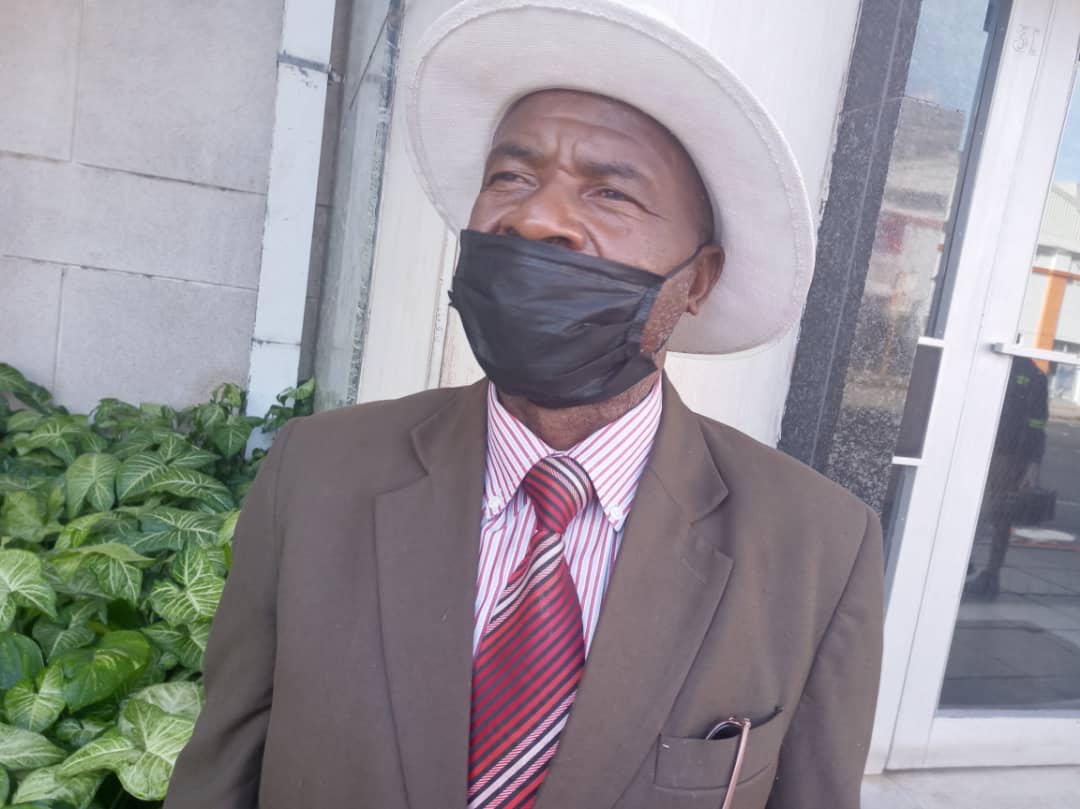
THE Second Chimurenga, also known as the Rhodesian Bush War, was precipitated by the unfair treatment that the black majority was subjected to by the white Rhodesian government. Children were not spared from the unfair treatment and humiliation by the colonial government.
As a result of the ill-treatment, hundreds of thousands of children left their homes, abandoned their studies and crossed into neighbouring countries where they either became refugees or guerilla fighters.
To help us understand how black school children were treated before and during the liberation war, we had a lengthy discussion with MR GEDION ARON MUJATI (GM), who, as a Standard 6 pupil at Nyanyadzi Primary School in Chimanimani, suffered a lot at the hands of a Rhodesian system which was determined to nip any early signs of black nationalism in the bud.
Read on as Mr Mujati, narrates to our Senior Reporter TENDAI CHARA (TC) about the horrors that he was subjected to by the Rhodesian police when he was a mere 15-year-old.
********
TC: If you can introduce yourself to our readers.
GM: My name is Gedion Hapureni Aaron Mujati. I was born in Dirikwe Village under Chief Muusha in the Chimanimani district, Manicaland, in 1949. My parents were peasant farmers. My late father repaired bicycles while my mother brewed and sold traditional beer for them to raise money for our school fees.
I attended Nyanyadzi Primary School and Mutambara High schools. In 1964, I was in Standard 6 at Nyanyadzi and my class teacher was Mr Mudhengwe, with Mr Benjamin Mutambara being the headmaster.
TC: Tell us about the brush that you had with the Rhodesian authorities.
GM: Well, what happened was that unknown people put huge stones on the Chikwizi River bridge, blocking passage. During that time, the youths in our area were engaging themselves in acts of sabotage against the Rhodesians.
The youths were on a rampage, blocking roads, destroying bridges and setting government buildings on fire. The youths were protesting against the oppressive white government.
On July 11, 1964, I was in class when I was summoned to the headmaster’s office. A police vehicle was parked in the school yard. When I entered the office, I noticed that one of my close friends and uncle, Josiah Charamba, was already in the office.
As I was in the office, five other pupils joined us. A big, hairy white police officer addressed us and told us that were under arrest for conducting acts of sabotage.
We were accused of blocking the Chikwizi River Bridge. We were subsequently taken to the nearby Nyanyadzi police station.
Those that had been arrested were myself, James Rwizi, Enos Gonorenda, John Tsanangurai and the Chikati brothers, Joseph, Daniel and Douglas.
After our charges were read to us, we all denied them, insisting that we were nowhere near the bridge that night.
The situation at the camp was very tense as a white farmer had been killed by unknown people the previous day in Chimanimani. We were kicked into the cells. We were mixed with several other young people who had been severely beaten. Blood was all over the place.
Daniel Chikati, who had been taken to another office, was brought back to the cells. His face was swollen and bloodied.
When Chikati was asked by the policeman to pinpoint his accomplices in acts of sabotage, he pointed to the six of us. He lied that we were part of the group that was engaging in acts of sabotage. We were threatened and harassed.
We were told that if we agreed to the accusations, we would be spared the beatings that Chikati had been subjected to. Out of fear, we later on signed a statement in which we admitted to the crime.
TC: Why did Daniel Chikati falsely finger you?
GM: He had been severely tortured and he just admitted to the crime so that he could not be beaten further. The Rhodesian police was in the habit of coercing blacks into making false confessions.
Chikati implicated us, although we were the boys that he usually hung around with.
TC: What then happened?
GM: We were detained for three days at Nyanyadzi police station before we were then taken to Mutare Remand Prison. The conditions in the Nyanyadzi cells were horrible. We used a bucket to relieve ourselves and we were given torn blankets.
At Mutare Remand Prison, the conditions were equally bad. We spent most of our time roaming around the prison complex or playing games to kill time.
We were then taken to court where we denied any involvement in the acts of sabotage. Our case was postponed on two occasions.
The magistrate, on the third court appearance, ruled that we had been found guilty. We were sentenced to six months in jail but because of our age, the sentences were commuted to six strokes of the cane each. Only James Rwizi, who was much older than all of us, was given a custodial sentence.
TC: Tell us, how were the strokes administered?
GM: We were first stripped naked and were placed on a board. Our hands and legs were tied.
A velvet rug was spread over our buttocks and we were canned. A huge white man administered the strokes, which were very painful.
We were returned to our respective homes and by the time that we arrived home, the schools had been closed for the term.
TC: Tell us about your days in remand prison.
GM: The conditions were appalling. In the cells, we used buckets to relieve ourselves. The blankets were old and tattered and we slept on a cold floor.
The food was equally bad. Some of the prison officers, especially the black ones, were very cruel and often beat the other older prisoners while we watched.
Between court sessions, we spent most of our time playing games. We were warned that cases of sodomy were rife in prison.
The Rhodesian government used such tactics as detention to intimidate the black masses.
The government wanted to stifle opposition. Young people were particularly targeted as the white regime wanted to make sure that the youngsters would not become rebellious.
When I was at Mutambara High School, I remember the Rhodesian police often came and took pupils whom they would use as state witnesses in court cases against such local nationalists as Mr Solomon Gwitira, Luke Chatema, Nesbert Mechanic Gwinya, Mahlamvi Nkomo, Amos Rwizi and Willie Dhliwayo, among others.
Due to the false accusations, some of the nationalists were detained and restricted.
The Rhodesian government made efforts to brainwash the youth and turn them into their spies. They didn’t want us to go further with our education as they were wary of educated blacks.
During that time, the youngsters were increasingly becoming politically active. I remember we often sang songs about the Congolese politician Patrice Lumumba. After detention, I resented white rule and I was always seething with anger.
Instead of stifling the spirit of nationalism in black children, the detention and other forms of abuse by the colonial regime hardened us.
This bad treatment by the whites stimulated many youngsters to join the war of liberation. My younger brother Joshua Mujati went to war after he was harassed by the Rhodesian police.
The officer-in-charge at Nyanyadzi, a Mr Juden, was very cruel and often tortured innocent people. We also had black Rhodesian police officers who were also equally cruel. Some of the black officers would beat suspects to a pulp just to please their white superiors.
In my area, the community was not happy after we spent a month in prison for a crime that we did not commit.


 Online Reporter