Online Reporter
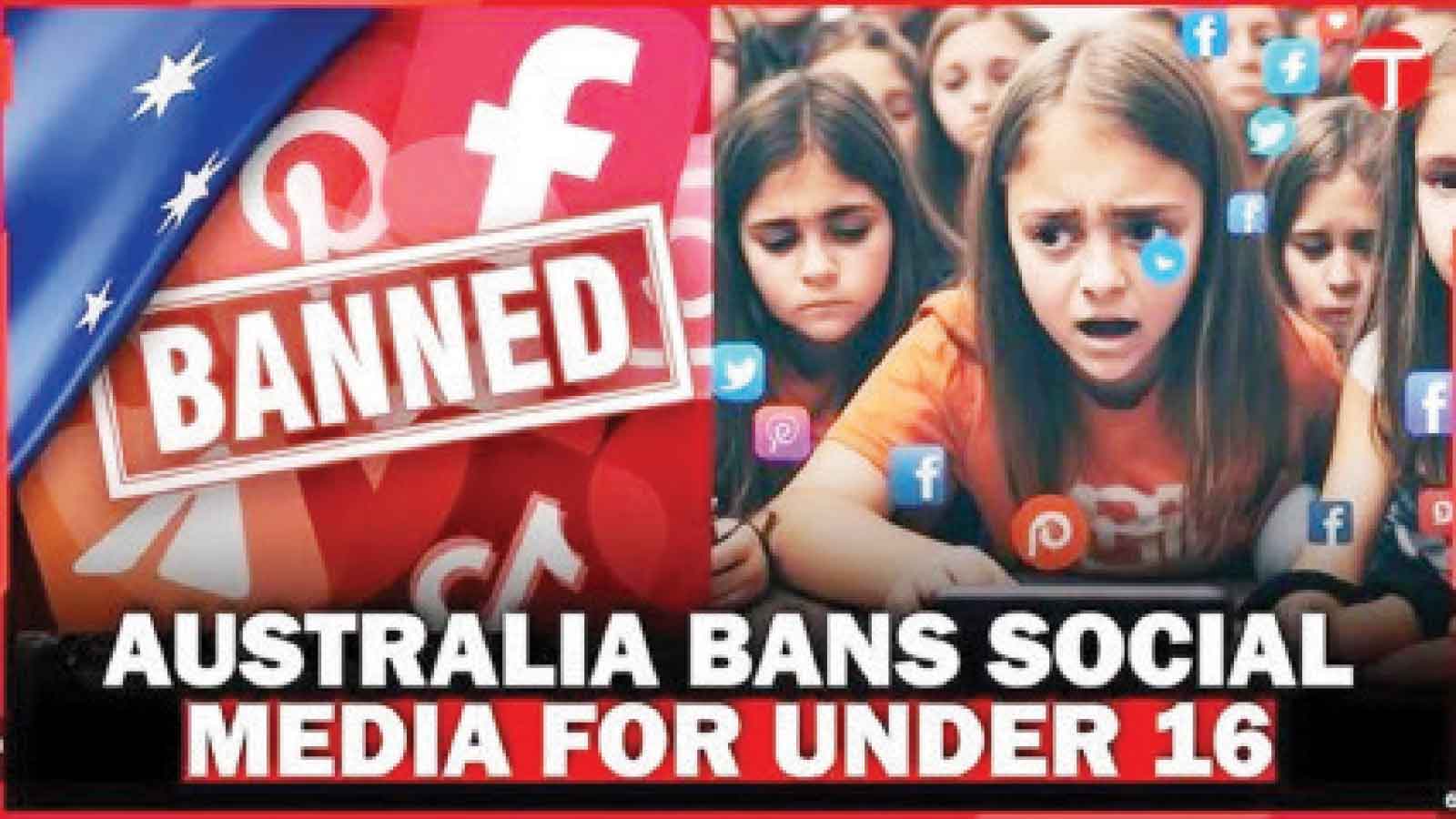
SYDNEY. – Australia became the first country in the world to ban social media for children under 16 yesterday, blocking access in a move welcomed by many parents and child advocates but criticised by major technology companies and free-speech advocates.
Ten of the largest platforms including TikTok, Alphabet’s GOOGLO.0, YouTube and Meta’s Instagram and Facebook were ordered to block children or face fines of up to US$33 million, under the new law, which is being closely watched by regulators worldwide.
Other sites such as YouTube Kids, Google Classroom and messaging apps including WhatsApp will still be available for under-16s to use.
Prime Minister Anthony Albanese called it “a proud day” for families and cast the law as proof that policymakers can curb online harms that have outpaced traditional safeguards.
“This will make an enormous difference. It is one of the biggest social and cultural changes that our nation has faced,” Albanese told a news conference yesterday.
“It’s a profound reform which will continue to reverberate around the world.”
In a video message, Albanese urged children to “start a new sport, new instrument, or read that book that has been sitting there for some time on your shelf,” ahead of Australia’s summer school break starting later this month.
The rollout caps a year of debate over whether any country could practically stop children from using platforms embedded in daily life, and begins a live test for governments worldwide frustrated that social media firms have been slow to implement harm-reduction measures.
Several countries from Denmark to New Zealand to Malaysia have signalled they may study or emulate Australia’s model, making the country a test case for how far governments can push age-gating without stifling speech or innovation.
Julie Inman Grant, the US-born eSafety Commissioner who is overseeing the ban, told Reuters on Wednesday a groundswell of American parents wanted similar measures.
“I hear from the parents and the activists and everyday people in America, ‘we wish we had an eSafety commissioner like you in America, we wish we had a government that was going to put tween and teen safety before technology profits,’” she said in an interview at her office in Sydney
Musk’s x says it will comply
Elon Musk’s X became the last of the 10 major platforms to take measures to cut off access to underage teens after publicly acknowledging yesterday that it would comply.
“It’s not our choice – it’s what the Australian law requires,” X said on its website. X automatically off boards anyone who does not meet our age requirements.”
Australia has said the initial list of covered platforms would change as new products emerge and young users migrate.
Companies have told Canberra they will deploy a mix of age inference – estimating a user’s age from their behaviour – and age estimation based on a selfie, alongside checks that could include uploaded identification documents or linked bank account details.
For social media businesses, the implementation marks a new era of structural stagnation as user numbers flat line and time spent on platforms shrinks, studies show.
Platforms say they earn little from advertising to under-16s, but warn the ban disrupts a pipeline of future users. Just before the ban took effect, 86% of Australians aged eight to 15 used social media, the government said.
Some youngsters have warned the social media ban could isolate people.
What are the Aussie teenagers saying?
The BBC has spoken to teenagers across Australia who have mixed opinions on the ban – ranging from supportive to critical.
“Banning social media will encourage teens to get off their phones and do other activities, but it is not going to solve the device addictions present among young people… I think that they are cemented into the future no matter what actions governments take,” – Charlotte, 15
“Instead of outright banning (these platforms) you should restrict some of the content and features on these apps,” – Piper, 14
“Social media is a dangerous place and many risks come with the apps especially for younger kids. I do, however, still believe that (the age limit for the ban) should be lowered to at least 14 and 9 months. In Australia that is the legal age to get a job, so what do you mean I can get a job but can’t watch a YouTube video?” – Ashlee, 13
“Things pop up so fast on social media, and you end up watching them even if you don’t want to. You see things that make you feel sad so not seeing them would be better for our own mental health,” – Indiana, 14
“The government is taking the easy route to find a solution for these problems… there is lots of harmful content across the internet, but this is what the government should be focusing on,” – Tayla, 14
“Australian Government has once again forgotten about those in remote areas, those who are bullied, or in unsafe homes who’s only escape or safe space is social media. They’ve forgotten about those without a parental figure who rely on the platforms to learn basic skills, whether its makeup or kicking a footy,” – Zoe, 15
Spencer and Aahil are both 13 years old and have been friends since primary school. Both are in year 7 now, but at different high schools, so they rely on Snapchat and Discord to keep in touch – messaging every few days.
The BBC met up with the pair at a cafe after they finished school and both were able to log into Snapchat without a hitch, but admitted their accounts didn’t have their real ages.
They say they also use YouTube regularly – to watch reviews or gaming videos – with Spencer using TikTok. Aahil says he feels he is addicted to social media, as he enjoys the dopamine hit he says he receives. But that with the ban, he adds, he might play more video games, read manga or go outside.
Both boys say the minimum age to access social media should be 14, rather than 16. And Roblox, a popular gaming platform for young people, should have stricter guidelines, both say.
Snapchat enlists singapore firm
Snapchat, one of the most popular social media apps among Australia’s teens, has enlisted the software of a Singapore-based firm called k-ID to keep kids off its platform.
The company provides age checks for digital services like gaming and social media platforms. On Snapchat, users will see a prompt to prove their age, through several methods, including taking a selfie for the software to estimate their age. But some users say they have found ways to bypass these app checks, such as by using images of older people.
The company’s chief corporate affairs officer Luc Delaney tells the BBC that verification is a “constant battle” for firms in the business.
K-ID’s software will be constantly improved over time as new examples of how people work around the system surface, he says.
“But we don’t advise people to try to circumvent these tools as they might be banned from the platform.” – ReutersBC