admin
admin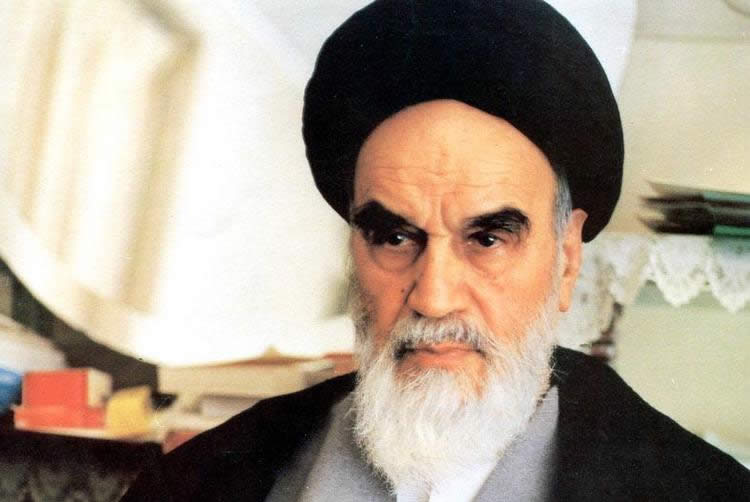
Abdullah Makwinja
Remembering those who have influenced us in the past and reflecting upon the departed loved ones can be a grounding experience and remind us where we came from.
It can be encouraging and empowering to reconnect with our roots and recall the lessons taught through the lives of those important to us.
On June 4, millions of Muslims and the oppressed all over the marked the 33rd anniversary of the demise of Imam Khomeini on June 4, 1989.
The Imam was undoubtedly the most important figure in recent world history, the man whose thought and leadership effectively gave birth to what we now know as the Islamic Republic of Iran and the global Islamic revolution.
Imam Khomeini took a global view, focusing on issues common to all the Ummah and the oppressed throughout the world, even though he came from, and worked largely within, a particular part of the world. He believed that politics with all its intricacies can and should be ethical.
It is because ethics from his outlook is not confined to religious issues only but rather should encompass all the facets of human life.
It is deemed as the bedrock of both individual and collective life as well as the fountain head of felicity in both the worlds.
Ethics is not a marginal issue as it is the basis for the movement and progress of society, encompassing all social manifestations. As such, politics cannot be considered as being detached from it.
By all standards available, Ayatollah Khomeini was a giant of the 20th century.
The Iranian revolution of 1979, which unfolded so eclectically under his leadership, quite literally shook the world.
As all giants of history, Khomeini left an indelible imprint on the consciousness of the world people, a stock of shared memories that is constituted by nostalgia, reverence, utopia and loyalty on the one side and exile, tragedy, anger and rejection on the other.
The 33rd anniversary of Imam Khomeini’s demise which is being observed a month after the International mother’s day, seems, as well, an appropriate time to reflect, though briefly, at some of the more salient aspects of his thoughts and ideals on the female gender.
Imam Khomeini worked out such values with respect to women, as he could motivate humanity to respect and honour them. An extensive look at history shows that various social communities imposed a lot of cruelty and injustice on women, in one way or the other.
In the pure Islamic revolutionary school of Imam Khomeini which he represented, he preached that a woman is a divine being who is imbued with special and distinguished status, “the role of the women in society is more important than that of the men, for in addition to being active members of society themselves in all fields, the ladies also raise active members.
A mother’s service to the community is greater than that of a teacher, indeed of anyone else”.
Imam Khomeini believed and put into practice these lofty teachings and used to pronounce that, in the Islamic system, women will have the same rights as men: the right to education, the right to work, the right to own property, the right to vote, the right to stand for election.
The Imam taught that Islam obligates both men and women to acquire education.
Education in Islam is not divided into sacred and secular, and the implication of these sayings of the Prophet, in modern terms, is that every child, boy or girl, man or woman, should pursue his or her education as far as is possible.
He also says: “The rise and fall of a society depends on the rise and fall of women of that society.” The Prophet states that, “The parent, if he educates his daughter well, will enter Paradise”. Yet another tradition states that, “A mother is a school. If she is educated, then a whole people are educated”.
It is through such values that a revolution can be brought and the female gender can receive their fair share of dignity, respect and rights.
Imam on several occasions was quoted to have said, “Islam holds you, the women, in high esteem. The favours that Islam confers upon the women are more than it does upon men. The status of women is lofty, supreme and towering.
Sincerely, the Imam revived the Islamic gender equality and women’s rights in every sphere of their life and guaranteed rights of men and women in an equal degree and without any discrimination between them.



 Online Reporter