

 admin
adminCambodian capital of Phnom Penh. Convened three decades after the 1975-79 Khmer Rouge reign of terror and mass murder, the UN-orchestrated proceedings are designed to bury the underlying responsibility for the Cambodian catastrophe – above all, that of United States imperialism.
Washington laid waste to Cambodia during the Vietnam War, in which three million Vietnamese were killed. Standing trial before the Extraordinary Chambers in the Courts of Cambodia (ECCC) are four Khmer Rouge leaders charged with genocide, war crimes and crimes against humanity. In the absence of Pol Pot, the top Khmer Rouge leader who died in 1998, the prosecution is intended to make them exclusively culpable for one of the most chilling chapters of the 20th century.
In the first phase of the trial, they are charged with the forced movement of people from urban areas to the countryside during which an estimated one million Cambodians were executed and a similar number died from starvation, disease and overwork.
To this day, Pol Pot’s regime is routinely labelled by the mass media as “communist.” There could be no more grotesque distortion. The Khmer Rouge was a product of the suppression of Leon Trotsky’s Left Opposition in the late 1920s and the Stalinist degeneration of the Soviet Union. Pol Pot and his followers emerged out of the Khmer People’s Revolutionary Party, which pursued Stalinism’s reactionary nationalist program of “socialism in one country.”
Faced with police repression under the post-colonial government of Prince Norodom Sihanouk, the party leaders fled into the countryside in 1963, turned to backward layers of the peasantry, and adopted a perspective of creating a primitive peasant-based society in which money, culture and other facets of urban life would be eliminated. Such a movement could seize power in 1975 only as a result of the barbarism that the US military unleashed on Cambodia’s people from the late 1960s as part of the Vietnam War. Between 1969 and 1973, US forces dropped some 532 000 tons of bombs on Cambodia – more than three times the tonnage dropped on Japan throughout World War II.
Secretly launched by US President Richard Nixon and National Security Adviser Henry Kissinger without congressional approval, it was the most intensive saturation bombing in world history. The death toll is estimated as high as 600 000. In 1970, the White House and the CIA organised a coup that ousted Sihanouk, who had sought to maintain neutrality and manoeuvre between Washington and Hanoi, and installed a military dictatorship headed by General Lon Nol. A month later, Nixon announced the invasion of Cambodia by 20 000 US and Vietnamese troops.
Cambodian society disintegrated under the impact of the US bombing, compounded by the brutal civil war waged by Lon Nol’s junta. Two million of the country’s seven million people were rendered homeless, rice production plunged by more than 80 percent, and economic life was shattered. These were the conditions in which Pol Pot’s forces – less than 5,000 men in 1970 – grew to an army of about 70 000. They captured Phnom Penh in April 1975 when Lon Nol’s US puppet regime finally disintegrated, just before the ultimate defeat of the US-backed dictatorship in South Vietnam.
Faced with a country in ruins, and unwilling to feed the cities, the Khmer Rouge ordered the evacuation of the entire urban population to undertake virtual slave labour in the countryside. This was a profoundly anti-working class regime. As the “killing fields” terror unfolded, Washington shifted its support behind the Khmer Rouge as a means of combating Vietnamese influence. Attacks on ethnic Vietnamese in Cambodia triggered a Vietnamese invasion in December 1978, which installed a breakaway Khmer Rouge faction commanded by Hun Sen, who remains the prime minister of Cambodia. In response, US President Jimmy Carter’s administration tacitly backed a massive Chinese military assault on Vietnam and worked with China to supply Pol Pot’s insurgents with arms.


Online Reporter
- Herald
- September 22, 2026
- 22 views
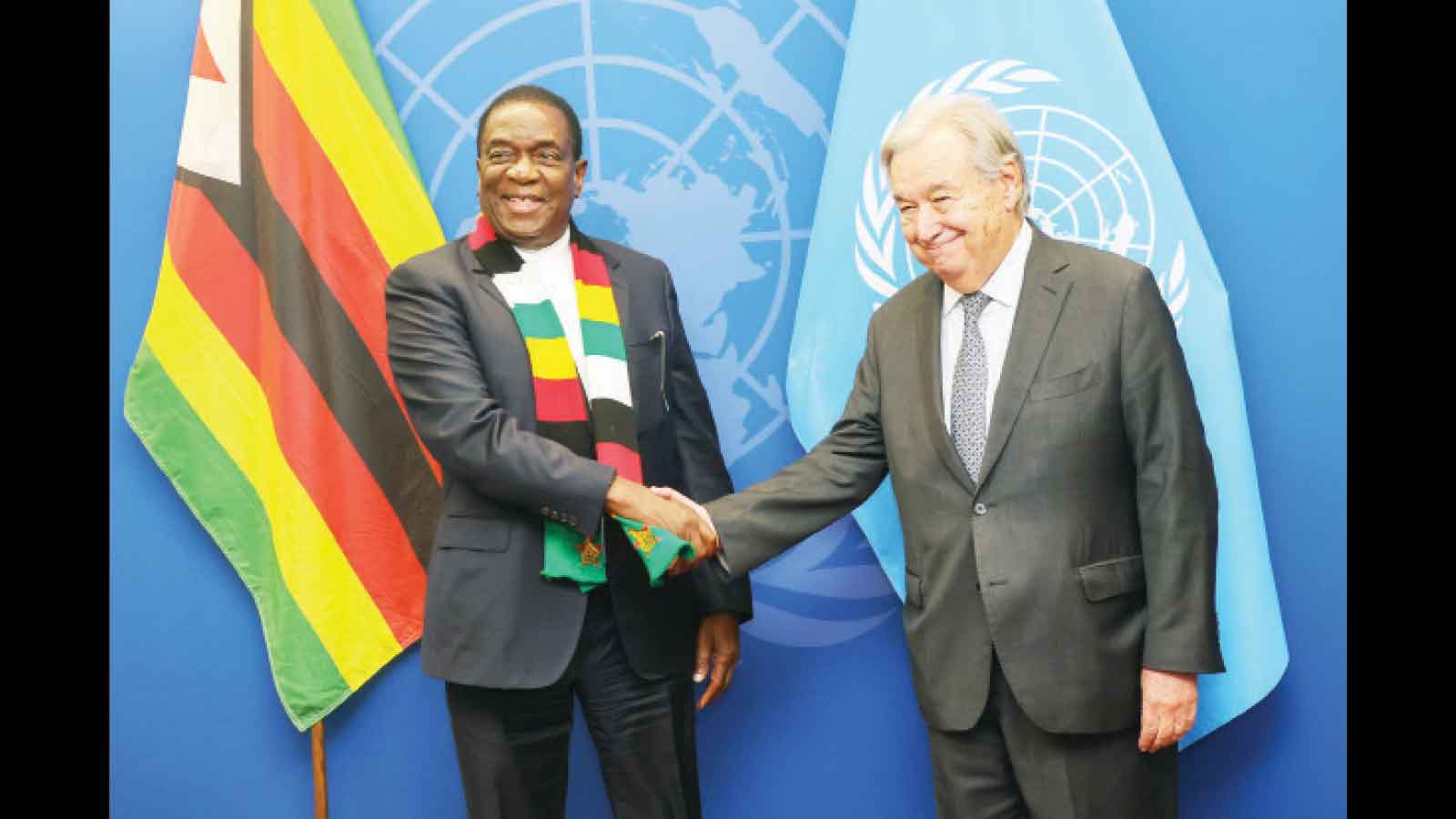
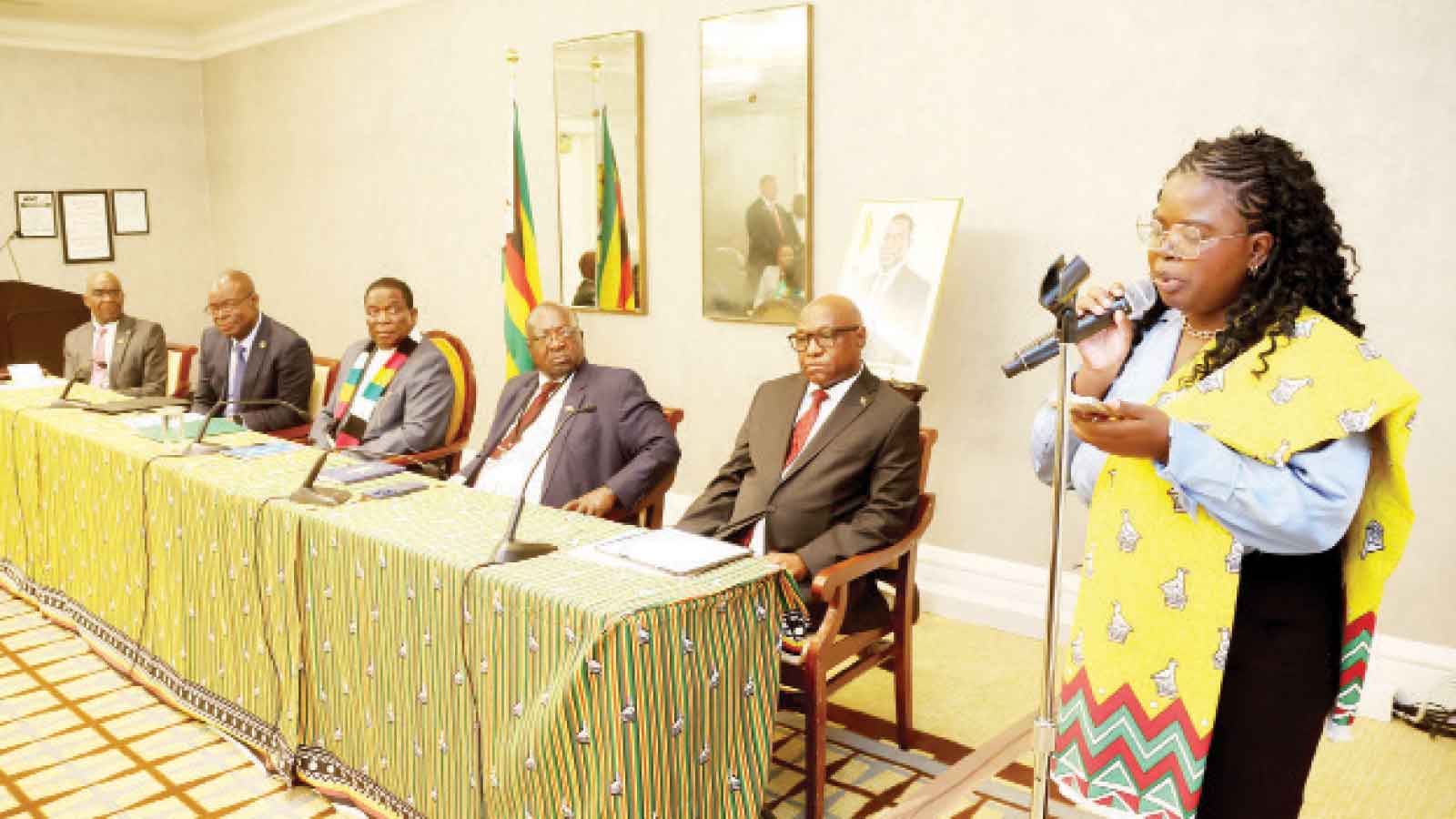
Harness Diaspora capital for Zim good: President . . . holds massive interface in New York
Wallace Ruzvidzo in New York, USA BORDERS must never become barriers to the flow of global knowledge, expertise and best practices back to Zimbabwe, President Mnangagwa has said, urging the…
 dyton mupawaenda