

 admin
adminProtocol. “A simple lack of trust” was another set of terms, this time used to describe the relationship between Europe and David Cameron after Prime Minister Cameron led Britain in the European Union Treaty veto. The two issues, Climate Change and Euro zone Debt Crisis, are current and popular topics in socio-economic discussions. Do the above suggestions that there is absence of trust in these two important issues; show the importance of trust in governance?
Sifonis and Goldberg (1996), states that trust is the fabric that binds people together, creating an orderly, civilised society from chaos and anarchy. Governance works through relationships. How well these relationships facilitate the ease in working towards desired goals, also provide the basis for measuring governance systems. Issues involved in governance are far reaching and beyond rules and regulations. Governance involves control, accountability, responsibility, and authority among others. These subjects are not easily understood or defined. Yet, they also link relationships within organisations to changes in directions of organisations.
Despite this importance, we find ourselves in a world that seems to be saying, trust no one, and not even oneself, as Joseph Stalin believed. Many prefer to trust no one for fear of betrayal. Organisational cultures are now filled with this fear of betrayal. Mistrust has become an obsession. For instance, it has become a culture, to ambush one another with meetings. Meeting no longer facilitating the meeting of minds, but resemble war zones. People attend meetings to defend themselves or to attack others. People are not given ample time anymore to prepare for meetings, even important ones.
When there is no trust in an organisation, each component of the system protects its own immediate interests to the detriment of the entire system, as well as the component’s own long-term loss. In the above example, decisions made in meetings, show very little common vision. Instead, to the detriment of the entire organisation, minutes are intended for defence in case there is litigation. Is there sufficient understanding on what trust is about and what it entails?
Trust is about having faith, hope, confidence or dependence in another person or a situation. It is a positive state of being which causes one to be sure about someone or something. It involves being able to predict what other people will do and what situations will occur. There are two parties to trust, one is a trustor and the other is the trustee. The trustor chooses to rely on the actions of the trustee for something now with an expectation that it will be repaid, possibly in some indeterminate way at some unspecified time in the future. This dimension of trust, exposes vulnerability as the trustor, abandons control over the actions performed by the trustee. Risk and uncertainty are often those aspects of trust which bring about fear rather than faith.
As the English proverb says, it is an equal failing to trust everybody, and to trust nobody. Trust is fleeting it weakens and strengthens, based on circumstances, the environment, motivation, finances, morals, politics, pride, hierarchy within an organisation, friendships, enemies, etc. The fact is that, for as long as relationships last, some degree of trust or distrust will also be there. The real matter is whom do you trust?
Risk and uncertainty mean that trust requires a defensive game too. It requires a balance of whom or what to trust or not to trust. This comes through regular exercises, with lots of failures and successes, which result in either having very good relationships or very good lessons. Hence the saying that it takes years to build, but trust can suffer serious damage in just a moment. Breach of trust, like a crack in a mirror, remains a reminder to take caution. This crack does not have to be permanent, depending on one’s ability to trust themselves, ,even after making series of mistakes.
Excessive caution in organisations is what makes control, accountability, responsibility, and authority difficult to execute in governance. When one operates in fear and does not trust other components in the organisation, it means that they have to remain in control of all facets of the system. When leadership behaves this way, it clogs the system, and then virtues such as transparency and accountability get lost along the way.
In the relationship between Europe and David Cameron, concerning the European Union Treaty, we see this aspect of lack of trust. The new treaty is reported as designed to place the “fiscal compact” for the Eurozone on a legally binding basis.Cameron does not trust the British establishment and interests to be placed under the control of Europe, particularly the City of London, which he sought to protect in his decision to veto. Reports indicate that by the same token, some sections of the British have as a result lost confidence in Cameron, especially coalition partners, the Liberal Democrats.
This crisis of confidence is what weighs down good governance. The longer it takes to restore this confidence, the more damage is done to governance. For then, laws and regulations will be changed to back up leadership actions of distrust. Like in any crisis, it is the poor who are hit most. We see the same pattern of protecting one’s own immediate interests to its own long-term detriment and to the disadvantage of the entire system, in the case of Canada, pulling out of the Kyoto. According to reports, Peter Kent, Minister of the Environment, stated that the Kyoto Protocol required Canada to pay US$14 billion to buy carbon credits abroad to compensate for failure to meet its Kyoto emission targets. Reports suggest that this was one of reasons Canada pulled out of Kyoto.
The country itself cited unfair practices particularly regarding emerging China, which insists, that as a developing country China should be exempt from binding obligation. However, it is believed that for Canada there would have been alternatives to withdrawing completely from Kyoto. If it had not withdrawn, its obligation to buy carbon credits payment could have cost much, much less than US$14 billion. The long and short of it is that trust got lost along the way. These two case studies of Europe/Britain relationship and Canada/Kyoto Protocol relationship, although they focus on economic governance and environmental governance, respectively, the principle is the same that trust is the foundation of every relationship. Thus in any organisation, whether at corporate levels, in civic society private sector or public sector, trust remains a necessary ingredient, in enhancing the quality of governance. .
The high prevalence of this crisis of trust, I believe is a pointer towards reasons why global governance systems are in weak. Creating models of trust is one of way of addressing this challenge. A close counterpart of trust is integrity. In order to have strong relationship and trust, there must be a culture of honesty. Old fashioned truth, is what will build trust and mend governance systems.
Laws and regulations founded on dishonesty will always be challenged. Leadership is responsible in ensuring that integrity and trust become ingrained in the societal culture of an organisation or nation. As well as making it a consistent, clear pattern, repeated even in most remote parts of the design, much as the pattern of a single maize grain is replicated on a maize cob and the entire maize field. It is only when trust becomes so completely woven into the fabric of a society, that true and sustainable good governance can take shape.
Objectives of a good and sustainable governance system must be applied uniformly across the board. Constant changes in laws, and goal posts, really confuse stakeholders, and at the end of the day, it leaves only the leadership and legal personnel, knowledgeable about rights and obligations in a governance system. Laws are frameworks, and when a framework is altered frequently, the body structure alters too, to the extent of losing its identity. People become confused and skeptical. Every leadership must make it its primary responsibility to take care and ensure that trust is given necessary time to be rooted in an organisation and society.


Online Reporter
- Herald
- September 22, 2026
- 23 views
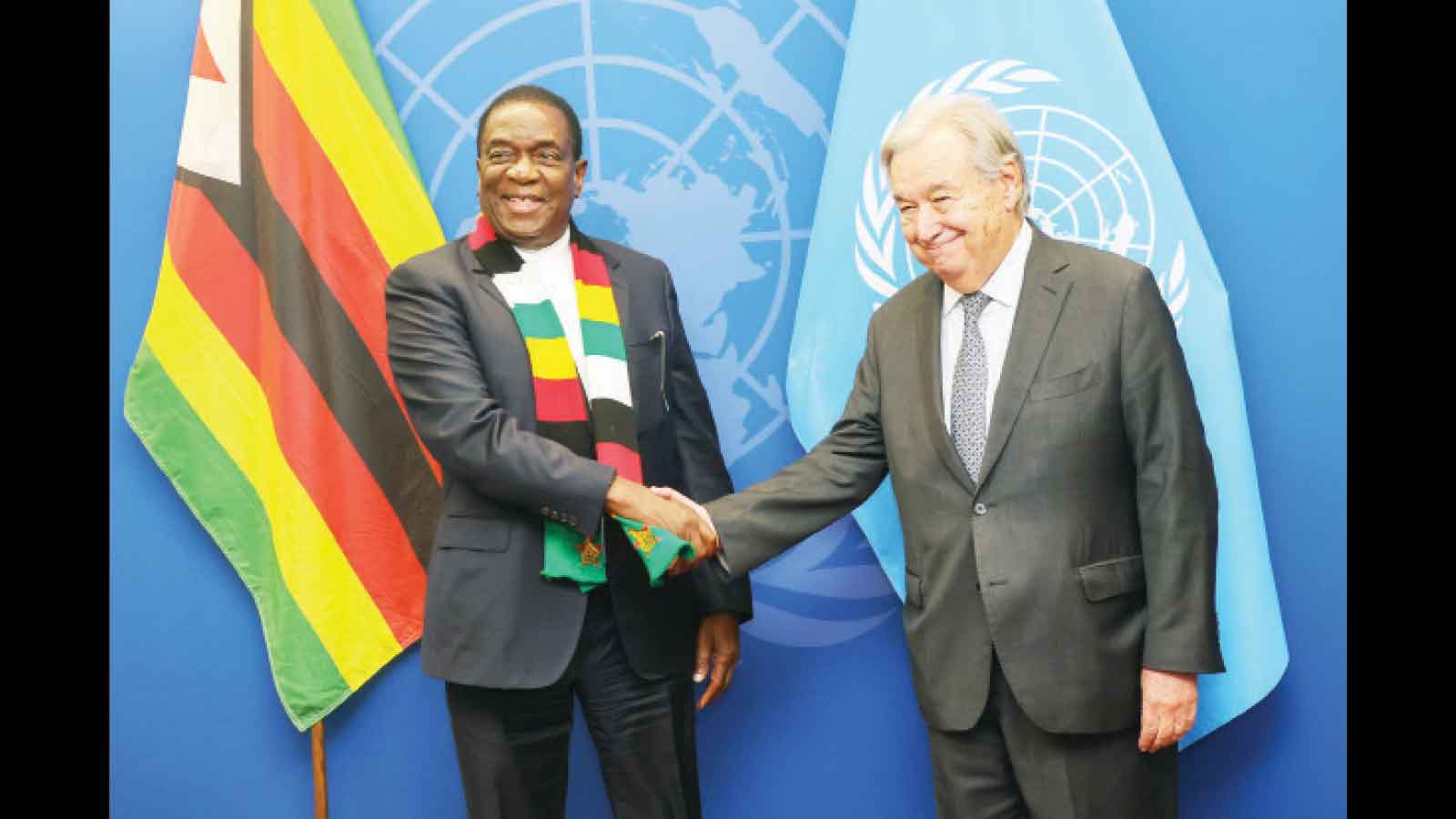
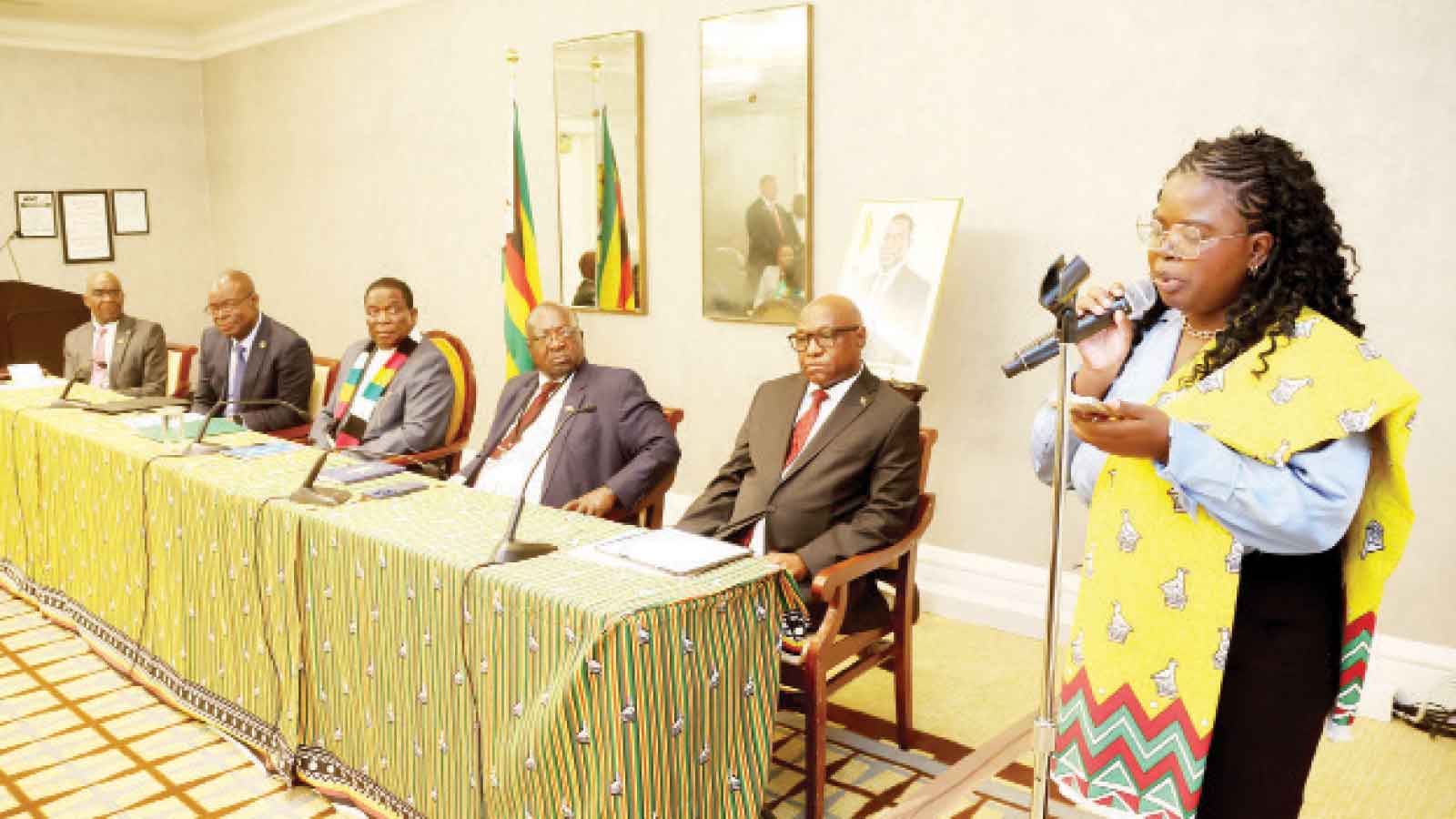
Harness Diaspora capital for Zim good: President . . . holds massive interface in New York
Wallace Ruzvidzo in New York, USA BORDERS must never become barriers to the flow of global knowledge, expertise and best practices back to Zimbabwe, President Mnangagwa has said, urging the…
 dyton mupawaenda