Online Reporter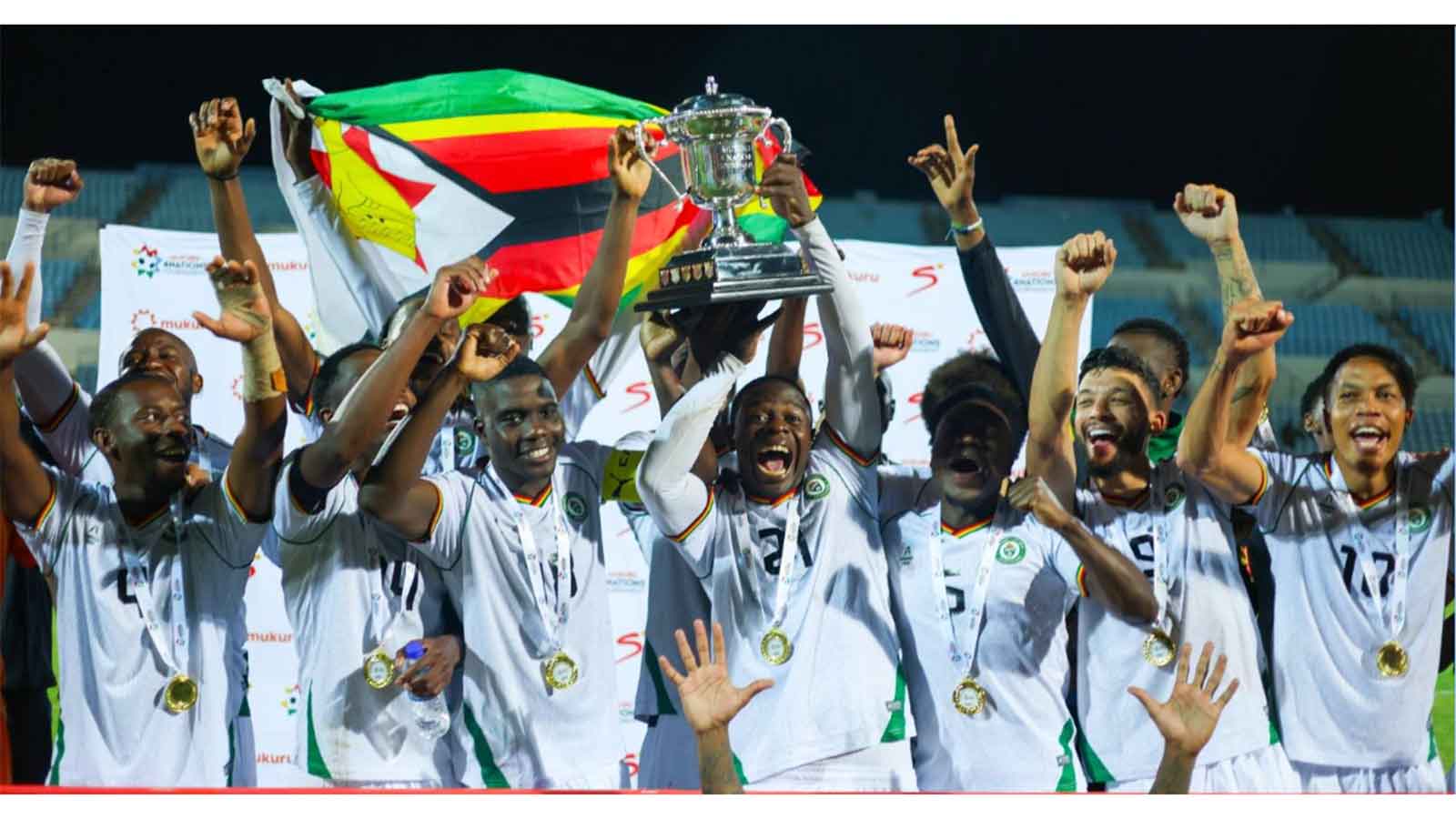
Inside ZIFA
Nqobile Magwizi
A TROPHY always matters. But in football, what often matters just as much is what a team reveals on the way to winning it.
Zimbabwe returned from Francistown with the Mukuru Four Nations title after a 3-0 win over Botswana and a 1-0 victory against Zambia.
On the face of it, that is neat, efficient work.
Look a little deeper, though, and it begins to feel more significant than that.
This was not just about two results and a medal photo. It was about a team beginning to show direction, belief and the first real signs of forward movement.
Naturally, there are already those eager to downplay the achievement.
The opposition was not this, the opposition was not that. We know how that script goes. But football, especially in Southern Africa, does not work like that.
There are no guaranteed wins in this region. Every national side arrives with pride, intensity and a determination to upset whoever is expected to prevail.
To Zimbabwe’s credit, they handled what was in front of them. That, in itself, matters.
There was a time, not long ago, when almost any team facing the Warriors would quietly believe it had a chance.
Zimbabwe had become too easy to unsettle, too easy to frustrate and, at times, too easy to beat.
That is not a reputation any serious football nation can afford to carry for very long. What Francistown offered was a small, but meaningful correction.
Winning does not solve everything. It never does. But it does something that endless analysis and hopeful speeches cannot do on their own.
It restores belief. It gives players proof that the work is producing something. It gives supporters a reason to lean in again, rather than simply wait and hope for better days.
And let us be honest: Teams do not grow strong by losing every meaningful test.
Constant defeat does not build character. More often, it breeds anxiety, hesitation and self-doubt.
Confidence in football is not a slogan. It is a habit. It grows when players do the right things, then do them again. That is why these victories should be valued properly, not casually waved away.
Just as encouraging was what sat beneath the results.
This tournament gave the technical team a chance to test combinations, assess new faces and deepen the squad.
Several players were handed debuts. That is not a minor detail. In football terms, that is nation-building.
Strong national teams are not assembled in a hurry when qualifiers arrive. They are built steadily, deliberately and sometimes quietly, by exposing players early, broadening the pool and creating real competition for places.
Zimbabwe appears to be trying to do exactly that.
There were also signs, perhaps overdue ones, of greater attacking intent. Forcing two own goals in two matches does not happen by chance.
It comes from asking questions, putting defenders under pressure and spending time in dangerous areas.
For a Warriors side that has too often drifted into lifeless possession and toothless control, that was an encouraging shift.
For some time, Zimbabwe risked becoming a team full of effort, but short on incision, a team with movement, but too little consequence, a side that kept the ball without truly hurting the opposition.
In Francistown, there were at least signs that this may be starting to change. Not solved, but changing. And that distinction matters.
That is not to say the week was perfect. It was not.
The issue involving Teenage Hadebe could easily have become the dominant story.
Instead, it was dealt with firmly and professionally.
The player accepted the sanction, apologised and remained supportive of the group.
That does not erase the incident, but it does say something important about how standards are being managed.
Discipline is not tested when everything is smooth. It is tested when something goes wrong and the response is measured, clear and respected.
Then there is the Marshall Munetsi matter, which has created more noise than any coach would want around a camp.
The public will always be concerned when one of the nation’s biggest players is absent, and rightly so.
But after the coach addressed the situation, the hope now must be that the conversation moves away from suspicion and towards resolution.
Zimbabwe needs its strongest players. It also needs a culture where communication, structure and mutual respect are non-negotiable.
No serious national side can function for long amid confusion and public tension.
Strong teams are not those without problems. They are the ones that refuse to let those problems define them.
And that is where the bigger picture starts to come into view.
While the Warriors were making progress in Botswana, the CAF African Schools Football Championship gets underway tomorrow at Gateway High School in Harare.
That is not a separate story. It is the same story, only at a different point in the pipeline.
If Zimbabwean football is to become sustainably competitive, the link between junior development and senior success must be more than a talking point.
It must be visible, organised and relentless. That seems to be the direction of travel.
Today’s schoolboy or schoolgirl tournament is tomorrow’s national team trial ground. Today’s youth development programme is tomorrow’s squad depth.
Countries that understand this do not leave the future to chance. They build it.
That is why Francistown must be seen in its proper context.
Yes, it brought silverware. But more importantly, it offered signs of structure, signs of growth and signs that the Warriors may be rediscovering something that had begun to fade: competitive belief.
No one should get carried away. Two wins do not make a finished team. Harder assignments are coming. Better opponents are waiting. Bigger pressure lies ahead.
This side is still evolving, still learning about itself, still searching for its strongest shape and sharpest edge. But progress in football rarely arrives all at once.
More often, it comes in fragments. In cleaner performances. In better habits. In stronger responses. In results that slowly begin to shift the mood around a team.
Francistown felt like one of those moments.
Zimbabwe won the trophy. That is the headline. But the more important possibility is that the Warriors also won back something less visible and perhaps more valuable: a little trust, a little momentum and a little belief.
And after some of the years this team has had, that is no small thing.
Nqobile Magwizi is the president of ZIFA.