

 admin
admin
Tendai H. Manzvanzvike
Zimpapers Knowledge Centre Head
FOUNDER of Ford Motor Company is believed to have said: “Coming together is a beginning. Keeping together is progress. Working together is success.”
This is the 35th year since the signing of the Unity Accord between the leaders of the Patriotic Front – veteran nationalists and liberators par excellence, the former President Robert Mugabe of Zanu (PF) and late Joshua Nkomo of PF-Zapu.
This happened following post-independence conflicts.
They had fought the Rhodesian forces as an alliance, and defeated them, forcing the colonial regime to the negotiation table where the Lancaster House agreement was signed on December 21, 1979.
It was only natural that reason had to prevail to preserve the national interest they had fought so hard for.
Was it also fortuitous that this important agreement was signed three days shy-away-from Christmas Day when the Christian world celebrates the birth of the saviour Jesus Christ?
If Christ came to restore fallen man’s relationship with his creator, why would the created not do the same – mend broken fences?
The power of agreement/unity is well-demonstrated by scriptures in the Bible: “Can two walk together, except they be agreed?” (Amos 3:3)
Psalms 133 also confirms that power of unity: “Behold, how good and how pleasant it is for brethren to dwell together in unity! It is like the precious ointment upon the head, that ran down upon the beard, even Aaron’s beard: that went down to the skirts of his garments . . . for there the Lord commanded the blessing, even life for evermore.”
In the gospels, Jesus teaches against disunity: “And if a house is divided against itself, that house will not be able to stand,” (Mark 3:25), which almost happened soon after independence.
As the nation commemorates the 35th anniversary of the historic signing of the Unity Accord, it is however disturbing to note that some people think of it as just one of those days.
How much reflection is put into the Unity Day’s meaning and how it should be sustained ad infinitum, not just by Zanu-PF, but all citizens?
The sobering message from the late hero, Cde Simon Khaya Moyo, writing in The Sunday Mail on Heroes Day in 2020 continues to resonate as he raised pertinent questions that beg answers and action: “Unity is the glue to any stability, development and prosperity in both political, economic and social terms.
“The Unity Accord of December, 22, 1987, which brought together erstwhile liberation movements of Zanu (PF) and PF-ZAPU into Zanu PF and whose respective liberation armies before independence were ZANLA and ZIPRA, cannot wished away.
“It is most disheartening to note that although December 22 is a public holiday in honour of the Unity Accord, there are no visible activities across the country depicting such a political milestone. The young people virtually know nothing about the importance of this day.
“It is not a day for leisure, but for reflection, underscored by the fact that thousands perished, hundreds were maimed and displaced, homes destroyed and livestock looted, for us to gain freedom and independence.”
Whereas the Unity Accord of 1987 was pursuant to the attainment of the national interest which is the bedrock of Zimbabwe’s ethos, what the founding fathers said then remains noteworthy.
The then President Banana, who played the midwifery role, said it was a fulfilment of an “expensive and dear dream” for the vast majority of Zimbabweans, adding that the triumph was a guarantee of greater conquests in the continuing struggle for national oneness, survival and national prosperity.
Then Vice President Nkomo said the document should be seen as an instrument for uniting the people of Zimbabwe irrespective of tribe, race, or political affiliation.
He appealed for sincerity among the leaders of the two parties saying otherwise “these signatures will be in vain” and that the pact would enhance the success of the Zimbabwean Constitution.
And President Mugabe said in part: ” . . . and after those series of meetings, we have now come to the conclusion that we are agreed to merge our parties; that we shall have one party, one leader, work for the substance of our democracy . . . “
Our founding fathers’ vision is a blessing that left the nation a big purpose towards arriving at Zimbabwe’s final destiny.
After the Unity Accord, citizens breathed a sigh of relief as they called the pact “a gift of peace for Christmas.” As one Kenyan-American preacher said, “When you carry peace, you even smile differently.”
Fast-forward to 1999, the pursuit of the national interest remained ideal but elusive. Former President Mugabe thus described Gukurahundi, one of the ills that led to the accord as “moments of madness”, but the nation trudged on in leaps and bounds.
These leaps have seen Zimbabwe craft rules of engagement and re-engagement to bolster unity and integration, although some prefer to operate outside the big tent. But as the saying goes: “puppies’ eyes and ears do not open at the same time.”
When Zimbabwe remains in its destiny and purpose, using its God-given resources and opportunities, they will come on board to build our economy – brick-by-brick, stone-upon-stone for no one should be left behind. For, we are masters of our destiny!
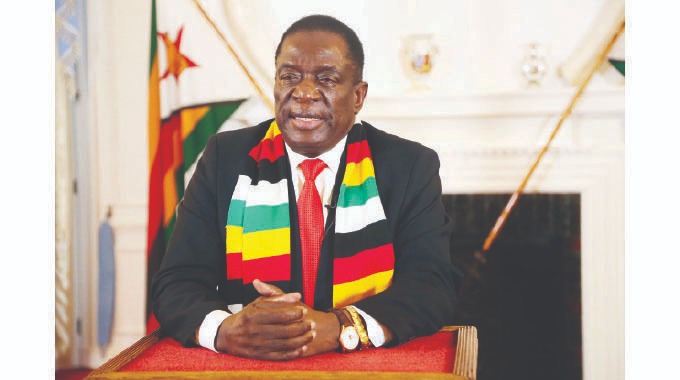
Although some people want to remain shackled, President Mnangagwa has time and again appealed to the nation to seek closure by confronting its ugly past.
In 2019 he is quoted by The Herald saying: “The question of Gukurahundi, personally I do not see anything wrong in debating it on television and in newspapers. Let us debate it… There is nothing to fear about the debate”, he said.
“Actually, it is critical that we have that debate… Some of the issues could have been resolved a long time back. In my view, there is not a single issue that cannot be discussed and a way forward crafted.”
His message as leader of the Second Republic has been consistent: productivity, growth and economic development for ALL.
When President Mnangagwa gave his Unity Day address in 2019, he also said, “We must be united to assure our people of decent livelihoods through inclusive development and growth which leaves no one behind. This immutable goal requires all hands on the deck regardless of politics, tribe, region, race or creed. Zimbabwe needs all its hands; black or white; long or short; tender, clean or greased; fisted or open.
“All these hands belong to our nation which today bids them to work for it, and in unity and harmony. We have created channels and avenues for resolving our differences and sharing ideas on challenges we face as a nation. It is never too late to serve your people and country,” he said.
In short, the President’s call was that a united nation will contribute a lot to the desired Zimbabwe.
President Mnangagwa’s 2020 Unity Day message was also a clarion call to demystify issues we dare not talk about and to look at how we can fulfil the fundamental principles of the Unity Accord. “Decades have passed since that historic event of our Unity Accord. However, its conceptualisation must now go beyond narrow interpretation.
“Therefore, today as we remember and celebrate Unity Day, let us re-commit ourselves to the important virtues that bind us as a people and equally incorporate the importance of our unity within the transformative national economic agenda”.
“As we focus on the future and inspired by the new national trajectory of economic development; I challenge us all to draw from the fundamental principles of the accord to unify and collate our national capabilities, competencies and skills for the attainment of Vision 2030.
“On its part, my administration remains decisive in ensuring that all Zimbabweans have a sense of belonging and that they flourish and prosper leveraging on their potential and abundant natural resource endowments. This is indeed what our Founding Fathers envisaged when they committed to entrench unity as a critical pillar of our great nation”.
During the 2021 Unity Day, the President while taking stoke of his administration’s major successes in infrastructure development and devolution had this to say: “Whatever differences and contradictions we face, or are likely to face in the future, these should always find resolution through peaceful dialogue in the interest of peace and national unity. Nothing beats sitting down as one people to iron out any differences that exist or may arise.
“Peace in our nation remains the foremost prize for which no price is too big to pay, no cause or ego too big to bend. We are one, indivisible people, circumscribed by this, our one nation, built on this the only geo-political space we can ever have as Zimbabweans,” he said.
These words pregnant with meaning. Let them not be used only as quotable quotes. We have thinkers and implementers in our midst, who can bring them to life. Let them do so!
My parting shot: what does Unity Day mean to you, and how are you commemorating it? Is it in the national interest?
Judge for yourself!


 Online Reporter