Moffat Mungazi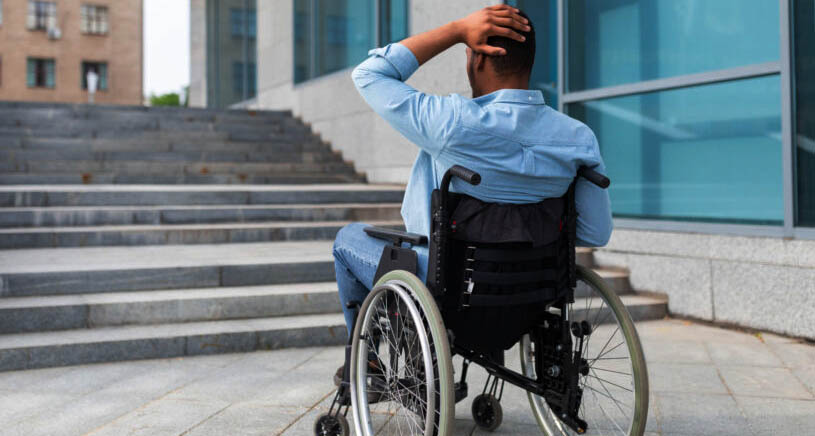
Rodgers Irimayi
Cultural Perspectives
THE major impediment that affects people with disabilities (PWDs) is the inaccessibility, because whatever they need within the physical environment, they cannot get easily.
Besides fighting stigma and discrimination in society, they face accessibility challenges, be it in the area of transportation, information, and services that are essential for their full participation in society.
Despite the fact that Zimbabwe has a law to that effect, the Persons with Disabilities Act (1996) which provides the legal framework for the promotion and protection of the rights of PWDs which emphasises the need for accessibility in public buildings and transportation, a lot still needs to be done to fulfil it.
The law enshrines their rights within the social security, healthcare, and education.
Let us have a conversation surrounding this topical issue of accessibility which remains a thorn in the flesh for this group of people in our society.
Social and attitudes as barrier for PWDs
The serious challenge being faced by people with disabilities (PWD) are attitudes of people in society.
These attitudes have become a barrier that leads to stereotyping and misconceptions that result in the sidelining, and hindering the full participation of disabled persons in economic, social and political activities.
Until people adopt the correct attitudes, and become aware of the capabilities and rights of PWDs, the cultural perceptions and practices that tend to sideline and undermine them will continue.
Access to Government offices
The way most Government buildings were constructed did not factor in how people with disabilities would manoeuvre.
Many Government and private buildings, including facilities such as offices, schools, and healthcare centres lack ramps, elevators, or accessible restrooms.
With the mushrooming of high rise buildings, accessibility challenges become compounded.
If a building has more floors upwards and without elevators, a wheelchair bound person has no way to get to rooms up stairs.
How does a person who uses a wheelchair access a minister’s office on the third floor of a Government complex.
The fact is, the person living with a disability will not be able to get the minister and might even abandon the mission.
Most building environments, spaces and facilities do not have the designs or modifications that accommodate wheelchair users, individuals with sensory impairments, and those with mobility limitations.
Most old constructions end up having specialised adaptations and renovations in an attempt to accommodate them.
Features such as ramps, elevators, accessible restrooms, and signage are important components that greatly provide the needed in the planning, designing and the construction process of public facilities.
In the initial stages of coming up with these facilities, the concept of universality has to be considered when designing which creates environments that are accessible to everyone, regardless of ability or disability.
Inclusivity in universal designing from the outset aims to rules out the need for specialised adaptations and renovations in the future.
Accessibility in the transport sector
Another important area is the public transportation system.
People living with disabilities need access to vehicles like buses.
I have witnessed a commuter omnibus refusing to stop after realising there was a disabled passenger on a wheelchair flagging down the driver to stop.
Imagine what goes in the mind after such ill-treatment by a person who really did not care or give a second thought and feeling about another human being.
There are other related infrastructure such as bus stops and transit stations that must be navigable.
Access within the workplace environment
Another notable challenge faced by people with disabilities is inaccessible areas in working environments.
In many work places, disabled persons find it difficult to move around freely either to the boardroom, file cabinet, or reaching to other offices.
It is the employers who have to play a vital role in creating an inclusive work environment.
An inclusive work environment might mean buildings should be modified and special needs provide such as working tools.
The support from every other worker is needed to cultivate a culture of diversity and inclusivity that values the contributions of PWDs.
Topics on disability are not normally discussed at workplaces where there are no disabled persons until such a time when the department employs a worker with a disability.
It, therefore, becomes difficult, uncomfortable and awkward to start introducing the disability subject to workers.
Governments and organisations need to take initiatives to promote these discussions in case someone with a disability is employed or someone within the department becomes disabled and the provision of support becomes easy.
Access to information
With regards to access to information, the major challenge is lack of and inadequate material in formats such as Braille, large print, simple language, and Sign Language which ensures that essential messages reach everyone.
During the Covid-19 period, the Ministry of information, Publicity and Broadcasting Services tried hard to bridge the gap, but the there was a large margin that remained to be covered in the dissemination of Covid-19 information to disabled persons.
Braille and audio material were produced in limited quantities and could not reach all those with disabilities.
The need to have adequate material particularly where important emergency information is to be disseminated has to be prioritised.
Digital accessibility
The issue of inclusivity also relates to technology where PWDs face challenges in accessing websites and digital platforms.
Many websites, mobile apps, and digital platforms are not accessible to PWDs which excludes them from online services and opportunities.
They are also limited when they need access to assistive technologies such as screen readers and Braille displays as they are often unaffordable or unavailable.
Most of these are deemed expensive as they are imported, making their prices high and ordinary citizens fail to purchase them.
Inclusivity policy and legislation
The Zimbabwean Constitution recognises the rights of PWDs in Section 83, which states that every person with a disability has the right to fully participate in all aspects of life and the right to have their dignity respected and protected.
The Constitution prohibits discrimination on the grounds of disability.
The aspect of inclusivity is encompassed in the Zimbabwe National Disability Policy (Revised Draft, 2020) which aims to address the various barriers that PWDs face and seeks to promote their rights, participation and empowerment.
Already Government has played a major role, it is imperative to involve PWDs in the planning and designing processes of public spaces and constructions to ensure that their needs are adequately addressed.
For them, accessibility is a cornerstone of empowerment their full participation in society.
However, achieving true accessibility requires a multifaceted approach that fosters an inclusive environment that does not leave them out, but values diversity and supports the rights of PWDs.
They say everything without them is not for them.
There is need for continuous education and advocacy in order to foster understanding and acceptance among the general populace.
Rodgers Irimayi is the Ministry of Information, Publicity and Broadcasting Services Masvingo Provincial Information Officer. He writes in his personal capacity and can be contacted on +263778246098 or [email protected].



 Online Reporter