Online Reporter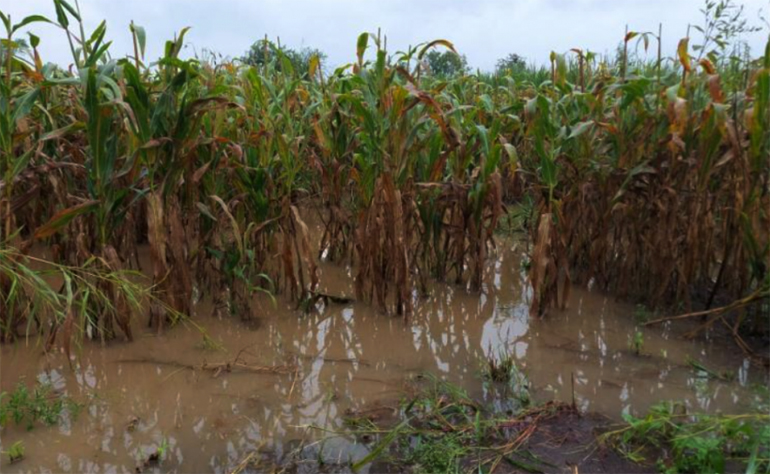
Ray Bande
Senior Reporter
EXCESSIVE rains being received in Manicaland are threatening to ruin harvest-ready crops, potentially leading to cob rots and sprouting of grains and pulses, agronomists have warned.
The Manica Post can reveal that the incessant downpours have created an environment conducive to crop damage, putting the anticipated bumper harvest at risk.
Prolonged exposure to moisture is likely to compromise the quality and quantity of the crops, dealing a blow to farmers’ yields and livelihoods.
With the province’s agricultural sector heavily reliant on favourable weather conditions, the impact of the excessive rains could be far-reaching.
Although the official Second Round of Crops, Livestock and Fisheries Assessment (CLAFA-2) report is scheduled for next month, expectations of a bumper harvest still exist, despite the mid-season dry spell that almost derailed hopes for a good yield.
CLAFA-2 is considered a crucial, high-level assessment by the Ministry of Lands, Agriculture, Fisheries, Water and Rural Development to verify the results of the 2025–2026 agricultural season.
Manicaland Province has received significant rainfall, and figures from the Meteorological Services Department indicate that, cumulatively, since October last year, Buhera has recorded 472,4mm, while Chipinge recorded 1 008,1mm, as of Tuesday this week.
Chidengu Meteorological Office in Chimanimani recorded 1 247,2mm, while Chisumbanje Meteorological Office recorded 622,3mm.
Mukandi Meteorological Office in Mutasa District recorded 1,661,9mm, while Nyanga Experiment Station recorded 1179mm.
Mutare Fire Station readings recorded 925,8mm, while Rusape Meteorological Office recorded 1003mm.
MSD focal person for Manicaland, Mr Tapiwa Maringo confirmed that expectations are high that rains will continue until the end of March.
“Chances are high that we will continue receiving rains until the end of this month,” he said.
In a separate interview, the Provincial Agricultural and Rural Development Advisory Services (ARDAS) director, Mr Nhamo Mudada said excessive moisture may affect yield.
“We are assessing the extent of these rains on our harvest-ready crops like sorghum, millets, groundnuts, and maize. However, it is true that excessive moisture at this stage of crop growth is associated with cob rots, sprouting of some grains, and pulses may also occur,” said Mr Mudada.
Sprouting of grains and pulses is the natural process of germinating seeds, allowing them to grow tiny shoots, and this process transforms the seed from a dormant state into a living, growing plant.
Mr Mudada said there are, however, benefits to food security that come with incessant rains.
“We hope that CLAFA-2 will be able to give us the challenges that might be associated with these rains on our mature pulses and cereals. However, we are happy to say that these rains are helping, especially crops like sweet potatoes, cassava, and yams.
“They (continual rains) are also adding to the water levels in our dams. The rains are also making our veld for our livestock remain green and fresh as new shoots are emerging,” he said.
Mr Mudada said harvesting in most parts of the province is expected to start in the first 10 days of April.
“We expect to start harvesting in the first dekad of April. Regarding targets for harvests, we look forward to getting the publication of CLAFA-2 results,” said Mr Mudada, adding that the province is expecting to surpass the winter wheat harvest of last season. “For winter wheat, we are now registering farmers for winter wheat production. The number of farmers is elastic, even the area to be planted is elastic, but we want to exceed last year’s achievements,” said Mr Mudada.