Online Reporter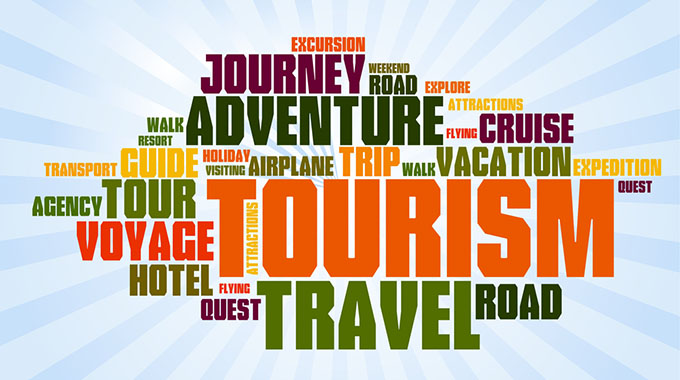
Dr Farai Chigora
The entrepreneurial agenda has been at the forefront of business modelling and ownership in Zimbabwe.
Inspired by the visionary leadership of the Second Republic, spearheaded by President Mnangagwa, this phenomenon has known no boundaries across all the provinces and districts in Zimbabwe.
Hence, we now realise and anticipate further growth of the tourism industry in the country as we progressively engage with the National Development Strategy (NDS) 2, guided by an innovative mindset for growth.
To aspiring entrepreneurs, this is the time to strategise and act inclusively, leaving no one behind towards achieving Vision 2030.
We keep reflecting on the milestones that have taken Zimbabwe to another level through all forms of tourism by our indigenous entrepreneurs.
Even as other sectors achieve growth, the tourism industry is moving in the same direction, as recorded by Zimstats between 2024 and 2025.
Zimbabwe is open for business, and the future is bright.
Despite some challenges here and there, our entrepreneurs in the tourism industry are gradually developing confidence that they can contribute positively to the national bottom line if given adequate intellectual and technical support.
We say the sky is the limit for this movement of progressive entrepreneurs in the Zimbabwean tourism sector.
Our thrust is to have everyone be part of this trajectory, since we all contribute equally to its growth in one way or another.
Of course, entrepreneurial businesses have been labelled failures in various instances and perspectives, but those practising, led by the Government through the Minister of Tourism and Hospitality, can testify that there is real tourism enterprising at every level of our economy.
That is from micro-businesses to SMEs across all provinces in Zimbabwe, and rewards are being realised as it is no longer business as usual.
To strengthen our tourism entrepreneurial strategy, it is imperative for our aspiring entrepreneurs to understand the breadth of our tourism industry, which can be categorised into three main divisions, namely travel, accommodation and resorts. As mentioned, everyone has a role to play at any level within these categories.
In the past, tourism was mainly viewed as an elite space for the rich and famous, but it has since been proven to be accessible to every income level among operators and consumers.
Today, it is a given that anyone can be a tourist at any time of their choice.
Effective marketing has been a drawback for our entrepreneurial tourism players and their potential to sustainably deliver quality in travel, accommodation and resorts remains unknown.
We should refocus on innovative digital marketing to generate quick, positive publicity for everything we do in this industry.
The advent of social media, connected to local and global networks, has improved marketing access in both traditional and new tourism markets for our Zimbabwean entrepreneurs.
Of course, capital has been one of the challenges deterring entrepreneurial growth across all sectors of our economy, but through simple, cheap and convenient digital platforms, even the cheapest smartphone can reach a larger global market.
It is not only in terms of coverage but also in content creation that homemade brands inspired by the Proudly Zimbabwean tagline showcase themselves through elements, jingles, pictures and other forms to the rest of the world. It is now easy to digitally create your own brand and showcase it to the world.
As innovation has become part of our entrepreneurial mindset in the tourism sector, “sustainability” has emerged as a catalyst for attracting the global community.
We operate with the understanding that the global tourist is no longer patronising tourism establishments that are not eco-friendly in their operations.
There is a need to revisit our habits as tourism entrepreneurs, in how we transport, support the travel industry, design our lodges/houses for accommodation, and manage natural habitats in the resorts. Attraction is not only through fancy structures but also through maintaining our traditional settings, including thatched huts and cultural heritage, as proven by the recently opened Baradzanwa Cultural Leisure Village facilities in Mazowe. Tourists from other parts of the world enjoy the originality of these cultural centres as heritage sites, where the ambience and aroma of cuisines speak of nature.
This is simple innovation, using our own endowments for attractiveness and socio-economic transformation.
The use of recycled materials in our various designs has also proven to be an attractive, low-cost innovation within our growing tourism sector.
The power of community involvement in our tourism activities has proven to be another innovation for tourism business success across communities in Zimbabwe.
That’s when our entrepreneurs will realise the magic of synergies rather than operating in silos.
There is shared indigenous knowledge and practical responses to existing gaps within the local ecology that support business viability.
That is where strategic modifications for attractiveness are made by a group of people who know what is really on the ground, rather than through experiments.
Those who have travelled the same road before are now doing it for tourism vibrancy.
Especially with the communities surrounding resorts, they know the places, paths and endowments for a superb tourism experience, and they help determine safety for the tourists.
It contributes to the same wished-for sustainability at the same time, giving every member of the community a sense of belonging in the tourism activities by our entrepreneurs.
Events have evolved from mere enjoyment into a large-scale, inspiring tourism experience for locals and international visitors alike.
An innovative mindset has enabled our entrepreneurs to make even a birthday party more appealing to those not invited to the point that event management has become a growing tourism business for entrepreneurs across the region. As mentioned, every business is tourism in our ecology.
Even confectionery, cooking, music, culture, and religious activities contribute to the country’s socio-economic well-being, from employment creation and revenue generation to the overall mental health of the populace.
We do not exist in a vacuum, especially in the tourism business, where our packages should extend beyond domestic tourism to a global scale.
As we travel in the region and beyond, let us prototype customisation to develop our own innovation that brings all the best places in the world to Zimbabwe.
Now we even see our communal waterfalls, hills, mountains, bushes, and other features, once viewed as ordinary, recognised for their global appeal and converted into tourism businesses for income.
This is entrepreneurial innovation, where individuals and groups are given the opportunity to experiment and transform for development.
The question remains whether our entrepreneurs in the tourism sector are ready to join such a progressive bandwagon. Yes, to some extent, especially if we improve our business formalisation.
The global myth is that entrepreneurial businesses die out early because they lack proper structure, have poor managerial skills, and poor financial management. Let us now overcome these beliefs by properly registering our tourism businesses so we can take advantage of the waivers and exemptions being offered by the Second Republic.
Here, we have tax and levy cuts, among other incentives, for the tourism industry in Zimbabwe.
Lastly, for this edition, is the power of branding. As said above, this is amplified visibility. Marketing through generic advertisements needs a brand(s) for easy-to-measure progress, a good image, high quality, and wider awareness, which will then bring a lasting association with current and potential tourists for future loyalty.
Dr Farai Chigora is a businessman and academic. He is a Senior Lecturer at Africa University’s College of Management and Business Sciences and a global business modelling practitioner. His doctoral research focused on Business Administration (Destination Marketing and Branding, Major, UKZN, SA).