Online Reporter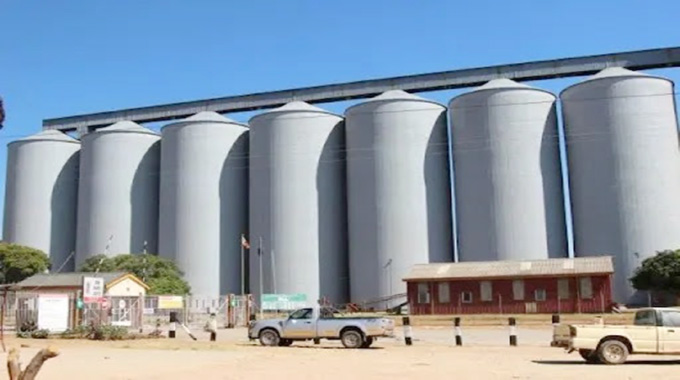
Edgar Vhera, Specialist Writer – Agribusiness
THE Grain Marketing Board (GMB) has unveiled an innovative marketing model designed to strengthen grain value chains, reduce costs and ensure reliable access to quality grain for processors across the country.
This will help fulfil Zimbabwe’s aspirations under the Agriculture Food Systems and Rural Transformation Strategy 2 (AFSRTS 2) 2026-30, where GMB’s balance sheet is expected to grow 62 percent to US$4, 2 billion in 2030 from US$2,6 billion in 2025.
Under AFSRTS 2, GMB is transforming into the grain supply chain manager for the nation by ensuring timely input distribution, receiving local strategic grain resources (SGR) on behalf of communities during surplus years, and acting as a competitive buyer for the national SGR.
To advance this cause, GMB has set aside its 89 depots and 1 804 grain buying points to actively participate in the third-party grain purchases and storage for farmers, millers, stock feed manufacturers and other grain processors.
“The third-party grain purchase model assists farmers in accessing the market at a low cost while benefitting grain processors from GMB’s aggregation.
“After registration, participating client entities deposit funds into the GMB account at the agreed price per tonne and GMB’s stocks serve as collateral for the millers,” GMB explained.
The processors can collect the prepaid grain at any nearest GMB depot to their own processing centres to ensure grain availability and reduced logistics costs.
Government’s Rural Development 8.0 stands to benefit with women, youth, Village Business Units (VBUs), School Business Units (SBUs) as aggregation centres where a nominal fee of 10 percent is charged for the services.
GMB has also introduced the third-party storage leveraging on its current silo storage capacity of 862 000 tonnes with an additional 672 000 tonnes under construction.
“GMB has reduced storage fees to US$2,90 per tonne per month to encourage grain processor participation.
“Contractors can participate by allowing their contracted farmers to deliver grain to the nearest GMB depot, thereby reducing costs and minimising side marketing,” revealed GMB.
The board called on on-boarded contractors to take advantage of its fleet to fulfil their transport needs, while those entities under third-party grain purchase can also take advantage of storage facilities at favourable conditions.
Grain stored under a third party is ring-fenced and enforceable under law through contract.
To preserve farmers’ produce, the GMB is also offering storage facilities to farmers at a reduced cost of US$2,90 per tonne per month with the farmer granted access to his/her produce at any time.
GMB has taken advantage of the central location of Zimbabwe and its world-class storage facilities to facilitate trading by regional and international grain traders.
“Storage by regional and international grain traders will be under a collateral management agreement.
“By combining nationwide reach, competitive pricing and world-class storage, GMB is positioning Zimbabwe as a hub for grain trade in the region,” said GMB.
The board will offer state-of-the-art logistics, storage and warehousing services for the Government and private sector.
“It will use its extensive depot network for commercial agri-services for the benefit of rural farmers and stabilising food prices through appropriate market intervention.
“GMB’s massive real estate must be sweated to generate cash-flow required to energise the transformation of GMB into a full commercial entity, weaned from fiscus funding by 2027,” read AFSRTS 2.