


 Online Reporter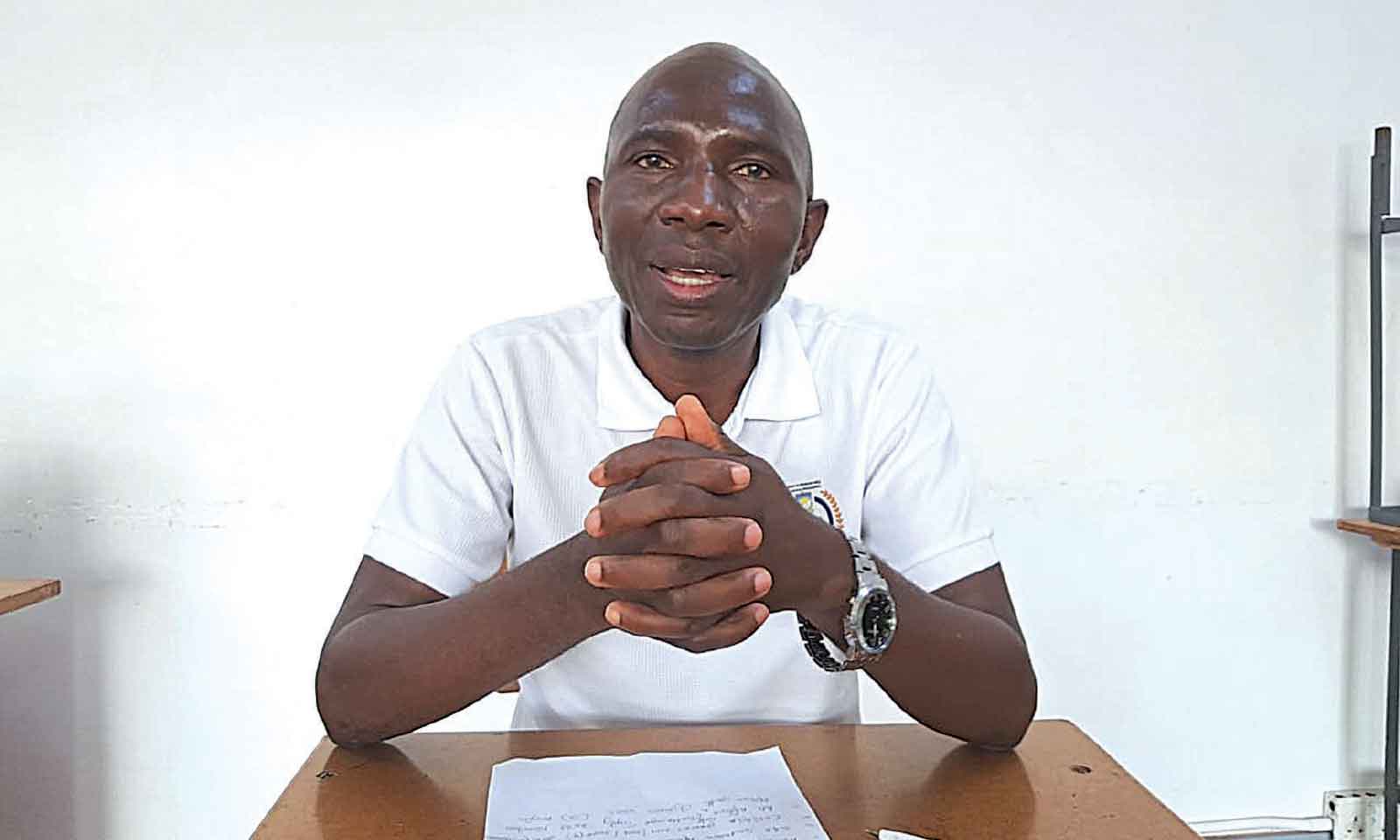
Ellina Mhlanga
Zimpapers Sports Hub
AS Zimbabwe searches for answers to a familiar question, how to consistently produce elite athletes who can compete with the world, one quiet experiment has been unfolding away from packed stadiums and television lights.
It sits in Bindura, housed at the Bindura University of Science Education, shaped more by patience than spectacle.
The National Sports Academy is not yet the finished product many imagine a high performance centre should be. It is, instead, a place still becoming.
Since it opened its doors in 2013, the Academy has carried a long term ambition that resists shortcuts.
It was conceived as part of a deliberate government effort to establish a high performance pathway, rooted in legislation passed in 2006, and designed to nurture talent early enough for excellence to feel possible rather than accidental.
Its most visible success has come through athletics, a sport that has given the Academy a public face.
When Tapiwanashe Makarawu left for the United States on scholarship, carrying both academic promise and sprinting talent, he also carried the Academy’s quiet validation.
Today, when Zimbabwe speaks of Olympic Games and World Championships, Makarawu’s name surfaces naturally among those who have stood on the sport’s biggest stages.
But the Academy insists its story is broader than one discipline, even if athletics has drawn the brightest spotlight.
“The National Sports Academy is a product of a deliberate effort by the Government of Zimbabwe to come up with a high performance centre in the country,” said director Life Chemhere.
“It is also a product of an act of Parliament which gave birth to the National Sports Academy in 2006. We started operating in 2013.
“Up to date, we have produced more than 179 athletes, predominantly in athletics. But as an academy, we have got more than one discipline.
“I think people are just aware of athletics. Maybe it’s because we have made some great strides. But we have got other disciplines like golf, chess, tennis, football and boxing.
“On our list, we also have got some other priority sports. We have taken baby steps, focusing on probably low hanging fruits. But not to say our focus is just on athletics.”
Those baby steps have been deliberate.
The Academy caters for athletes between the ages of 13 and 18, an age where potential is fragile and belief still forming.
Beyond Makarawu, there have been other journeys shaped within its system.
David Nyamufarira, another 100m and 200m sprinter, moved from the Academy to New Mexico Junior College on scholarship in 2024 and went on to compete at the World Athletics Under 20 Championships in Lima, Peru.
Privilege Chikara rose through the same environment to represent Zimbabwe in the women’s 1 500m at the 2018 African Youth Games and the Youth Olympics.
Away from the track, progress has been quieter but steady. Golf and football have begun to find their footing.
Some footballers have gone on to represent Zimbabwe at the African union Sports Council Region 5 Youth Games and Cosafa tournaments, with Tawananyasha Chisuse making the Under-17 squad for last year’s Cosafa event.
For those still inside the system, the presence of former Academy athletes has become a powerful currency.
“I think our athletes have drawn a lot of inspiration from these icons. We call them ambassadors of the academy,” said Chemhere.
“Quite often we have interactions with these luminaries, just to promote or to make these youngsters know that it is possible to reach international standards.”
At present, the Academy works with just over 50 athletes across football, golf, chess and athletics.
Plans are in place to activate other disciplines on its list, including boxing, rugby and para-sports, with inclusivity now part of the conversation.
Growth, though, has come with constraints. Expertise remains uneven, and staffing gaps have slowed momentum.
“I think we really need to up our game in terms of the coaches, the expertise. On the supply side, in terms of the expertise in the coaches, we really need to work on that part,” Chemhere said.
Yet the most ambitious part of the vision lies beyond the athletes currently in training.
The Academy sits on 100 hectares of land set aside for a fully fledged high performance sports centre, a promise that still exists mostly on paper, but one that defines where the project hopes to go.
“As a National Sports Academy, we have got 100 hectare piece of land, which is specifically dedicated for construction of a high performance sports centre,” said Chemhere.
“This high performance centre will have an Olympic sized athletic stadium. It will also have other facilities like football, basketball, volleyball, golf, rugby, cricket, you name it.
“But as we speak now, we are relying on outsourcing because we are still trying to make sure that the infrastructure is put in place.“We have come up with the master plan, which is the engineering, we have done.
“Our Vice Chancellor has actually taken a huge drive towards the construction of the infrastructure. And it is also the interest of the nation at heart.
“It is not an agenda of Bindura University, but it is a national agenda. And the Bindura University of Science Education is there to cultivate, to make sure that at least the vision is coming to fruition.”
Along the way, the Academy has drawn support from the Zimbabwe Olympic Committee and national associations, including the National Athletics Association of Zimbabwe and the Zimbabwe National Boxing and Wrestling Control Board, largely through capacity building initiatives.
“We need to take a deliberate effort reaching them and also them reaching us. We have just drafted our five year strategic plan, 2026 to 2030, with a vision 2030.
“And the issue is to accelerate in terms of engagement with sports federations,” said Chemhere, who believes partnerships, including corporate backing, will be essential to unlocking the next phase.
On the ground, talent identification remains a work in progress.
The Academy’s coach, Cuthbert Nyasango, says resource limitations have shaped their current approach.
“The model that we are using right now due to some resource constraints, is that we are doing more where we attend school competitions,” he said.
“But in our plans, what we want to do is to go to different provinces, host our own talent identification events, where we invite a specific group to come and challenge for the positions or the scholarships.”
Centres of excellence have already been identified in different provinces, with optimism that they will become fully operational this year and widen the net.
For now, the National Sports Academy exists in a space between aspiration and arrival.
It is not yet the engine Zimbabwe dreams of, but it is a place where belief is being built slowly, athlete by athlete.
Its ultimate promise is simple and ambitious at once, a home-grown solution that can quietly, steadily transform sport in the country.


 Bongani Ndlovu