Andrew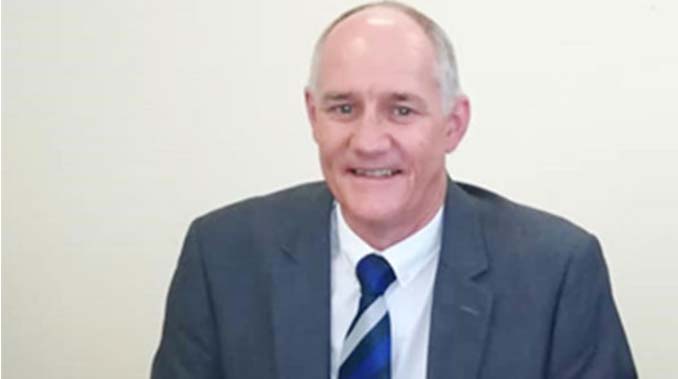
Leadership is both a research area and a practical skill encompassing the ability of an individual, group or organisation to influence or guide other individuals, teams, or entire organisations. Zimbabwe is full of such capable leaders yet one area of concern is that they may not pass on their leadership skills to future generations. In a Zimpapers Television Network (ZTN) broadcast in partnership with ICAZ, CAFCA Limited managing director Robert (Rob) Neill Webster (RW) chronicled his long leadership journey and where he plans to take CAFCA. Below are excerpts of the interview Rob had with ZTN’s Andy Hodges (AH).
AH: Rob, in 1987 you were admitted into the Institute of Chartered Accountants as a Chartered Accountant. It seems in today’s world many Chartered Accountants, especially in Zimbabwe, have become leaders in business. In your opinion why is this so?
RW: The reason why Chartered Accountants make good leaders is that the institute trains one in a certain set of disciplines and values.
They also teach you the drivers of a company so when we make decisions as Chartered Accountant running a company, we are fully aware of the impact of that decision.
On education, I believe that appropriate education makes a very good leader since you need to have discipline be it financial or technical.
There is also a whole lot of soft skills that we want people to be trained at to make them good leaders. That is why it should be automatic that everyone does Psychology in order to learn to deal with people and manage stress.
AH: What does leadership mean to you? What is leadership in your opinion?
RW: With me, the first thing is backstops because I have to create a system or a model that ensures that what I believe in are the important things that everyone in the chain follows.
So I created the culture, models, make plans and strategies, more importantly, I get everybody to buy into this hence involving them in the process is the best thing to do because at the end of the day I know they have an input into these models and plans.
Therefore, I have dealt with their concerns in arriving at that model and they get to follow me. Listening is very important, but at some point, you need to be very firm. You also need to listen to everyone, be sure where you are going, and decide where to go.
AH: You have held numerous positions with various companies within Zimbabwe and in 1990 you were approached by Coopers and Lybrand to re-join them as a partner in charge of Information Technology. You opted instead to join Apex Corporation of Zimbabwe Limited as financial director. Luck, fortune, or a good career choice?
RW: Very good career choice but not one made of luck. It was time to look around me and I had always said that the institute was going to be a stepping stone for me.
I was a good Chartered Accountant but that was not where I wanted to be because I came from the farming stock and I grew up growing things.
I felt that is where I wanted to be, growing things or making things hence my Apex decision. In my view, it is nice to know where you want to venture into but you need to open your eyes because the opportunity comes and you have to grab them when they come past.
AH: Looking back at your career would you say you had it easy or was it a difficult journey?
RW: It was difficult because I chose to live in Zimbabwe even though I had a choice with my qualification to go anywhere.
But running a business in Zimbabwe is not easy because there is no set of repetitive and you have to be thinking on your feet as you go because going through hyperinflation twice is very stressful.
What was easy was taking advantage of the opportunities that came and I was very fortunate because they gave me an increment of benefits and I always went for something bigger.
AH: Rob, in business, very few rise to the top of large organisations such as CAFCA, a profitable company with turnover as reported in its last published inflation-adjusted accounts for September 2020 of over $1,6 billion. What do you think you did? What would you attribute your success to?
RW: I am a competent Chartered Accountant, I worked hard and therefore I got opportunities when they came my way.
My first credit goes to John Carter the late CEO of Apex Corporation because he taught me the fundamentals of production and that allowed me to move from being a financial person to productive person.
AH: Rob, did you encounter any major challenges in your rise to leadership? And if yes, how did you manage to overcome them?
RW: What is important is to understand what caused the challenge. If it is your own doing, deal with the root cause and ask yourself why this happened and another side of challenges is they come naturally. I have learned to be very light on my feet because there is no point in sulking about what I had.
I also learned that in order to inject a lot of energy into my team, I need to be very positive to make sure the glass is full rather than empty.
AH: Rob, as a leader, what do you believe were your key success factors during your journey? Did you for example have a career plan?
RW: No, I knew I was a very competent guy and I knew that was a stepping stone to get somewhere. I also identified roughly where I wanted to end up because I needed to manage and produce.
You need to keep the opportunities’ insight and take the one that takes you one step in your direction. Also being patient is very important because success will bring you that and slowly work your way down your path.
AH: Rob, There is a famous Chinese proverb that says: “Failure is not falling down but refusing to get up.” I am sure you have met some degree of failure in your career. How did you deal with them and what advice would you give to Zimbabwe’s future leaders?
RW: Getting up is an attitude. You must always have an attitude that whatever happens your way there is always a light at the end of the tunnel.
Define the light at the end of the tunnel to say yes I have fallen down but I have the courage, skills and resources to get to the end.
But first, you need to understand why you have failed. Also, have positive people around you to lift you up when you fall down.
AH: Leaders are considered to be problem solvers and solution providers, but also need to get the best out of the team that they lead. What do you consider to be the greatest challenges facing leaders in Zimbabwe today?
RW: Patience and listening are very important because you need to be a very good listener in order to deal with people and young leaders need to get mentorship because that is going to be their support group.
AH: What advice would you give to future leaders. What should they be doing now in order to become Zimbabwe’s future leaders? What skill sets do you believe future leaders must have to be successful?
RW: Skill sets youngsters should be getting are the soft skills because they will help them in dealing with people.
AH: Rob, finally, everyone would like to leave a legacy behind, as one of today’s leaders, what do you think is your legacy? What would you like to be remembered for?
RW: The first thing is I was successful and more importantly are the values of the institute that taught me to keep my ideas.
I am very strong on integrity, I comply with all the laws in the country and in my years of experience in business, I never bribed anyone or gave up my values to get the job done yet I have a successful company hence I want to be remembered for that.



 Online Reporter