onlinemedia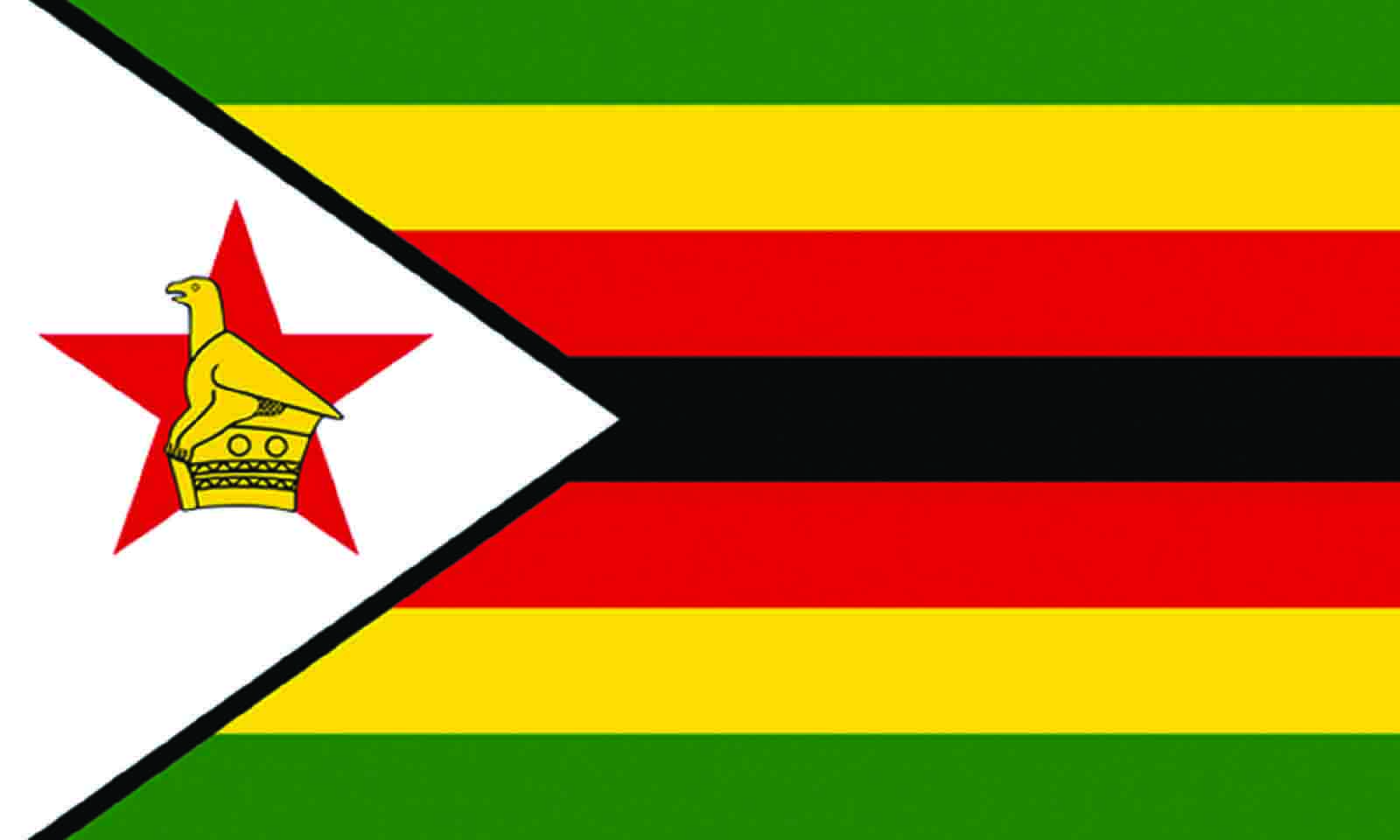
Gibson Nyikadzino
Zimpapers Politics Hub
There is meaning in symbols that people use in both worlds, real or virtual.
These symbols can be in the form of names, representative signs or emojis, as used by those who communicate on social media platforms. Symbols are part of a language.
Have you ever wondered what the “red star” symbol on Zimbabwe’s national flag represents? Many have knowledge on the symbolism of the flag’s colours and the bird, while very few have knowledge on what the “red star” represents.
That “red star” too, is a language that communicates something which ought to be understood within Zimbabwe’s context. Its interpretation is something Zimbabweans pledged to live for.
What is known is that Zimbabwe’s mineral wealth, flora and fauna, the black majority, peace and blood shed during the war of liberation, are represented by the colours yellow, green, black, white and red, respectively.
At a greater national scale, citizens have lived to cherish the interrelatedness between the colours, in their symbolism and the lived realities of the people.
The African fish eagle, as a symbol of power, authority and the nation’s sovereignty that can be connected to the distant origins rooted in the ancient civilisation of the Great Zimbabwe State, create impactful meaning on the connection between the ancient and present states.
Of importance is what present-day Zimbabwe committed to in 1980 when the national flag was hoisted after the defeat of British colonialism following years of a protracted armed struggle.
The set-up of Zimbabwe’s society, from village to national level, ought to be seen through the prism of the “red star” on the national flag.
Living outside the rubric of the “red star” symbol can mean as a people we are not yet ready to live up to what we signed up for as a nation in 1980.
The Red Star
In 1980, Zimbabweans pledged they would live through the State’s socialist aspirations, as represented by the national flag’s “red star”.
By living with these socialist aspirations, this means the State, then and now, wants to have an egalitarian society where there is a shared ownership and control of the means of production, to which the distribution of opportunities and resources is also equal.
The socialist idea works in many societies. In the West, many governments provide free basic healthcare to all citizens, while in others primary and tertiary education, and accommodation are free. The same happens in the East, where major economies and great powers provide the same freely for the sake of their citizens.
Where specialist care is needed, the citizen is also helped by the government to ensure that they get the medical attention they require. This does not mean socialism or having socialist aspirations is wrong, at times there are challenges that come with it, especially when it comes to planning.
The promise of socialist egalitarianism is a promise of equality and harmony, whose goal is to overcome and advance beyond the predatory phase of human development where individualism takes centre stage.
It is important socially, politically and economically for society to remember the resemblance of the “red star”. It is about working together, multiplying the fruits of our work together and living collectively in unity and driven by one purpose.
What went wrong?
The culture of consumption and materialism that is creeping into society has torn apart fabric of seeing things collectively. Collectivism has always been a key instrument towards national development.
This has been evident with countries like Singapore, China, Cuba among many others where society has to be the biggest beneficiary of all productivity and not the individual.
When the masses fought for the country’s independence from the 1960s, they desired to see both black and white, rich and poor, educated and uneducated living in harmony, sharing same amenities and not living in a dual economy. One for blacks and another for whites.
Stories about the unity and oneness liberation fighters had when they shared scare resources are stories that should not be abandoned today, for that is what made people get the courage to look forward to crossing into an independent Zimbabwe together.
There is need for the State to help re-organise the people in terms of the value system that follows the egalitarian root where the socialist aspirations of Zimbabwe and Zimbabwe will not die as they are imprinted on the national flag.
Learning through naming
The way people name their kids carry a powerful resonance that mediate how they will live their lives, in most cases. It is unfortunate that very few understand the essence of how civilisations come up with names. For example, compare the West and the East. In Britain, France, Germany and the US, one is given their forename and surname or family name.
Whereas in the East, most parts of Asia or in China, for example, one gets the family name or surname first, and what is the forename (in western lexicon) becomes their last name.
There is meaning to this. In the West, the priority or emphasis of giving first the forename creates an element of individualism, unlike in China where one gets the family name first, representing collectivism in the family.
The psyche or conditioning is when Americans are working, because of how they are named, they are working for themselves as individuals in search of self-glorification. Whereas in Asia, when one works, they do so for the sake of the authority of the family name.
The individual name flourishes in the West, while the family name flourishes in the East or in greater Asia where Confucianism is a prime set of values.
There are lessons to learn from this. It is either we want to flourish as individuals, or we shall flourish together as families or communities. Self-glorification is a defeatist idea that carry ills which can corrupt the society.
Reflectively, the song Nzira DzeMasoja, a poignant wartime compass that directed and instructed freedom fighters on how they ought to live and interact with the masses or captured enemy combatants, has lyrics that still resonate with the lives of ordinary people in independent Zimbabwe.
It carries values of humanity, collectivism, communalism and a compassion for unity, equality and egalitarianism in a society or environment that has discipline, as we aspire as a nation through the “red star” on the national flag.



 Online Reporter