

 admin
admin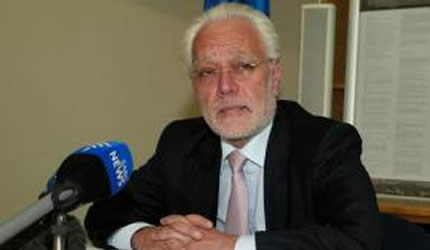
Union and United States came to Zimbabwe. Our Senior Reporter Tendai Mugabe (TM) spoke to the bloc’s Ambassador to Zimbabwe Mr Aldo Dell’Ariccia (ADA) on these and other issues
TM: A European Union delegation was in the country as part of re-engagement efforts. May you brief us on their general appreciation of the political and economic situation in Zimbabwe?
ADA: Members of the delegation from the European Parliament really appreciated the warm welcome by Zimbabwe. The delegation was updated on EU development assistance, development needs and priorities of the Government. The general appreciation is that there has been significant progress since the formation of the inclusive Government, while challenges still remain to ensure credible and peaceful elections.
TM: Relations between Zimbabwe and the EU were frosty for the past decade. Why is the EU now willing to engage Zimbabwe?
ADA: The EU wants friendly relations with all countries.
The GPA provided an opportunity for the EU and the Government to embark on a re-engagement process. As there has been progress in the implementation of the GPA, there has also been progress in the re-engagement process. The objective is to fully normalise relations.
TM: Some people say the EU has realised that it was losing lucrative business opportunities in Zimbabwe to China hence the need to re-engage the country. What is your view on that?
ADA: First of all it is evident that the People’s Republic of China is becoming very present in Africa. Now, are they really competitors with the European Union?
I am not so sure in the sense that our market in Zimbabwe is solid and improving. Trade has doubled since 2009.
The Chinese can compete on certain aspects but on other aspects the EU industry is solid enough not to fear any kind of competition. The second one is that it is evident that there are very good possibilities of business between the EU and the Republic of Zimbabwe. At present these are not fully possible because of certain circumstances in the country in particular the confidence of EU investors in the situation in Zimbabwe.
This prudence of the European investors is not due to the measures, is not due to the Chinese, is due to lack of total clarity on the implementation of certain policies of the Government of Zimbabwe in particular Indigenisation.
TM: Why has it taken the EU 10 years to re-engage Zimbabwe?
ADA: Zimbabwe has been going through a long and difficult period of democratic transition. The Global Political Agreement in 2008 marked a turning point and stalked a new democratic course for the country. This provided an opportunity for the EU to engage in supporting efforts towards a peaceful and democratic Zimbabwe.
TM: If the EU is really serious about engaging Zimbabwe why is the bloc still maintaining sanctions on the country’s leadership?
ADA: Following the successful Referendum in March the EU immediately suspended the majority of measures.
The decision represented a significant shift in the EU approach. At the same time, concerns remain. Key provisions in the GPA and in the roadmap for elections remain outstanding.
For example, the freedom of assembly, association and expression are essential components in any democracy and remain a challenge in Zimbabwe.
TM: The EU is on record as saying it will recognise any winner of free and fair elections in Zimbabwe. How can the country hold free and fair elections when it is reeling under sanctions?
ADA: The EU has no measures on any political party, but on a few individuals.
Some may belong to a political party, others not: this is not the criteria.
The EU will never favour one party over any other.
We will indeed recognise and work with any government formed as a result of transparent, peaceful and credible elections.
TM: There is a wide belief that sanctions were imposed and are maintained to influence electoral processes in Zimbabwe. What is your take on that?
ADA: What we wish is for the elections to be peaceful and credible.
This is also the objective of Sadc and we fully support Sadc’s efforts. The EU has also expressed its readiness to consider any request for support to credible elections.
TM: If they (sanctions) are not a tool of influencing elections in Zimbabwe why are you maintaining them at a time when the country is heading for crucial elections?
ADA: As I said, concerns remain. Key provisions in the GPA and in the roadmap for elections that would ensure credible elections are yet to be implemented.
TM: Still on the issue of sanctions, the EU maintained sanctions on Zimbabwe’s security chiefs –a sector where the MDC-T is strongly calling for reform. It appears the maintenance of sanctions on security chiefs is a clandestine way of forcing the security leaders to capitulate to the demands of the MDC-T?
ADA: The security services must observe strict political neutrality in any democracy. The GPA clearly stipulates that “State organs and institutions do not belong to any political party and should be impartial in the discharge of their duties.”
We agree with Sadc that statements by senior army officers suggesting that they would support one political party or would not recognise certain winners of a democratic election are therefore of concern.
TM: The approach of the EU when it comes to the issue of sanctions is viewed as divisive. What criteria has the EU used to remove people on the sanctions list?
ADA: Measures were introduced on individuals directly or indirectly undermining human rights, democracy and the rule of law, to promote democratic reform.
In recognition of the successful referendum, as well as to encourage further reform in the GPA, the EU has suspended the majority of measures in March. A number of key decision makers remain subject to restrictive measures until peaceful, transparent and credible elections have been ensured.
TM: In whose interests are you maintaining the sanctions because all parties in the inclusive Government have agreed that sanctions should be removed in their totality?
ADA: Why do you talk about interests? It is not a matter of interests.
It is the process of re-engagement with Zimbabwe and this started with the first of the re-engagement committee to the EU in July 2010.
The EU declared to the re-engagement team that it was pleased with the process launched in Zimbabwe through the GPA and the Government of National Unity to return on the path of democracy development of the country.
We are taking note of the content of the GPA and we would respond to the progress in the process in the country by our action.
TM: Zimbabwe is set to adopt a new constitution sometime next week. As EU do you think the Global Political Agreement will still be relevant in the politics of Zimbabwe considering that all issues in the GPA are captured in the new constitution?
ADA: The full implementation of the GPA, as well as the alignment of national legislation to the new Constitution and the implementation of those laws and regulations will be critical to the holding of credible and peaceful elections.
The EU will continue to support the strengthening of democratic institutions and processes under the new constitution, including in the justice sector and the independent commissions.
Once it (draft Constitution) is submitted to Parliament and once the national legislation is aligned to the new constitution then we might consider that indeed some more steps be taken but for the moment some issues are still pending.


 Online Reporter