admin
admin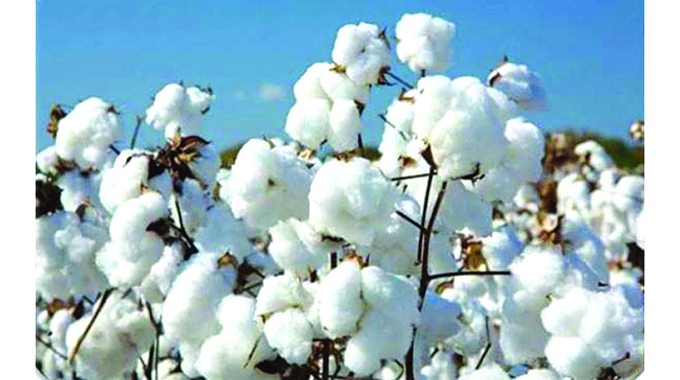
Edgar Vhera
Agriculture Specialist Writer
STAKEHOLDERS in the clothing and textile industry have urged the Government and private sector to mobilise US$150 million patient capital for cotton production and allow the country to later realise US$690 million yearly from exports of value-added cotton products.
Spinners Association of Zimbabwe chairman Mr Shadreck Muhoni made the call at the inaugural World Cotton Day celebrations in Harare recently.
“In the past the country used to have a labour force of around 40 000 and local spinners used to consume 25 000 tonnes of lint annually.
“Presently, spinners are demanding 8 000 tonnes of lint, which is worrisome considering that the Government has a standing policy requiring ginners to reserve 30 percent of their lint for locals.
“It is crucial that Government and private sector avail cheap value chain financing that looks at growers, ginners, spinners, clothing and retail sectors for funds to resuscitate defunct cotton factories and dilapidated machinery,” said Mr Muhoni.
In the year 2000, the country recorded the largest seed cotton production of 353 000 tonnes by farmers and this contrasts sharply with the anticipated 55 000 tonnes this year.
Value chain financing, quality reward in cotton grading and payment on time with a stable currency are crucial to revamp the cotton to clothing value chain,” said Mr Muhoni.
He revealed that the Government needed to play the smart leading role of supporting the whole cotton value chain in addition to farmers.
“The spinners are making a clarion call to ginners to display regularly information on cotton quantity and quality as this will assist in scouting for exports,” said Mr Muhoni.
Government can accelerate the cotton to clothing value chain by offering incentives such as tax breaks, discounts and duty exemption to would be investors.
Mr Muhoni, who also spoke on behalf of the Association of Cotton Value Adders of Zimbabwe (ACVAZ) disclosed that they had proposed a formula that was meant to reward each player in the value addition node from farmers to the final player.
He urged the Government to review the export retention from the 60:40 ratio so that exporters may meet their capital expenditure necessities, factory maintenance and general input requirements.
A review of the Nostro policy framework in which 20 percent of foreign currency is converted to the Zimbabwe dollar would also incentivise exporters,” said Mr Muhoni.
“Increased value addition of cotton will create employment as well as increase income for fiscus through pay as you earn (PAYE),” continued Mr Muhoni.
An analyst with the Confederation of Zimbabwe Industries (CZI) Mr Victor Boroma challenged cotton industry stakeholders to entrench value addition and emulate platinum group of metals (PGM) that heeded the Government’s call to beneficiate close to the mine and transformed their sector from earning US$250 million in 2014-15 to over US$2 billion in 2021.
Zimbabwe Investment Development Authority (ZIDA) chairman Mr Busisa Moyo noted that Zimbabwe was good at academic research and boasted some of the best minds but implementation was lacking.
He called upon the country to populate value chains with clear demonstrable opportunities as well as approach ZIDA for support.
“The country is known for coming up with the best research papers from sharp minds but everything has ended in desk drawers. There is need to unlock the knowledge into reality, as Zimbabwe has remained an extractive exporter chewing only a small piece of the cake. I call upon all cotton stakeholders to approach ZIDA, which was created for the purpose of improving business operations through incentives,” said Mr Moyo.



 Online Reporter