Online Reporter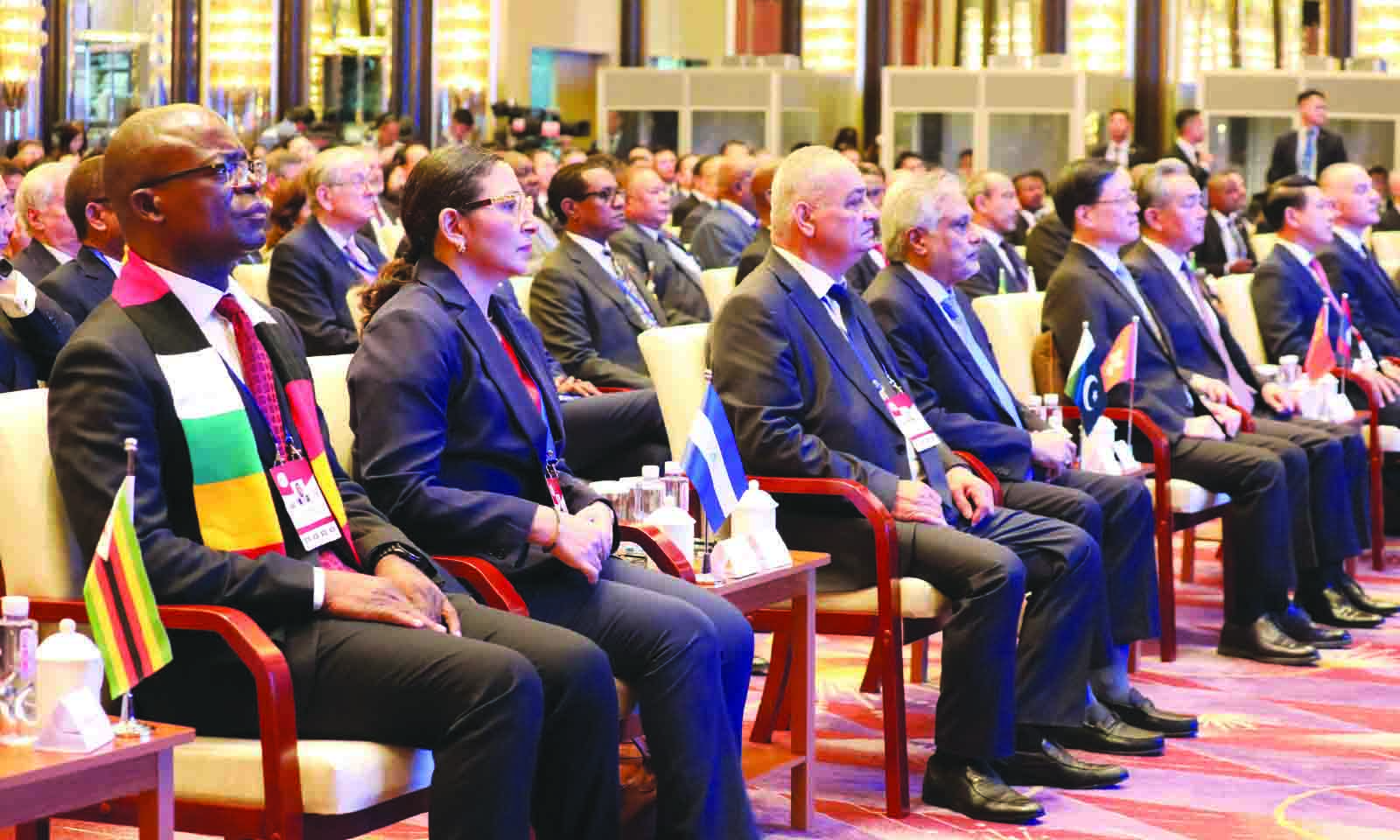
Hui Fan
ON May 30, in a sunlit conference room in Hong Kong, senior officials from 33 countries signed the Convention on the Establishment of the International Organisation for Mediation (IOMed), the world’s first intergovernmental legal organisation dedicated to resolving international disputes through mediation.
This offered a novel approach to global conflict resolution.
Zimbabwe was one of the countries represented, as Foreign Affairs and International Trade Minister, Professor Amon Murwira, graced the occasion.
Hong Kong, the headquarters for the IOMed, provides a unique blend of Eastern and Western legal traditions.
Hong Kong chief executive John Lee Ka-chiu highlighted the importance of the organisation, as it reflects the shared confidence in mediation as a peaceful means to settle disputes and maintain international peace and security.
The establishment of the IOMed reflects a collective aspiration of the international community to replace confrontation and conflict with dialogue and cooperation and echoes the rising call around the world for cooperation and mutual benefit.
Mediation: A non-confrontational approach to peace
Mediation, as captured in the Western adage “beating swords into ploughshares” and the Chinese saying “turning spears and shields into jade and silk,” advocates harmony and resonates with humanity’s pursuit of peace, development, justice, and fairness.
As a non-confrontational approach to peace, mediation has long been championed by the United Nations Charter in Article 33, as it offers an alternative to litigation and arbitration.
It allows parties to exchange concerns freely with an impartial third party’s assistance, collaboratively seeking a mutually acceptable solution. Successful mediation yields resolutions satisfying all parties, enhancing compliance and relationship preservation.
A newcomer in
dispute resolution
At first, the IOMed’s journey began in 2022 when China and other like-minded countries proposed creating a platform for the peaceful resolution of differences and upholding the international order through international law.
The IOMed emphasises consensus-building and mutual gains, thus minimising confrontation. Its flexibility, cost-effectiveness and ease of enforcement make it a valuable addition to the current landscape of international institutions.
Also, the IOMed convention’s signatories are predominantly from Asia, Africa, Latin America and Europe, including China, Indonesia, Pakistan, Laos, Cambodia, Serbia, Belarus, Sudan, Algeria and Djibouti.
This diversity ensures that the voices of developing countries, often underrepresented in international dispute resolution, are amplified.
In this way, the IOMed advances a more just and equitable legal governance framework, fostering inclusiveness and fairness.
Promising prospects
One needs look no further for inspiration concerning the IOMed’s mission than its host city. Hong Kong’s return to China in 1997 was itself a fine example of the peaceful settlement of international disputes and a testament to the power of dialogue.
China’s recent successes in mediation also preview the promising role that the IOMed could play. With China’s facilitation, Saudi Arabia and Iran re-established diplomatic ties in 2023 after a seven-year hiatus.
Less than a year later, China helped bring 14 Palestinian factions back to unity, inking their pledges in the Beijing Declaration.
These highlight how respectful and impartial mediation can heal divisions and resolve geopolitical challenges, paving the way for IOMed’s peace-making mission.
The IOMed convention signing ceremony attracted around 400 high-level representatives from 85 countries across Asia, Africa, Latin America and Europe, as well as nearly 20 international organisations, including the United Nations.
In a world marred by endless conflicts, where hegemonic and unilateral actions threaten growth, and where international fairness and justice are often at risk, the IOMed responds to the international community’s call for global governance reform.
By integrating the strengths of diverse legal systems, the IOMed complements existing mechanisms, offering efficient and peaceful dispute resolution options.
Guided by the principles of extensive consultation, joint contribution and shared benefits, it will be dedicated to practicing true multilateralism and upholding the UN-centred international system, the international order underpinned by international law, and the basic norms of international relations based on the UN Charter.
As we mark the 80th anniversary of the victory in World War II and the founding of the UN, the IOMed offers a new platform, where conflicts are resolved through understanding and compromise, where the rule of law prevails over the use of force, and where nations’ diverse voices are harmonised into a chorus of peace.
Through fostering cooperation and bridging divides, the IOMed will unlock new opportunities and make a unique contribution to building a community with a shared future for mankind and make the world a better place.
The author is a Beijing-based observer of international affairs.