Online Reporter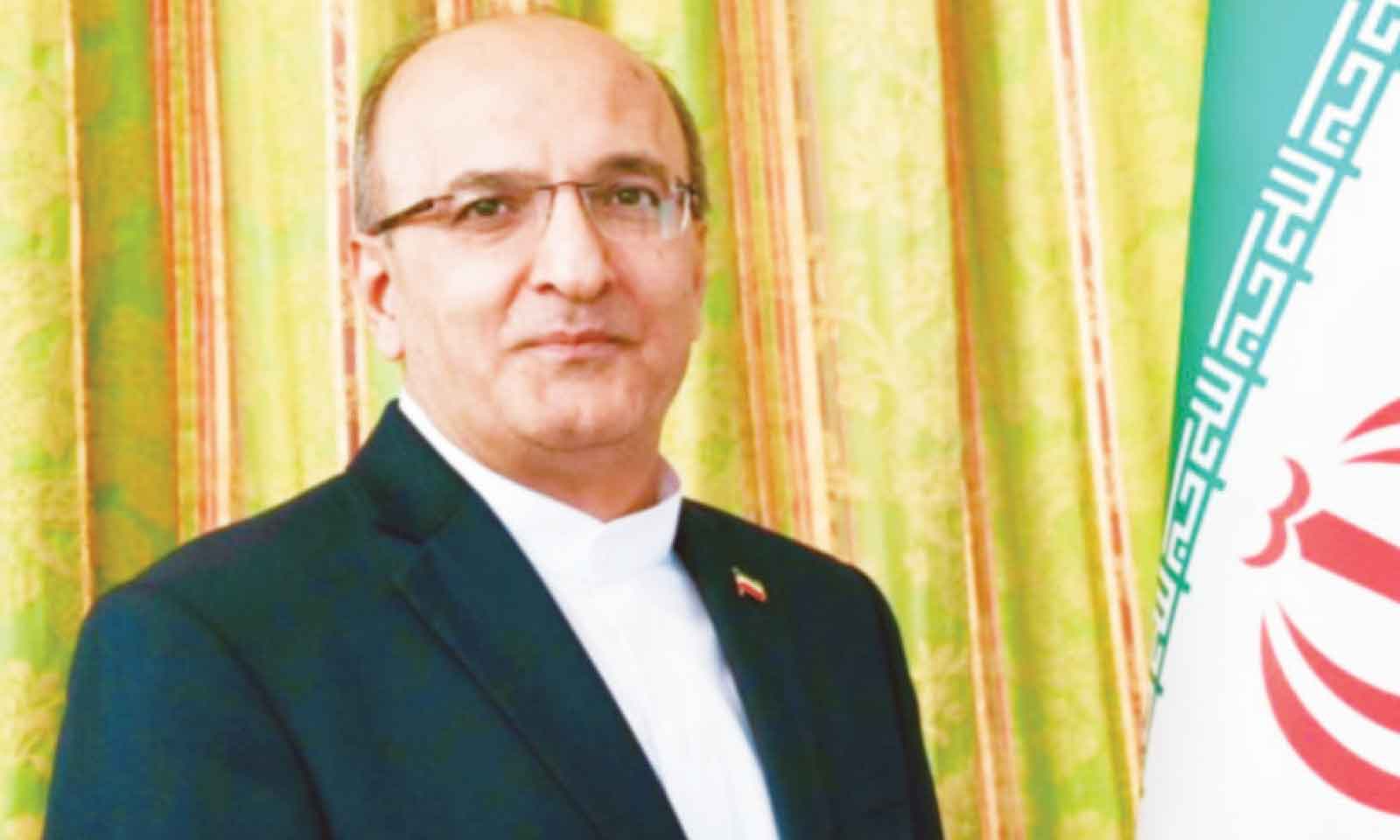
Gibson Nyikadzino
Zimpapers Politics Hub
THE Islamic Republic of Iran early this month experienced a coordinated operation it says was unleashed to undermine its security and tear the country to effect regime change. The riots led to damage and destruction of significant social infrastructure including schools, hospitals and mosques, the burning and murder of law enforcement personnel, and ordinary civilians. In an interview with Zimpapers Politics Hub’s Gibson Nyikadzino (GN), Iran’s new Ambassador to Zimbabwe Mr Amir Hossein Hosseini (AHH) spoke about how the courageous presence of the Iranian people dealt a humiliating blow to the architects and perpetrators of the operation. He also spoke about the cordial Zimbabwe-Iran relations, highlighting how the two countries have stood side-by-side with each other. Below are the excerpts.
GN: What areas are you strongly focusing on to grow Zimbabwe-Iran relations during your tenure?
AHH: At present, the two countries have reached a shared understanding that their political relations are at the highest possible level. Building on this strong foundation, it is essential to take decisive steps to enhance economic, trade and investment ties. In my view, given their respective capacities, capabilities and needs, Iran and Zimbabwe can function as complementary economies. By strengthening economic, trade and investment cooperation, both countries can ensure that their peoples fully benefit from the opportunities and dividends of closer bilateral engagement. I believe that in the coming years, particular emphasis should be placed on sectors such as healthcare and medical services, oil and petroleum products, petrochemicals, chemical fertilisers, agricultural machinery and equipment, mining, higher education, technical and vocational training, and tourism.
GN: Which areas do you have strong cooperation and where do more opportunities for broader collaboration lie?
AHH: As someone familiar with the needs and capacities of both countries, I note that there is a long and diverse list of potential areas for cooperation, spanning political, economic, commercial, investment, oil and petrochemical, cultural and artistic, medical, pharmaceutical, agricultural, mining, industrial, technological, tourism, urban and rural development as well as educational sectors. Realising this potential requires practical steps for effective implementation. In my view, over the medium term, the two countries can strengthen bilateral relations through concrete cooperation in key areas of mutual interest.
GN: How have Zimbabwe-Iran historical ties been translated into chains of economic benefit?
AHH: Since the very first days of Zimbabwe’s independence, our countries have laid the foundations for close cooperation across all fields, including the economic sphere. As two nations that have experienced coercive measures and unilateral sanctions, we have at times faced significant challenges in deepening our bilateral cooperation. Nevertheless, I am pleased to note that the trajectory of collaboration between these pioneering and revolutionary nations in the years following Zimbabwe’s independence has been highly encouraging. Through identifying each other’s capacities, capabilities and needs, the two countries have successfully signed numerous memoranda of understanding aimed at enhancing mutual cooperation.
At present, both sides are engaged in negotiations and constructive interactions to take practical steps toward implementing these agreements, particularly in trade and economic cooperation.
GN: What mechanisms have been implemented to monitor and measure the progress made in these areas of cooperation you raise?
AHH: The two countries have established a Permanent Joint Commission of Cooperation to oversee and guide the development of their relations. To date, nine sessions of this Commission have been held. The most recent engagement was the intersessional meeting of the ninth Permanent Joint Commission, held in Tehran from December 8–9, 2025, during which both sides signed minutes comprising a preamble and seven substantive sections. The next session is scheduled to take place later this year in Harare.
GN: Where do we locate collaboration in research and innovation to boost industrialisation in this friendship?
I highlighted the two countries’ efforts to strengthen practical cooperation, including in education and technology. We are fully prepared to advance bilateral collaboration in scientific and educational fields, as we firmly believe that synergy between our nations in science and technology can enhance their capacity to withstand external pressures and pursue a dignified, forward-looking path toward sustainable development. On behalf of my country, I wish to affirm that the Islamic Republic of Iran stands fully ready to share its experience and expertise in scientific, educational, and technological spheres with its friendly and brotherly nation, Zimbabwe.
GN: You spoke about sanctions and coercive measures against Zimbabwe and Iran. How have these negative experiences strengthened the two countries’ resilience against Western unilateralism and hegemonism?
AHH: Iran and Zimbabwe, as countries that have endured Western colonial and imperialist policies, have maintained close and sustained cooperation since Zimbabwe’s independence in confronting adverse actions by Western powers against developing and newly independent nations. For over two decades, Zimbabwe has consistently extended full support to Iran in the face of Western efforts to instrumentalise human rights issues against my country. In the multilateral arena, particularly within the United Nations, the two countries have been leading voices in resisting Western hegemony, acting in concert with shared positions in the formulation and adoption of numerous arrangements and resolutions by developing nations opposing the expansionist and interventionist policies of Western powers. A recent example of Zimbabwe’s support is its vote against the unjust and politically motivated resolution on the human rights situation in the Islamic Republic of Iran during the ongoing session of the United Nations General Assembly.
GN: With multipolarity and BRICS+ in mind, how key are your interactions likely to influence Zimbabwe’s campaigns for a United Nations Security Council seat as a non-permanent member next year?
AHH: Zimbabwe and Iran have consistently been advocates of the need to reform the current structure of international relations with a view to guaranteeing the equal rights of all countries, irrespective of criteria such as population size, territorial extent, economic strength, military power, or other such measures. We have played an active and high-level role within frameworks of cooperation among developing nations, including the Non-Aligned Movement, South–South cooperation mechanisms, BRICS+, and the Group of Friends of the Charter. In these settings, Iran and Zimbabwe have stood side by side in opposing various forms of colonialism and domination at the international level. On Zimbabwe’s candidacy for a non-permanent seat on the United Nations Security Council next year, I wish to state that the Islamic Republic of Iran has been a firm supporter of Zimbabwe in this regard, and that both countries have previously declared their mutual support for each other’s respective candidacies for membership in the Security Council.
GN: Finally, could you please speak to us, as a first-hand source, about the recent unrest in the Islamic Republic of Iran?
AHH: A vast and coordinated operation was unleashed to undermine Iran’s security and tear the country apart. Thanks to the decisive and courageous presence of the Iranian people in the streets, its architects and perpetrators were dealt a resounding and humiliating blow. It is not Iran that projects military power across oceans, sending troops, warships, and fighter jets from the Persian Gulf to the Gulf of Mexico. It is not Iran that has a long history of orchestrating coups and carrying out numerous destabilising actions against independent countries under false and fabricated pretexts. It is not Iran that harbours predatory ambitions toward the resources and national wealth of other nations, nor one that constantly issues threats and seeks to impose its will on the rest of the world. Have no doubt whatsoever: if the present conduct of the US government continues, the world will be dragged into flames. One of the most shameful and deeply alarming aspects of the actions carried out by terrorists trained and directed by the Mossad, CIA, and MI6 during the recent riots in Iran has been the commission of ruthless, brutal, inhumane, and profoundly anti- cultural Daesh-style terrorist crimes, deliberately aimed at terrorising the Iranian people and coercing them into submission to foreign powers. Their conduct not only violated fundamental human values but also trampled upon the moral and cultural foundations of Iranian society.