

 Online Reporter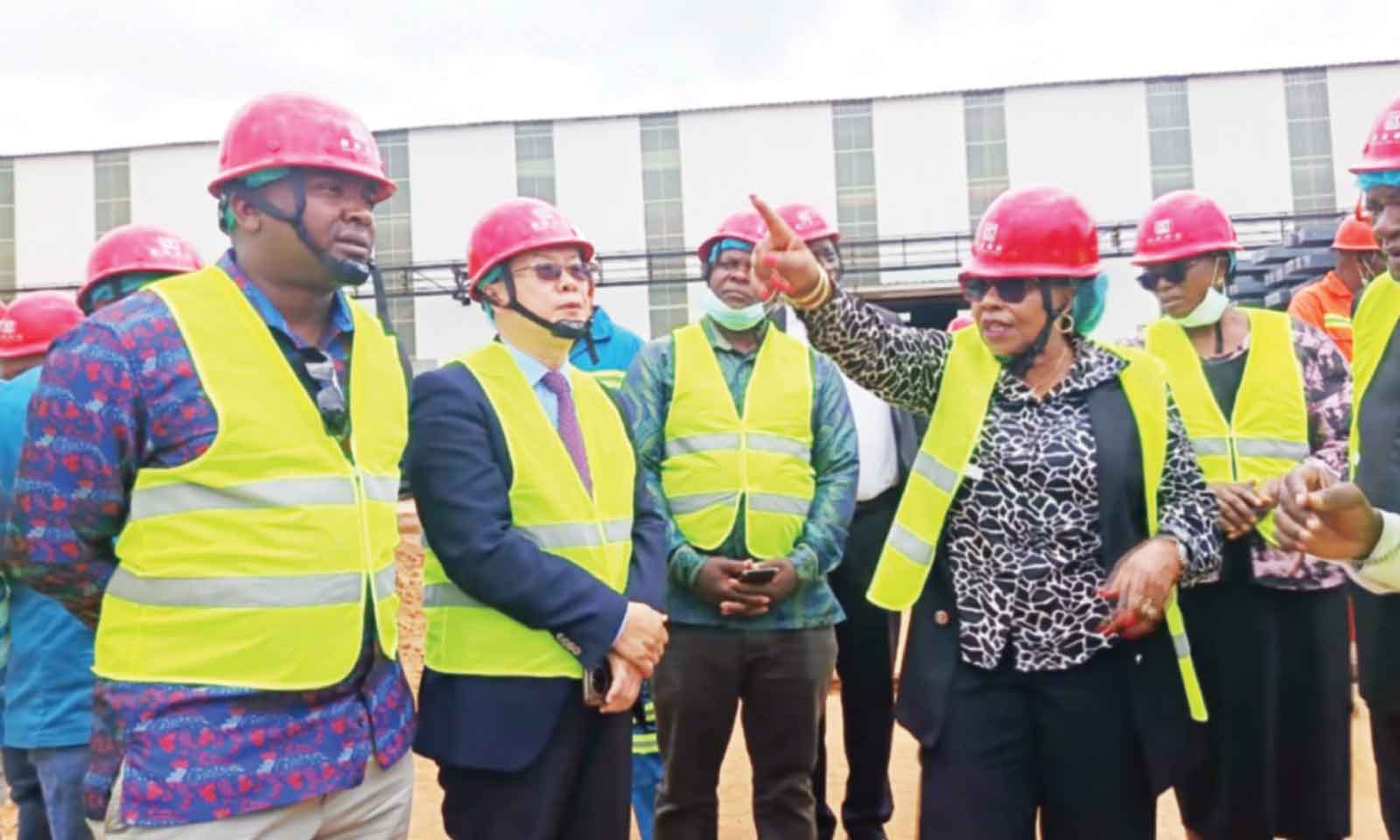
Patrick Chitumba
Midlands Bureau Chief
THE enduring friendship between Zimbabwe and China continues to yield significant dividends, with around 500 Chinese investors registering in the country last year alone, pledging investments of about US$2,5 billion.
Most of these investments are focused on the mining and manufacturing sectors, highlighting the country’s growing appeal as a prime investment destination.
This influx of Chinese investment is seen as a testament to President Mnangagwa’s “Zimbabwe is open for Business” mantra, underscoring the country’s potential as a hub for industry and innovation.
Chinese Ambassador to Zimbabwe Zhou Ding said the Zimbabwe-China relationship, which spans decades, has created fertile ground for mutually beneficial partnerships.
Ambassador Zhou made the remarks during a tour of the Dinson Iron and Steel Company (Disco) in Mvuma yesterday, emphasising the role of Chinese support in Zimbabwe’s socio-economic development.
Minister of Women Affairs, Community, Small and Medium Enterprises Development, Monica Mutsvangwa, alongside members of the Parliamentary Portfolio Committee on Foreign Affairs and International Trade, led by Cde Webster Shamu, were also present during the tour.
As Zimbabwe strives to meet its Vision 2030 goals of becoming an upper-middle-income society, the surge in Chinese investments is expected to foster economic growth, create job opportunities, and strengthen the nation’s position in regional trade.
Said Ambassador Zhou: “During President Mnangagwa’s successful visit to China last year, our two Heads of State elevated bilateral relations to an All-Weather Community with a Shared Future. This historic commitment has injected powerful momentum into our cooperation.”
He said in 2025, approximately 500 Chinese investors registered in Zimbabwe, with planned investments close to US$2,5 billion, over one-third of which is in manufacturing.
“This is a clear vote of confidence in Zimbabwe’s vision of being open for business,” Ambassador Zhou added.
He emphasised that Harare has made significant progress in its infrastructure development journey with the establishment of Disco, a key player in the country’s industrialisation efforts.
The plant is poised to enhance the nation’s construction and manufacturing sectors, aligning with Vision 2030, spearheaded by President Mnangagwa’s administration.
“Well, they say iron and steel are the food or backbone of industry; Zimbabwe’s iron and steel industry has enough food following the setting up of Disco.
“Zimbabwe is slowly having food for socio-economic growth through the production of steel products,” Ambassador Zhou said, reiterating China’s commitment to supporting Zimbabwe’s development.
He praised the China-Zimbabwe Cooperation, highlighting the pride Beijing takes in Tsingshan Holding Group’s decision to establish the steel plant in Zimbabwe.
“What impresses me most is that they are not only manufacturing products, but also addressing local community needs through corporate social responsibility programmes. They are building roads, drilling boreholes, and renovating schools, demonstrating the tangible benefits of the China-Zimbabwe Cooperation.”
Through his visit to Disco, Ambassador Zhou witnessed firsthand how the partnership between China and Zimbabwe is yielding concrete results.
“Having toured the impressive production lines and facilities, I believe Dinson has made a powerful impression on us all. As a Chinese saying goes, seeing is believing,” he said.
Dinson is a significant long-term investor in Zimbabwe.
At its peak, it will have an annual steel output of approximately 600 000 tonnes — 60 percent of which will be exported.
It will also create thousands of jobs and generating essential foreign exchange for the country.
Looking ahead, the Ambassador said Dinson’s ambition to become Africa’s largest integrated steel plant will significantly bolster Zimbabwe’s manufacturing base and enhance its position in the global steel value chain.
Beyond the production figures, Dinson’s broader contributions are notable, as it actively embraces social responsibilities by initiating projects such as a US$6 million power grid, an US$8 million 25-kilometre dual-lane road, US$50 000 worth of boreholes and the renovation of seven schools at a cost of US$200 000.
“These efforts reflect the true spirit of mutually beneficial cooperation and demonstrate that development must deliver tangible benefits to communities,” said Ambassador Zhou.
He commended the Government for its efforts in transforming the economy, noting last year’s growth rate of 6,6 percent as a testament to collective hard work.
“It also owes much to the contributions of thousands of Chinese-invested enterprises here. China remains firmly committed to supporting Zimbabwe’s development through concrete action.”
In addition, Ambassador Zhou said this year marks the 70th anniversary of diplomatic relations between China and Africa, as well as the China-Africa Year of People-to-People Exchanges.
Minister Mutsvangwa, who took along potential investors from Canada and the United States, said under President Mnangagwa, Zimbabwe has become an investment destination of choice.
She highlighted the positive impact of the Zimbabwe-China friendship, which has created opportunities for 180 000 smallholder farmers and expressed gratitude to the Government for fostering a conducive environment for attracting investors like Disco.



