

 admin
admin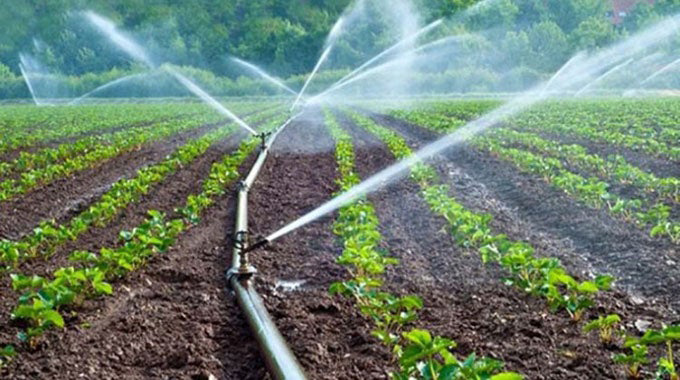
Growing vegetables is her only hope in the drought and hunger-ravaged Zvishavane district.
Sekai and her friends water their crops using this bucket system at least three days a week to ensure that they do not dry out.
They have no choice but maximise their cropping during this period because in a few months; time, the few water sources will dry out leaving them to compete with animals.
People around this area have been forced to start little gardens far away from their homes as the nearest irrigation scheme — Mabwematema — is not longer functioning.
The only cash crop in the area, cotton, is no longer viable due to the current price wars and changing climatic patterns that have seen the district becoming more arid.
However, two rivers — Runde and Ngezi — flow through the district but are of no benefit to the people so in need of water.
They see themselves as beggars sitting on a bed of gold.
Indeed, the district cries for irrigation schemes.
Zvishavane has three main irrigation schemes — Mabwematema, Hwadze and Mupani.
Nothing has been happening at all three irrigation schemes as pumps have either been stolen or broken down.
The only reliable source of food has thus been taken away from them.
Chief Mazvihwa, Calvin Hove, bemoans that Zvishavane does not have big dams and Government’s failure to resuscitate the few irrigation schemes in the area.
“Our biggest worry is that Zvishavane has no major dam. This has affected development of irrigation activities in the area.
“In some instances only a few farmers are irrigating vegetables using buckets, but that cannot sustain a community hence the need to quickly resuscitate and
reconstruct existing irrigation schemes,” he said.
Zvishavane is getting drier and no meaningful cropping can take place in the area.
Continuous changes in weather patterns have seen even the drought-resistant crops like millet and sorghum also failing.
Chief Mafala, Mtokozisi Matshazi, said there is no meaningful cropping in the area.
“The fields can no longer help us and we have to resort to Government and donor assistance.
“This year it has been serious as the rains left when we needed them the most.
“The few sorghum and millet that survived had reached the milking stage. We watched in horror as the sun drained the life out of our crops. All our investment and hope was taken away from us just like that and we could not do anything.
“The situation was exacerbated by the fact that we had just applied fertilisers to our crops as the season has been promising. The dry conditions have reduced us to perpetual beggars. We now are relying on the grain loan for survival. We feel this year the need for food is going to be worse,” Chief Mafala said.
Indeed, it is high time the district focused on irrigation to ensure people can at least produce some grain to augment what is coming from Government.
Chief Wedza said: “We are looking at ways of resuscitating existing irrigation schemes to ensure our people can get some grain.
“We ought to move with haste to ensure resuscitatation of these schemes so that our people can have some supply of vegetables.
“We only have a medium-sized Mbala Dam but there is no irrigation scheme. This is despite a number of perennial rivers flowing through the district.
“We feel these rivers should be taped to provide irrigation facilities for our people.”
Years of failed seasons have also reduced the once nutritious pastures to something ordinary that they can no longer hold many cattle.
Livestock farming is thus no longer as profitable as before.
Mr Cainos Ndlovu under Chief Wedza said it was no longer profitable to keep lots of animals, as the pastures can not support ranching.
“We have been forced to reduce the number of animals to manageable numbers ranging between 10 and 15.
“Increases in population in the district have exerted pressure on the pastures as people are settling even on former grazing areas.”
With two major rivers — Ngezi and Runde — flowing through the area, Zvishavane which is in the Midlands, faces the same problem with areas in neighbouring
Masvingo province that now face perennial food shortages because of erratic rainfall.
Efforts to resuscitate the irrigation schemes have been stalled by lack of money.
Work at one of the local dams, Shavi Dam that was meant to resuscitate one of the irrigation schemes stopped after Government failed to pay contractors at the dam meant to supply water to Mabwematema Irrigation Scheme.
With the Ministry of Agriculture, Mechanisation and Irrigation Development getting a small budget and the Ministry of Finance even failing release funds in time, it is highly probable that the irrigation resuscitation programme will take longer that anticipated.
Presenting a lecture at the Zimbabwe Staff College early this year Agriculture, Mechanisation and Irrigation Development Minister Joseph Made on challenges in irrigation development and mechanisation said the area was seriously under funded.
Minister Made said most irrigation systems in the country required redesigning and rehabilitation to suit operational needs of farmers.
Rehabilitation of irrigation schemes got only US$1,9 million of which only a few millions have been released for the work.
Chief Wedza appealed to Government to prioritise the irrigation resuscitation programmes if the area is to win the war against hunger.
“Prioritising irrigation projects will ensure the area has somewhere to look at other than central Government for food allocation. We cannot be perennial beggars seeking Government assistance.
“I hope part of the money obtained under the Zvishavane Community Ownership Scheme will be devoted to save the schemes,” Chief Wedza said.
Mr Tirivafi Muganha of Mutambi Village expressed gratitude that the Zvishavane Community Trust had put the resuscitation of irrigation scheme as a top priority.
“Prolonged dry spells especially at a time when the crops need more water has made crop farming an unwise business. Most of our young people are now resorting to gold panning.
“These mines — Mimosa, Murowa and others — have helped a lot in easing problems caused by hunger as they are employing the majority of the young people in the area,” he said.
Chief Mazvihwa said to avert hunger the people were relying on Government grain loan scheme and food for work programmes although he expressed concern that people would not be able to repay the loans after the next harvest.
Buying maize is out of the question, as most cannot afford the US$16 per bag demanded by the GMB.
It seems irrigation in Zvishavane will remain a pipe dream, as Government says it has no resources to finance the construction and resuscitation of irrigation schemes.
- fortious.nhambura@ zimpapers.co.zw


 Online Reporter
 Charles Duri