admin
admin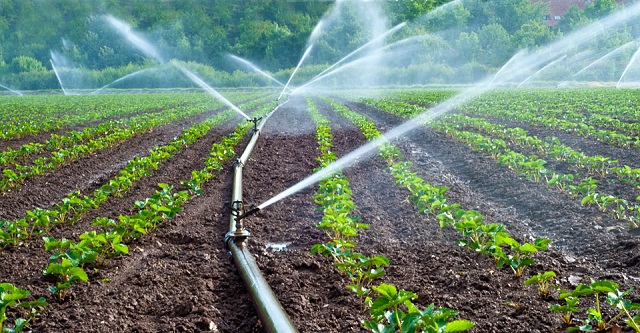
Tinomuda Chakanyuka
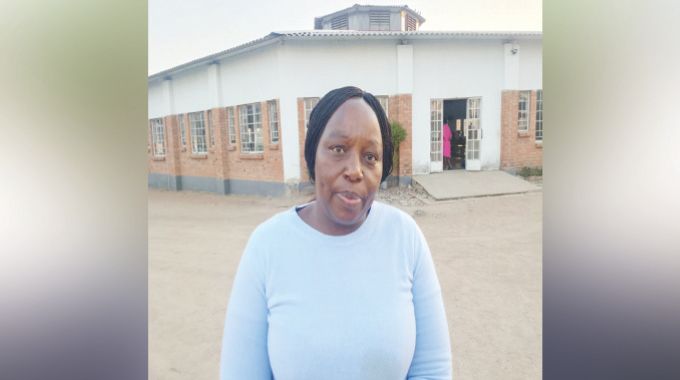
MS Evelyn Madzamba of Chirumanzu communal lands in the Midlands Province has been growing maize in her one hectare piece of land which her husband Mr John Chirima inherited from his father over 30 years ago.
Growing maize has always been a vital part of her socio-economic life. A mother of five, Ms Madzamba’s yields from her small field guaranteed food for her family, complemented by remittances from her husband every month from his toils in Masvingo.
On a good season she could harvest 20 or more bags of maize, enough to sustain her family and even spare a little for sale.
Fortunes, however, took a gradual tragic turn for her and her family at the turn of the millennium.
Ms Madzamba now counts herself lucky to get even five bags per hectare and with no remittances from her husband who has since left work, her story could easily read tragedy. This season she has already lost hope of any yields following erratic rains received in her area and beyond which rendered her maize crop a complete write-off.
She is not alone in this quagmire, as thousands of other small-holder farmers not only in Chirumanzu district, but across the country have been hard-hit by drought, attributable to climate change.
Faced with the effects of climate change, particularly on crop yields, most farmers are in a dilemma, not sure of what to do next, as their sole source of livelihood and food security is under threat.
Luckily for Ms Madzamba she has somewhere to fall back on, Hama Mavhaire irrigation scheme where she holds a one hectare plot.
She is one of the 100 farmers who hold plots in the irrigation scheme established in 1992 by Government and its development partners as an urgent response to the drought that hit the country that year.
Had it not been for the irrigation scheme, the unpredictable weather patterns could have easily plunged Ms Madzamba and her fellow communal farmers in the area into abject poverty and perennial hunger.
Many farmers in the area have since abandoned their small communal fields which no longer yield much to focus their energies on the irrigation scheme where they grow crops for sustenance and commercial purposes.
The abandoned small fields are now pastures for the farmers’ cattle, as with the erratic rainfall, nothing more than grass can be expected to grow on the small pieces of land.
“It is very clear that things have changed. We no longer get as much yields as we used to get from our communal fields. Some seasons we don’t even harvest even a single maize cob. It’s the case this season and it’s heartbreaking,” said Ms Madzamba.
She added, “The irrigation scheme has since become our fortress. Traditionally we would work on both the irrigation scheme and our communal fields to maximise on yields, but it’s different now”.
Experts have predicted that owing to climate change, rainfall patterns will change more extremely from one season to another, with more droughts, floods and intense rainfall patterns expected to be the order of the day.
Such extreme weather conditions spell doom, especially for communal farmers who solely rely on natural rainfall for their farming activities. Researchers have asserted that by 2050, average crop yield in Sub-Saharan Africa will go down by between 30 percent and 50 percent. This paints a gloomy picture for the region’s food security and calls for a regional and more integrated approach in mitigating the impacts of climate change.
Over the past five years Zimbabwe has been harvesting an average of 800 000 tonnes of maize annually against a national demand of 2, 1 million tonnes and importing the difference.
Zimbabwe and other countries in Southern Africa have of late been experiencing short rainy seasons and sometimes floods as the effects of climate change manifest.
Climate change has changed the face of communal farming, from which farmers, at some point, derived financial gain after selling their surplus yield to the Grain Marketing Board.
Communal farming has since been turned into something that is even far less than subsistence in nature and purpose, and farmers can barely rely on it for survival.
The biggest challenge Zimbabwe has been facing over the years, has not been inadequate rainfall, but unpredictable rainfall patterns, inconsistent with the traditional farming season.
Most communal farmers have thus failed to harvest as they rely mostly on the rains to see through their crops to maturity, yet the rainy seasons have been consistently shorter than anticipated for almost a decade now.
Against a backdrop of such undesirable developments, poverty has set in precipitating negative trends like high school dropout rates and lack of money to pay for health care services and food.
The story has, however, been different for other farmers whose crops are under irrigation, as the short rainy seasons have been able to provide enough rains to fill up dams for irrigation through the remainder of the season and see off crops to maturity.
Chirumanzu farmers are a case in point and can testify the massive transformation their lives have gone through, in the more than two decades they have had an irrigation scheme in their area.
“We are cushioned. The irrigation scheme has made our lives easy because we never at any time predicated that we would have successive dry seasons as is the case now. When your crops are under irrigation you can be certain that you will harvest at the end of the season,” said Ms Madzamba.
The irrigation scheme has been a reliable source of income for the farmers who supply fresh produce from their plots to surrounding cities and towns like Masvingo, Gweru, Mashava, Shurugwi and Zvishavane. Irrigation, although expensive, can be one of the many antidotes to climate change effects and can go a long way in alleviating poverty in rural households.
“I’ve been able to send all my children to boarding school through the income I realise from my irrigation supported plot,” testified Mr Patrick Tsvangirai another plot holder at the irrigation scheme.
When the Government of Zimbabwe introduced the rural electrification programme in 2002, communal farmers in Chirumanzu were among the first to sign up for the programme. A number of houses in the area are now electrified under the programme, as the farmers had the wherewithal to partake in the programme, credit to the irrigation scheme.
The Southern Africa Development Community (SADC) regional policy on agriculture emphasises the need for setting up more small scale irrigation schemes in rural communities in the region, to mitigate against perennial and irregular rainfall patterns experienced in the block.
Mindful of this the Government has embarked on an overdrive programme to rehabilitate small scale irrigation schemes around the country, as a measure to improve food security in the country. In 2014 Government availed $10 million to the Ministry of Agriculture, Mechanisation and Irrigation Development for the rehabilitation of small holder irrigation schemes in the country.
Some of the small holder irrigation schemes which were rehabilitated under the programme include Nyanyadzi and Nenhowe in Manicaland which measure a collective 1 000 hectares, Hama-Mavhaire and Mhende in Chirumanzu district which measure 100 and 73 hectares respectively and Chimwe-Chegato in Mberengwa which measures 95 hectares to name a few.
Director for the Department of Irrigation Development, under the Ministry of Agriculture, Mechanisation and Irrigation Development Dr Conrade Zawe said the programme was aimed at increasing productivity of irrigation schemes.
He said his department was also targeting to increase land under small holder irrigation to 6000 hectares. There are 3 500 hectares under small holder irrigation in the country.
“We want to turn small holder irrigation schemes into the country’s agricultural hub. All we want is to improve food security in the country and this is one of our main strategies towards this goal,” he said.
The importance of irrigation, particularly in light of the devastating effects of climate change on the rainfall patterns and ultimately the country’s yields and food security cannot be understated.
Climate change expert and lecturer at the Midlands State University Mr Raymond Mugandani called on Government to come up with a cocktail of measures to cushion the rural folk against the effects of climate change.
“Communal farmers bear the brunt of climate change and that is fact. They have no cover or cushion against the effects and this makes their predicament far worse. There is a need for the relevant authorities to come up with strategies that ensure communal farmers, who form the largest chunk of our population, are cushioned,” he said.
Development studies expert Enoch Musara said irrigation was the panacea to the Southern African region’s food security concerns.
“Sustainable irrigation to support agro-reliant countries like Zimbabwe is the way to go. Irrigation will actually provide panacea to food security challenges which agro-based countries face for their domestic consumption and trade,” he said.
Musara cited the Tokwe-Murkosi dam project, which he said when complete would go a long way in improving food security in the country through irrigation. He added that Government also needed to support the existing irrigation activities through marketing and pricing produce churned out by farmers in irrigation schemes.
It goes without mention that irrigation, though expensive to set up, stands out as the solution to poverty and food security concerns in the region. SADC countries thus need to invest heavily in putting more land under irrigation.
This article was supported by the Southern Africa Research of Documentation Centre (SARDC)



 Online Reporter