Professor Chris Ogden
After weeks of blockades by Iran and the United States in the Strait of Hormuz, it is clear the narrow waterway is now pivotal to the outcome of the conflict.
The US has begun to escort ships through the narrow passage, but behind the military manoeuvring lies a deeper development: energy security in the Persian Gulf is in a state of profound flux.
As well as the desire by both Iran and the US to control the global flow of oil, gas, helium and fertilisers from the region, the United Arab Emirates (UAE, a key US ally) has withdrawn from OPEC in what has been called a major blow to the oil cartel.
On top of this, Iran has announced plans to introduce tariffs in the Strait of Hormuz as a form of reparations for the damage caused by the war.
If imposed, these tariffs are estimated to be worth between US$40 billion and US$50 billion a year to Iran, and would potentially allow it to mitigate the impact of US economic sanctions. Crucially, tariffs would be a way to cultivate stronger relations with China because they would be denominated in Chinese yuan, not US dollars.
This has the potential to significantly alter regional and global power balances.
In fact, such payments have reportedly already been made by owners of vessels going to China, India and Japan, with the Iranian parliament working to formalise the process. (Iran has also begun accepting payments in cryptocurrency.)
50 years of dominance
If Iran can continue to charge these tariffs, it could tilt regional influence away from the US towards China and Asia by eroding the historical dominance of the petrodollar.
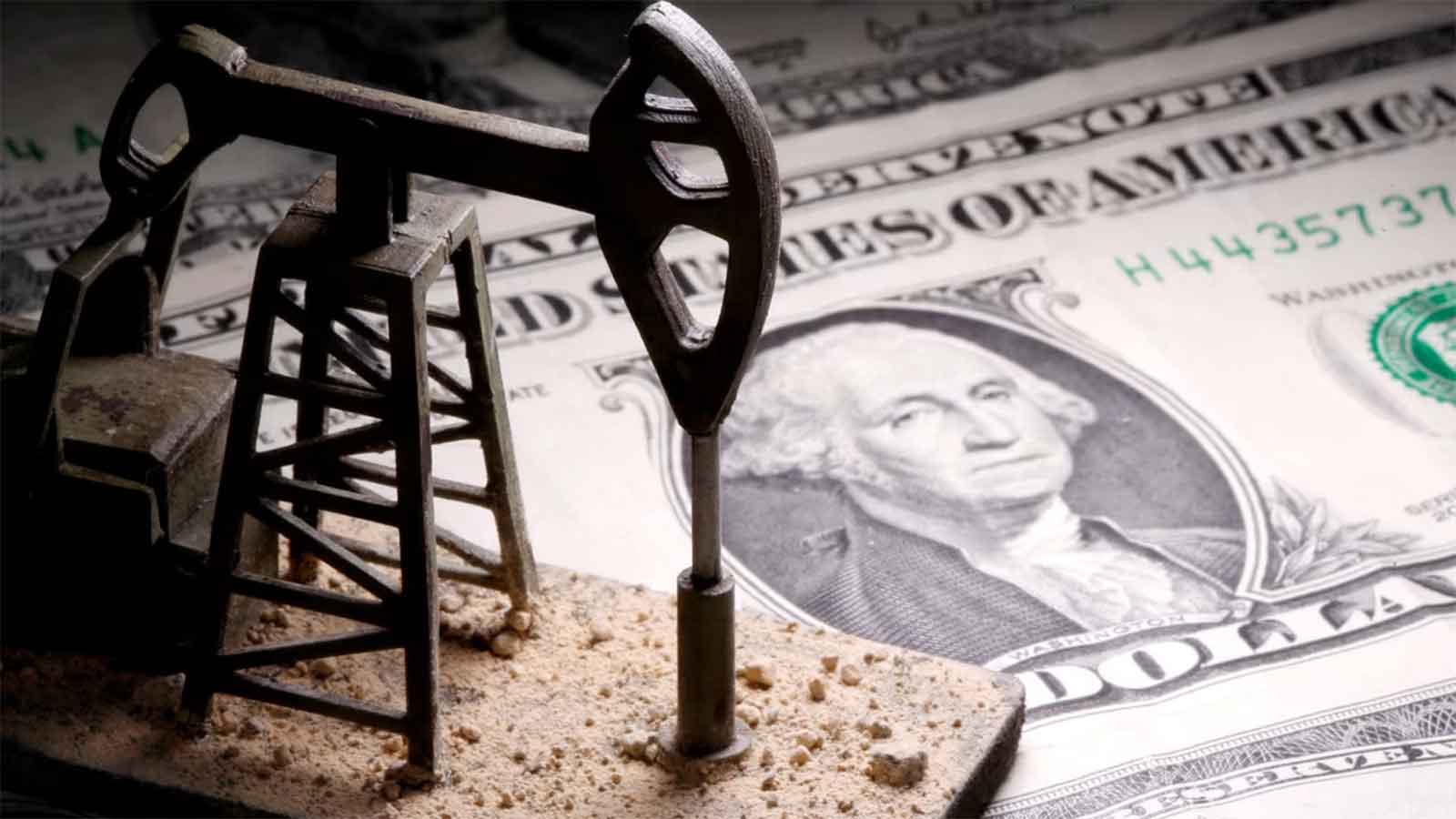
Essentially, the petrodollar system has seen the pricing and trading of oil in US dollars. The term dates from the 1970s when the US asked Saudi Arabia to exclusively price its oil in US dollars in return for military aid.
This spread across OPEC (Organisation of the Petroleum Exporting Countries), becoming the benchmark of the global oil trade, bolstering the US dollar as the global reserve currency and underwriting US power.
Oil-producing nations amassed huge petrodollar surpluses — too much to invest only in their own economies — which were funnelled or “recycled” back into US securities and stocks, and other countries’ sovereign wealth funds.
They have become the primary source of revenue for OPEC members, as well as non-member oil exporters Qatar and Norway. This ties these countries to Washington and gives the US significant financial leverage in global affairs.
The flow of petrodollars helps finance US deficits and reduce US borrowing costs.
A new paradigm?
If major regional players such as the UAE, Bahrain, Qatar, Kuwait and Saudi Arabia pay Iranian tariffs in “petroyuans”, economist Antonio Bhardwaj has said, it would mark “the systematic erosion of the petrodollar system and the emergence of the petroyuan as a credible, institutionally embedded alternative framework for settling global energy transactions”.
It is a sizeable “if”, but the introduction of tariffs would also pose a dilemma for countries that supported Iran in the conflict (implicitly or explicitly) and those that did not.
As international relations analyst Pakizah Parveen has written, we would see the emergence of “a bifurcated global oil market: Barrels from compliant parties would move through Hormuz in yuan. In contrast, non-compliant parties would incur significantly higher costs in dollar-denominated barrels”.
Such a choice would affect major US allies such as Pakistan, South Korea, Japan and the Philippines, all of which have faced severe economic pressures as a result of the upheavals in the Gulf and Middle East.
Paying tariffs in petroyuan would draw them towards China and play into Beijing’s narrative of being a reliable and more stable economic force.
It also mirrors Russia’s request for payment in yuan for its oil since 2025.
Decline of the petrodollar
It would be premature to argue Iranian tariffs will lead to a general “de-dollarisation” of the world economy. But they may be a step towards a devaluing of the US dollar.
By extension, any move by other countries away from the US dollar is a move away from dependence on the US financially and politically. It would also aid China’s push to internationalise the yuan.
For the first time since 1996, global central banks hold more gold in their reserves than US debt securities. The BRICS group of countries may move further away from US influence, with China, India and Brazil having all reduced their US holdings in 2025.
Overall, Iranian tariffs denominated in yuan would be another sign of an emerging multipolar world in which US pre-eminence is no longer a given. It would mean more strategic flexibility for all countries, great and small, but also more uncertainty.
Chris Ogden is associate professor in Global Studies specialising in the interplay between identity, culture, security and domestic politics in India, China, South Asia, East Asia and the Indo-Pacific.