


 Online Reporter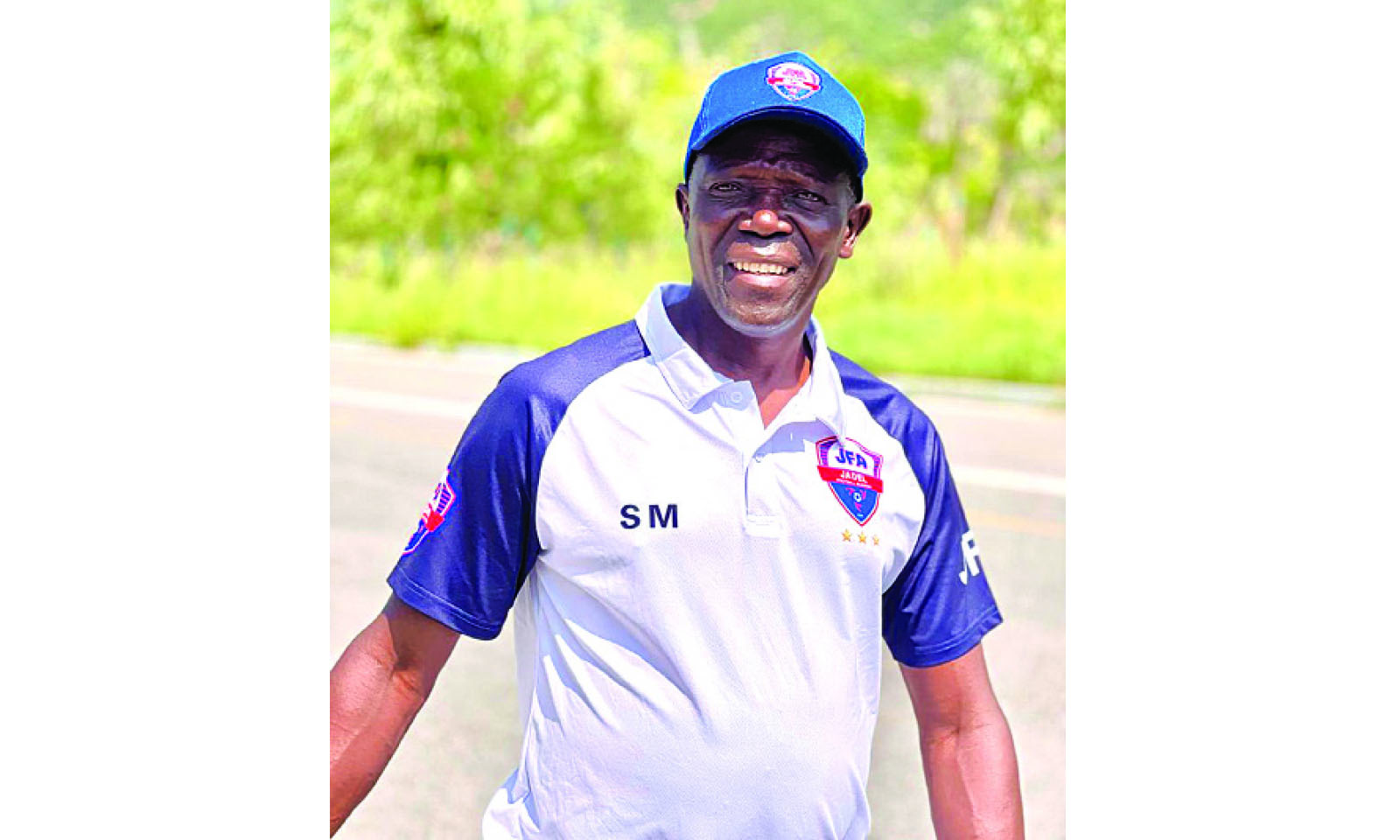
Tadious Manyepo in BEIJING, China
BEFORE independence, travelling for an away game could feel like walking into a war zone. Just ask Stanford “Stix” Mutizwa.
The Warriors and CAPS United legend, who also lit up the field for Black Rhinos, started his football journey in the early 1970s.
By the time he hung up his boots, he had earned a place in Zimbabwe’s football folklore.
For 10 straight years, he was featured on the Soccer Stars calendar, five times as the runner-up. He never lifted the top individual prize, but his consistency set him apart.
His name became shorthand for greatness. But it could have turned out very differently.
Back then, Mutizwa could have easily swapped his boots for a rifle.
Zimbabwe was still in the grip of colonial rule, and the life of a black footballer was riddled with roadblocks, both literal and symbolic.
Simply living, working or playing while black could get you treated like a criminal.
“You couldn’t even move freely,” Mutizwa recalls. “The system wasn’t built for us.”
As the liberation war raged, young men left for Mozambique and Zambia to train as freedom fighters.
Some died in camps like Chimoio in Mozambique and Freedom Camp in Zambia; they never made it home. Those who did helped usher in a new Zimbabwe.
Many are now buried at the National Heroes Acre or provincial shrines. Others lie in mass graves and yet others in unmarked graves, both at home and in foreign lands.
This August, the Heroes Month, Zimbabwe remembers them all. And for Mutizwa, football itself became a frontline battle.
“It wasn’t easy at all before we attained independence in 1980,” he says. “I started playing football in the 1970s. It was very hard to really make it because the system wouldn’t favour you. As time went on, we made the breakthrough, but the operating environment wasn’t as conducive as we would have liked.”
He still remembers a harrowing trip in 1973 while playing for Glens Strikers in Division 3.
They were headed to Hippo Valley in Chiredzi for a promotion decider. Their transport was a hired Mucheche bus. Before they got to Chivhu, then called Charter, from Harare, they were stopped at a Rhodesian police checkpoint in Featherstone.
“We were all instructed to come out of the bus for one-on-one questioning,” Mutizwa says.
The interrogation quickly turned ugly.
“It was a tough exercise carried out with threatening interrogation. We were asked where we were going. Our answers were uniform. Not very convinced, maybe, the police asked us to structure ourselves the way we would in the pitch,” says Mutizwa
They complied with the orders, lining up in a 4-2-4 formation, the tactic of the day, while being struck with rifle butts.
“It wasn’t a joke,” Mutizwa says.
He remembers every name in that team because of that moment: goalkeeper Cleopas Rumano, defenders Lovemore Mumba, Joseph “Bofan” Chingwaru and Dickson Ngwanya; Archford Chimutanda and himself in midfield; Kumbirai Mutimba, Raphael Beira, David Mukahanana, and Kembo Chunga upfront.
The two subs were Benard Timbenawo and Wilson Bingadadi, while two devoted fans had joined the trip to cheer them on.
But the police were not having it even after such a vivid demonstration.
“They thought we were going outside the country to receive military training using football as a decoy,” Mutizwa says. The two fans were detained and forced to return to Harare (then Salisbury).
“And, as if that was not enough, when we turned at Ngundu, heading for Triangle, our manager was harassed at another police roadblock,” says Mutizwa
It was not an isolated incident.
Glens Strikers faced this kind of abuse routinely, especially during away matches in Mvurwi, Mutorashanga, Chinhoyi, Kadoma and Marondera.
That was life under colonial rule. Brutal. Dehumanising. But it forged resolve in people like Mutizwa.
After leading Glens Strikers to the Super League, he signed with CAPS United in 1979. Three years later, he joined Black Rhinos. There, he finally crossed paths with comrades-in-arms, the very people the British police had feared he would train with back in 1973.
Mutizwa went on to win several trophies, including three league titles with CAPS and Rhinos, and the Cecafa Cup with the Warriors.
He later transitioned into coaching and led Rhinos to notable successes.
Today, Mutizwa is shaping the next generation. He is in Beijing, China, with Jadel Football Academy, guiding young Zimbabweans at the 100-Team Cup, running from August 8 to 16.
His squad won the Thaiwoo Cup last week, edging out over 60 other teams. But the bigger battle lies ahead.
The 100-Team Cup coincides with Zimbabwe’s Heroes Day and Defence Forces Day holidays, and for Mutizwa, the symbolism is powerful.
“We are joining the nation in commemorating the Heroes Day and the Defence Forces Day while here in China,” he says.
“We’d like to create heroes in the field of play and also win the 100-Team Cup and raise our country’s flag high.”
Jadel Football Academy, founded by former Young Warriors player Walter “Ringers” Musanhu, has become a multicultural force in China, with 23 nationalities represented.
Sixteen Zimbabwean players travelled for the tournaments last month.
For Mutizwa, it is about something more than trophies. It is about a legacy. And maybe, in some quiet way, redemption for those risky bus rides and rifle-butt checkpoints.
They never gave him a cap, but Zimbabwe remembers him all the same.




Manyepo continues to lie. Chivhu was called Enkeldoorn then, not Charter. Fort Charter was the first post established by the Pioneer Column nearby while making its way to Fort Salisbury. Chivhu was Enkeldoorn, established by Afrikaner farmers around the same area. In fact they preferred to call it the Republic of Enkeldoorn, a separate Afrikaner farmers “state” within Rhodesia.