Online Reporter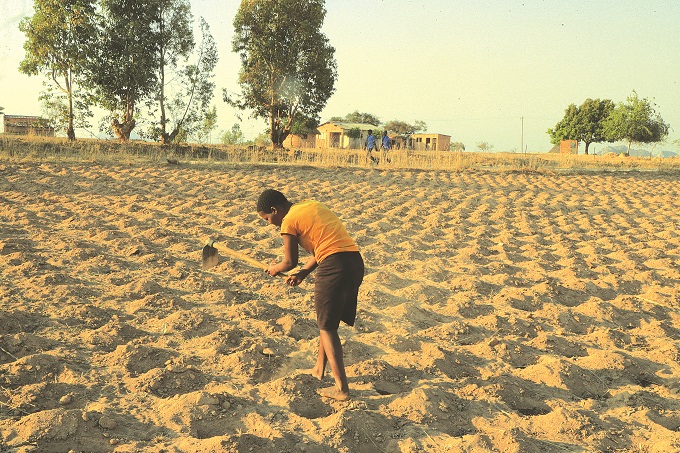
Prof Obert Jiri
Zimbabwe has excelled in conservation agriculture under the Pfumvudza/Intwasa programme. The concept is aimed at climate-proofing agriculture by adopting conservation farming techniques. It involves applying correct agronomic practices for higher yields and returns, particularly in small areas. The success of the concept has inspired many countries. Permanent Secretary in the Ministry of Lands, Agriculture, Fisheries, Water and Rural Development Professor Obert Jiri unpacks the milestones achieved so far.
***********************
Pfumvudza/Intwasa programme since inception
The Pfumvudza/Intwasa programme, introduced in Zimbabwe around 2020, has significantly reshaped the agricultural production landscape by promoting climate-smart conservation agriculture. Over 3,5 million smallholder farmers participated in the 2024/2025 season. Of these, three million are rural households, while 500 000 are peri-urban households. During the 2024/2025 season, 12 984 359 Pfumvudza/Intwasa plots (812 522 hectares) were planted different crops, an increase from 11 932 505 plots (744 588ha) during the 2023/2024 season.
There has been a shift from conventional tillage to minimum soil disturbance, mulching and crop rotation. Farmers now plant multiple crops per plot, including maize, sunflower, sugar beans and sunhemp. There has also been enhanced soil health, water retention and resilience to drought.
Crop yield outcomes
There has been a 290 percent increase in food crop production during the 2024/2025 season compared to the last season. This desired trend is attributed to the adoption of Pfumvudza/Intwasa and improved agro-ecological tailoring of crops.
During the 2024/2025 season, national average yield for maize under Pfumvudza was 1,4 tonnes per ha against a national average of 1,25 tonnes per ha for maize grown conventionally.
Improved food self-sufficiency: Many households now produce enough to meet annual grain needs
Enhanced dietary diversity: Inclusion of legumes and oilseeds boost nutrition · Reduced reliance on food assistance: In some wards, donor support dropped significantly due to improved yields
Empowerment: Farmers report being able to sell surplus produce, reinvest in farming and improve livelihoods
Pfumvudza/Intwasa has evolved from a pilot conservation agriculture model into a nationwide strategy for food security, resilience and rural empowerment. Its success lies in its simplicity, adaptability to different agro-ecological zones and strong Government and community support.
Food and fodder crops
The Pfumvudza/Intwasa programme promotes climate-smart agriculture by encouraging farmers to grow specific food and fodder crops tailored to their agro-ecological regions.
On food crops, selection of the Pfumvudza/ Intwasa input package is based on:
Climate resilience: Crops are chosen based on drought tolerance and suitability to local rainfall patterns.
Food security: Ensures households produce enough to feed themselves and contribute to national reserves.
Economic empowerment: Surplus produce can be sold, boosting rural incomes.
Soil health: Crop rotation and legumes improve soil fertility and reduce erosion.
Livestock sustainability: Fodder crops reduce livestock mortality during dry seasons.
Food crops reason
Maize: Staple food in Zimbabwe; high caloric value
Sorghum: Drought-tolerant traditional grain
Cowpeas, groundnuts, climate-smart legumes: Improve soil fertility, nutritional diversity and income generation
Sunflower and soya oilseed crops: Economic value and protein source, feed for poultry units and household nutrition
African peas: Nutritional supplementation, diversified diets and market potential
Cotton: Drought tolerant, economic value
Sugar beans: Nutritional supplementation, diversified diets and market potential
Fodder crops
Lablab: For feed and nutrition security.
Prevent livestock deaths due to feed shortages, increase calving rates and carcass weight.
The mechanisation of Pfumvudza/Intwasa is gaining momentum, as Zimbabwe seeks to scale up climate-smart agriculture while reducing the labour burden on farmers. It also makes Pfumvudza/Intwasa appropriate and accessible to the elderly, disabled and youth farmers. Mechanisation enhances scalability, thus enables expansion beyond subsistence plots to commercial levels. Mechanised minimum tillage preserves soil structure and moisture.
Ministry of Agriculture’s role
Equipment procurement targets
Aiming to supply two-wheel tractors, direct planters and trailers
Access through AFC Leasing Company
Farmers can lease machinery or access services via approved providers
Extension services and training
Agritex officers help farmers adopt mechanised practices and maintain equipment
Demonstration sites set up with chiefs and village heads
Support for local manufacturing
Encouraging small and medium enterprises (SMEs) to fabricate and maintain equipment locally
Building a network of rural mechanics and technicians
Response by farmers
Farmers have begun responding positively, especially with the establishment of 1 804 mobile grain collection centres at ward level to ease delivery. The mandatory 10kg contribution is not paid for; it is considered a symbolic and strategic contribution to national food security. Farmers can sell any surplus to the Grain Marketing Board (GMB) at official prices. Farmers may also exchange traditional grains for maize, or vice versa, offering flexibility in household consumption.
The mandatory 10kg contribution is important, as it builds a food security buffer. Contributing to reserves ensures availability of food during future droughts.
The move encourages responsible stewardship of inputs and builds trust with Government schemes while mobile centres and swap options improve access to structured markets. For the agriculture sector, the move enhances the Strategic Grain Reserve boost. It helps Zimbabwe move towards its 1,5 million tonne target by 2028.
Price stabilisation: GMB’s role as buyer of last resort helps to regulate grain prices and prevent market shocks.
Climate resilience: Reinforces the importance of conservation agriculture and preparedness amid climate volatility.
Addressing abuse of inputs
The Ministry of Lands, Agriculture, Fisheries, Water and Rural Development has rolled out a multi-layered strategy to curb both the abuse of agricultural inputs by farmers and theft by officials under schemes like Pfumvudza/Intwasa.
Crackdown on abuse by farmers
Online input distribution system
Tracks input allocation and usage in real time
Ensures only verified farmers receive inputs
GPS mapping of plots
Inputs are linked to specific plot coordinates
Prevents ghost beneficiaries and double-dipping
Community-based input committees
Include chiefs, councillors, teachers, youth representatives and Agritex officers
Promote transparency and local accountability
Strict eligibility criteria
Only farmers who complete plot preparation (holing, mulching and manure application) qualify for inputs
Legal enforcement
Selling or misusing inputs is a criminal offence under Statutory Instrument 274 of 2018
Offenders face arrest and prosecution
Measures against theft by officials
Blacklisting of offenders
Any official or ward committee member found abusing inputs is permanently banned from future involvement
Law-enforcement blitzes
Joint operations with the police and GMB
Presidential warnings
President Mnangagwa and Minister (Anxious) Masuka have publicly declared zero tolerance for theft and corruption
Transporting inputs to farmers
Transporting agricultural inputs to farmers, especially under Government-supported programmes like Pfumvudza/Intwasa, follows a structured process designed to ensure timely delivery, accountability and affordability.
Standard procedures for
input distribution
Centralised procurement
Inputs (seeds, fertilisers and chemicals) are sourced by the Government or approved suppliers.
Distribution is coordinated through the Ministry of Agriculture and agencies like GMB
District-level warehousing
Inputs are delivered to district warehouses or depots.
From here, they are dispatched to ward-level collection points.
Ward-level distribution
Inputs are moved to mobile collection centres or ward-based depots.
Farmers are notified to collect inputs once they meet eligibility criteria (for example, plot preparation under Pfumvudza/Intwasa).
Primary transport (from supplier to district/ward level) is fully covered by the Government.
This includes fuel, vehicle hire and logistics coordination. The last-mile transport (from ward depot to farm) is typically the farmer’s responsibility.
The Government has come up with the following interventions to ease input distribution:
Establishment of mobile depots to reduce travel distances.
Encouragement of community pooling (shared transport).
The Pfumvudza/Intwasa programme has emerged as a transformative force in Zimbabwe’s agricultural revival, helping the country reclaim its reputation as the breadbasket of the region. Its success is rooted in a blend of practical innovation, strategic policy and community empowerment.
Key success factors
Climate-smart conservation agriculture
Emphasises minimum tillage, mulching and crop rotation
Boosts yields even in drought-prone areas
Small plot scalability and production intensification
Standardised 16m x 39m plots make farming manageable for resource-poor households
Encourages precision and accountability
Government input support
Free distribution of seeds, fertilisers and training to millions of households
Ensures equitable access and reduces barriers to entry
Extension services and community involvement
Agritex officers, now transformed into agricultural business advisers, and local leaders guide implementation
Build trust and ensure adherence to best practices
Resilience to climate shocks and variability
Farmers report up to 800 percent yield increases compared to conventional methods, even during droughts
Reduces reliance on food aid and stabilises rural livelihoods
Strategic grain reserve contributions
Farmers deliver surplus to the GMB, strengthening national food security
Lessons for other countries
Adaptability to local conditions
Pfumvudza/Intwasa’s principles can be tailored to different agro-ecological zones
Empowering smallholders
Focuses on household-level food security before scaling to commercial production
Encourages self-reliance and dignity in farming
Policy integration
Aligns with national development goals and climate resilience strategies
Demonstrates how agriculture can drive inclusive economic growth
Monitoring and evaluation
GPS mapping, digital registers and community oversight ensure transparency
Builds a replicable model for accountability
Zimbabwe’s experience shows that restoring agricultural productivity does not require vast land or expensive technology; it requires smart planning, inclusive support and climate resilience.
Planning for the 2025/2026 season
In the coming summer season, which is expected to have good rains, the Government plans to support all the 3,5 million vulnerable households. However, those to be supported should have contributed to the GMB Strategic Grain Reserve through the 10kg appreciatory returns.
To benefit, farmers should also demonstrate that they adhere to the Pfumvudza/Intwasa tenets of early plot preparation, holing out plots (three), mulching and crop rotations, as dictated by the agro-ecological demand.
Interview conducted by Agriculture News Editor Elita Chikwati.



 Online Reporter