admin
admin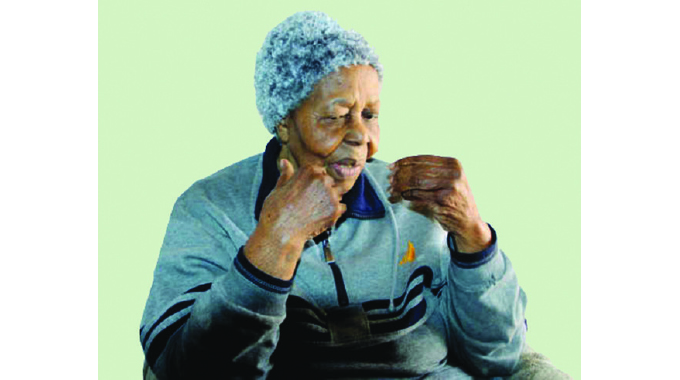
Liberation struggle heroine and nationalist Cde Jane Lungile Ngwenya who died on Thursday at the age of (86) was a household name in the story of the country’s liberation struggle.
Ngwenya died at Mater Dei Hospital in Bulawayo where she was receiving treatment for an undisclosed ailment.
Although she was no longer active in politics, she was still abreast with the political, socio-economic issues taking place in the country.
That sharp political brain was still there, so too the persuasive tongue that led people to leave the country in droves to answer to her calls for Zimbabweans to join the armed struggle through her radio programme, broadcast by the Zambia Broadcasting Services in the mid-70s.
Cde Ngwenya is also the only survivor of the PF-Zapu national executive that was there at Independence in 1980.
Sunday News spoke to Cde Ngwenya who was one of the first female nationalists. Born in Buhera District in Manicaland Province on June 15, 1935, under Chief Chatindo.
She completed her Standard 1 in 1944 at Gwebu Primary School. As she could only go that far, it was hard for her to find a school that offered higher standards.
She later attended Madende Primary where she did her Standard 2 and could not go further as schools were very far. There were boarding schools like Daramombe and Makumbe Mission, but she could not go there as she couldn’t afford the fees because her father had passed away.
Cde Ngwenya was staying with her grandparents at their homestead, before she moved to Que Que (now Kwekwe) in 1946, where she went to school under the care of a relative.
They relocated many times since he was a policeman and in 1947, they moved to Shurugwi where she did her Standard 6 at a school that had been donated by Charles Wraith, called Charles Wraith African School.
It was a school built specifically for Africans, as education facilities were not readily available during that time.
Cde Ngwenya was very young and she went into teaching after school, although she was not trained.
She said she hated teaching then because she felt that teachers were brainwashed.
Cde Ngwenya said in 1948 they saw the Burombo strike in Selukwe (now Shurugwi) as services ground to a halt, and she could hear elders saying some teachers had asked to sleep at the school during the strike.
She said some teachers took part in the strike, but were still sympathetic to the system as they wanted negotiations to take place. It was from that standpoint that she realised that they were brainwashed, adding that she was not for negotiations.
“Later on, I met a man (George Tinarwo) and got married in 1953. I was studying privately though during that time. I gave birth to my first child after that. One day in 1953 when I was living in Bulawayo and coming from St Patrick’s Church in Makokoba, I saw Benjamin Burombo addressing a meeting and I drew closer.
“He was speaking about politics and I told him I was interested in what he was saying. He was speaking about how Africans were being beaten up, losing their cattle and fields. I had seen this first hand back in the village in Buhera when my grandfather was beaten up and his cattle taken away.
“So, I became interested. I listened to the address and liked it,” she told the Sunday News during an interview.
Cde Ngwenya became more interested in politics and followed Burombo wherever he was addressing people.
She was a bitter person who had seen people suffering. There were no schools; salaries were poor; people were ill-treated and much more.
She also followed Cdes Masotsha Ndlovu, Joseph Msika, Zephania Sihwa, Jason Ziyapapa Moyo and other trade unionists where they addressed people.
They all spoke a language that she understood – politics.
Her grandfather back home in Buhera had been arrested several times and she witnessed it. Instead of deterring her, she became motivated to follow national politics.
By 1959 she was now seriously attending political meetings, sometimes alone or sometimes with her husband, if he was around since he was working out of town. Sometimes her husband would say he was busy to accompany her but she wouldn’t miss the meetings where pressing issues were raised.
“One day, a white man called John Stonehouse of the Labour Party came and addressed us at Stanley Hall in Makokoba and the meeting didn’t end well as there was pandemonium in the whole suburb.
“People were attacked and shops belonging to those perceived to be sell-outs burnt down. That was the period of ‘Zhii!’. We were arrested and I was with my young child who was two years old then and the ANC was banned in February of 1959.
“I speak about this arrest as history, but it is the incident which caused the breakdown of my marriage,” she said.
Cde Ngwenya said her husband, George Tinarwo reprimanded her for being too active in politics but she told him that this was where her heart was.
“I told him I wanted to help the people air their grievances and find solutions to our problems as black people. He told me that he supported the nationalist cause too but he reminded me that I was a woman who had to preserve her marriage and care for our children.
“He said he was spending sleepless nights as the Rhodesian police would descend on our house any moment looking for me. I told him that the police were arresting me as a person not as a woman. So, there was no peace in the marriage.”
They then agreed to separate, because both families felt I was dominating and overpowering the man in the marriage. They all felt that as a woman, Cde Ngwenya was supposed to be submissive to her husband and she was called all sorts of names.
“I felt that I wanted to lead and assist him in running our family but that failed. We eventually divorced at the Bulawayo High Court and Sir Hugh Beadle who was the judge then, said to me: ‘You are a stupid girl. You destroy your marriage because of silly things said by your people. You cannot run yourselves (black people); you have to say thank you to the people who brought civilisation to your country’. I just ignored him as I wanted to go back to the people and fight white oppression,” she added.
Cde Ngwenya said by then, the winds of nationalism were sweeping across the whole Southern African region. The nationalist movements were being organised with clear-cut structures set up. The colonial forces were also responding by arresting the leaders.
Political leaders from neighbouring countries, which were part of the Federation were also being arrested and some like Kenneth Kaunda, Simon Kapwepwe from Zambia, and Henry Chipembere from Malawi were once detained here in Zimbabwe.
“Locally, in 1960 the NDP (National Democratic Party), was formed. We attended a congress in Harare and decided to form structures of the party and work for the people. That is when I was chosen into the leadership. There were 65 people in that executive, 64 men and one mad woman, who is me.
“People sometimes ask me where the other women were, and I tell them they were supporting a great deal because their husbands were the ones behind bars, so they were active supporters. I was the only woman in the national executive. Joshua Nkomo was in Ghana at that time, and I had not even met him. We voted for him to lead us in the NDP,” she said.
Cde Ngwenya also served time in prison for her political activities.
“I stayed in jail for seven years between 1964 and 1971. I had also been arrested on several occasions, slapped with restrictions and detentions.
I once served time at Gwelo (Gweru) Prison, which they called the home of correction where there were many other women from different places. Those women were serving time for different criminal activities, and they came from all races. I was there for politics.
“The ironic part is that the prison was called the home of correction, but what happened was that I was the one to correct the laws of that place. There were some white female prisoners who had been arrested for various criminal activities but we were made to clean their cells as we were black prisoners. We were also ordered to clean up for Coloureds.
“I made noise about that and told the magistrate who would come every Saturday to hear our grievances. I told them we needed soap; we needed sanitary wear; after working all day at the prison, we needed to bath, so soap was essential.
“I complained about food, then I was taken to a different cell called ‘spirit high’ where basically it was punishment, which included having no food. I was detained several times in that cell because I never stopped making noise, pushing for the change of situation in the prison.”
Cde Ngwenya said they finally won as things were corrected after she had made noise about it.
Women were now given soap, sanitary wear and the conditions were a bit humane. She said that they had been arrested for crimes that did not have to take away their dignity.
“I was also detained at Wha Wha after the formation of Zapu.
After being detained and restricted, I then left for Zambia in 1971. I was secretly taken away by the party as there was information that I was going to be arrested and eventually eliminated.
“My name, I was told, was at the top of the hit list. The people who arranged my travel to Zambia via Botswana were the late nationalists Grey Mabhalane Bango and William Sivako, who was also a businessman here in Bulawayo.”
Cde Ngwenya told the Sunday News that she never used transportation facilities that many people regularly used. From Bulawayo they drove to Plumtree where she dropped off at a place that was not a designated drop off point. There were people waiting for her.
“As I have said, my name was the first on the hit list of the Rhodesian security forces. I was supposed to be killed. One guy, called Choga disappeared. Meanwhile, in Buhera, my home area, the police went to look for me but failed to locate me as I had slipped into Botswana.
“When I got to Francistown, I went to the police station to inform them of my presence as they were assisting us. During my brief stay in Botswana, I met Sir Seretse Khama who was the President then, and he warmly welcomed me. I then left for Zambia where I found Jason Ziyapapa Moyo, George Silundika and Edward Ndlovu in charge of Zapu then. I became the fourth leader when I arrived,” she said.
She added that she got into Zambia during the period when Zapu was having serious problems. It was the period when James Chikerema and others had left the party to form FROLIZI (Front for the Liberation of Zimbabwe).
In Zambia she got a scholarship organised by Amnesty International to study law in Canada, but she chose to sacrifice that chance and opted to work for the party saying Zapu needed people to re-organise it and so she felt she could not leave for Canada when the party was facing all those problems.
She said it was not easy to pick up the pieces and solve the internal problems Zapu was facing, but they persevered and managed to see to it that the party programmes were brought back on track.
As the leadership, she said, they had to pull in one direction to see to it that the young people received military training in various countries.
She, however, conceded that it was not easy to organise and lead the people.
She said politics was fraught with challenges but they put their hands on the deck and the party was strengthened.
“Zambia gave us some space to broadcast. Our programmes entailed urging people to cross the borders and join the armed struggle. The Wankie (now Hwange), Sipolilo (now Guruve) and Sinoia (now Chinhoyi) battles had been fought by then.
“People came to the camps in thousands and were prepared to fight. Chikerema and Nyandoro did not get many supporters then,” she said.
Cde Ngwenya as a broadcaster was in charge of the propaganda programme that was supposed to mobilise people to join the armed struggle.
“On the radio I would say, ‘Buya mntanami uhlaleleni; owakho umbhobho nanku; ufanele wena’, and people started coming in droves but when they got to Zambia especially at Nampundwa, which was a transit camp, they were shocked to find out that they were to undergo a rigorous military training before taking the gun and returning home to fight the Rhodesians.
“People would then tell the instructors that this is not what Jane said, that we had to ‘toyi-toyi’. They would say, Jane told us to come and get the gun and go back to fight.
“Later on, I stopped broadcasting and in came the sister to Cde Chiratidzo Mabuwa, who was part of the group that was taken from Manama High School in Gwanda. She was chosen among many because she was very witty, brilliant and her understanding of issues was top notch. That is why we chose her.
“She also had the advantage that she could broadcast in all languages. Even today it’s an advantage in broadcasting because as Zimbabweans we should be able to speak all our local languages,” she said, adding that she was fluent in languages such as Nyanja, Ndebele, Shona and English.
“When I speak of Zimbabwe, I speak of the whole country, not just a particular tribe. Cde Mabuwa fitted that bill well and that was why at that tender age, she was given that important responsibility of sending a message that was crucial in our recruitment drive.
“It should be noted that girls had also joined in and it bothered her why some people especially male ex-combatants speak as if only men fought in the liberation struggle when it was a real war where women also put their lives on the line in their quest to see a free Zimbabwe”, said Cde Ngwenya.
She was also there when Cde Jason Ziyapapa Moyo was killed by a parcel bomb and said: “It was on January 22, 1977, and it was a Saturday. Zambia was hosting an OAU (Organisation of African Unity) meeting and the whole of Africa was there.
“JZ had gone to Mozambique on a Thursday and returned the following day, Friday. There was a parcel for JZ that came through and our administrator, the now late Amos Jack Ngwenya forgot to give him on his return from Maputo, so he received it on Saturday.
“I had organised a meeting at the office to discuss the talking points of the meeting he was to attend with some diplomats and friendly countries and organisations. We wanted him to tell the people from the United Nations and the OAU about the challenges that we were facing.
“So we went to the office. JZ was given his letter and no one even suspected anything because he had been expecting that letter anyway. We had overheard a conversation about the letter he was waiting for and little did we know that his communication had been intercepted.”
Cde Ngwenya said she was in a small office on the phone speaking to the UN representatives informing them that JZ was coming to speak to them. Dumiso Dabengwa and John Nkomo had also joined and they were present too.
“Before I finished the conversation, the bomb exploded on JZ. Ngwenya, Dingane and Carlos were also some of the people who were in the office when JZ died. That is how (JZ) Moyo died,” she said.
“I am much better now because my head no longer buzzes like it used to, but we were injured as well. I was thrown out of the office. John Nkomo was a handsome fellow with a beautiful light skin but he was burnt badly on that day.
“The collar of his T-shirt was the only thing that remained on his neck after the bomb exploded. Dabengwa also got badly burnt. The owner of the office that we were using, Desire Khuphe was also affected by the impact and was thrown out of the office.
“What pains me most is that when Khuphe died after Independence here in Zimbabwe, he did not get any recognition,” said Cde Ngwenya.
She said there were so many distortions from people who were not even present on that unfortunate day when the incident occurred, but they speak as if they know everything.
“Some say he had blood all over his head but what happened was that his stomach was ripped open exposing his intestines. His head did not suffer any injuries; neither did his body get dismembered. I was there and I saw everything.
“People are now distorting information because history is coming out too late. Now people want to speak like they were present so that they gain cheap political mileage which is not good.”
She said Cde JZ was buried by the whole of Africa and the UN officials that had gathered for the OAU meeting. He was buried after four days because the meeting had to be concluded so that people could go back to their countries.
“Heavy rain fell on that day. Zambian President Kenneth Kaunda, refused to be covered by an umbrella and all the rain poured on him as JZ Moyo was being buried. We got drenched in rain. I have seen leaders with love and compassion but very few are like Kaunda. Many important incidents are hardly spoken about in our history,” she added.
On the kidnapping of intelligence officer Ethan Dube, Cde Ngwenya said: “Ethan Dube who was with us was taken by Selous Scouts and disappeared without trace. I had travelled with him to Botswana for a meeting and when we arrived, he was taken away and that was it. We put up for the night at different places and I was shocked when I was woken up and told that Ethan had been taken. I was in my night dress.
“We had sell-outs among us. There was a girl who seemed to be our supporter and was present when we got to Botswana. I believe she assisted the enemy with information regarding our presence. We did not suspect that she had been planted to get information from us.
“It looks like this girl gave him a drink which was laced with some substance, which made him drowsy and then the Rhodesians got in. The Tswana people assumed they were locals and let them into where Ethan was.
“He was a tall, huge man. The white man carried him on his shoulder and walked away with him. He seemed to have been drugged because his body was limp. The Tswanas did not question anything and those whites walked away with him and that was that. Up to now we do not know what happened to him.
“I was then taken to the airport and returned to Zambia. That was another incident where I missed death by a whisker. I had missed it during the JZ Moyo incident,” said Cde Ngwenya.
Fast forward to after the Lancaster House Conference, Cde Ngwenya said the party called for people who would volunteer to go home first.
Many were scared as they were not sure what the Smith regime was up to, but she stepped forward; so did Willie Dzawanda Musarurwa, Ariston Chambati, Mrs Mangqatshana Nxumalo-Dlomo and Daniel Madzimbamuto.
They returned home to do a test case as people were scared and they were welcomed with great joy.
In March of 1980, Cde Ngwenya was voted in as Member of Parliament for Bulawayo. Some of her colleagues joined the army and other Government departments.
PF-Zapu had lost the elections and had entered into a coalition with the governing party.
In 1982, Prime Minister Cde Robert Mugabe appointed her Deputy Minister in the Ministry of Labour, Manpower Planning and Social Welfare.
She said they were about 25 in the Zapu national executive with Dr Joshua Nkomo as the President, Josiah Chinamano as his deputy while Joseph Msika was the Secretary-General. That was the top leadership.
Cde Ngwenya said they never really fought for leadership positions, saying they fought for the betterment of the lives of people and in terms of seniority in the Women’s League she said Cde Angeline Masuku was one of the surviving members.
She said she was not elected into Parliament in the 1985 elections but that was not a challenge as she was not after a position but joined the struggle to free the country.
“But when I noticed that my name was not on the list of candidates, I approached Dr Nkomo and he referred me to the National Chairman then, William Kona who also referred me to Dr Nkomo. At the end of the day, I did not understand what was happening,” she said.


 Online Reporter