Chronicle Editor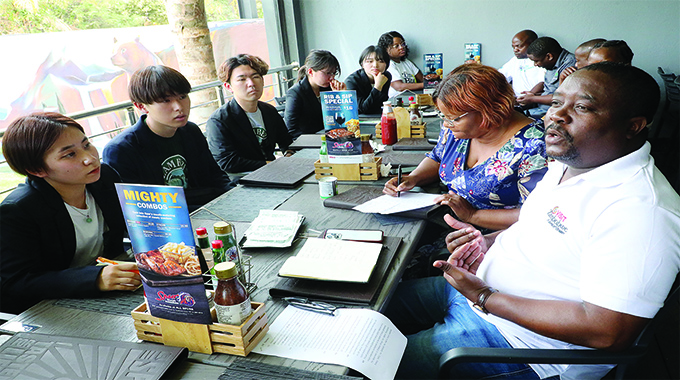
Nqobile Tshili, [email protected]
A group of 13 students from Japan embarked on a study tour of Zimbabwe to explore local languages, cuisine and iconic destinations such as Victoria Falls, Matopo National Park and the Great Zimbabwe National Monument.
The trip, which ran from March 2 until their departure from Joshua Mqabuko Nkomo International Airport in Bulawayo yesterday, was aimed at dismantling preconceived notions and foster mutual understanding.
In a meeting with Deputy Minister of Tourism and Hospitality Industry Tongai Mnangagwa, the students expressed their newfound appreciation for Zimbabwe. Deputy Minister Mnangagwa remarked that through their first-hand experiences free from the skewed narratives often portrayed in Western media, the students were now inadvertent ambassadors for the country.

“As a ministry it is exciting because we have young ambassadors coming in and this falls in the study tourism cluster where we have students coming from different countries to study and they go back with a message of what Zimbabwe looks like and what Zimbabwe has to offer in terms of our culture,” said Deputy Minister Mnangagwa.
“I asked them how they felt and they said the people of Zimbabwe are hospitable. They felt at home and said everyone smiles, everybody gives you a positive response. It is part of our culture where we are taught how to treat visitors and we do this at a national level where I as the Deputy Minister come out to receive the guests.”
Zimbabwe has been actively promoting its rich cultural heritage as a key element in its international marketing strategy and has seen tourist arrivals from Japan grow by more than 300 percent in the past year.
The Deputy Minister highlighted the symbiotic relationship between tourism and infrastructure development, particularly in enhancing the nation’s ability to host global conferences, which is integral to improving Zimbabwe’s international connectivity.

“I’m proud to tell you that our numbers have gone up by over 300 percent in this past year. We have 336 percent coming from Japan and this is an increase from one country. Can you imagine if you look at China, India and Indonesia; it’s exciting times for us. All this is a result of us coming up with strategies of how to market the country.
“We have sent ambassadors out there as attachés at our embassies to tell the story of Zimbabwe and it’s bearing fruits and the numbers are coming.
“Our story is of the different clusters that we have put in place where we have said some should come and learn how we eat, how we cook, how we lived in the past, our culture. That is part of our story that we are packaging nicely. We are also talking about studying tourism. We want more and more students to come in. They will pay school fees in foreign currency and spend money around the country,” he said.
He said Zimbabwe not only seeks to attract international visitors, but to also encourage domestic tourism.
Mr George Asakura, a civil engineering sophomore from the University of Tokyo, lauded Victoria Falls as the most impressive tourist destination he has encountered. His academic pursuits in civil engineering found practical resonance during his visit to the Bulawayo Railway Museum, offering him valuable perspectives on the evolution of railway infrastructure.
“It was a wonderful experience to see all the old trains to current ones which made me understand the development of the railway in Zimbabwe. I also enjoyed the Victoria Falls view. I think it’s one of the best views that I have ever seen in my life. It was a good experience,” he said.

Mr Asakura said he was able to bust the false image that the Japanese have of the country.
“Japanese people have a lot of stereotypical things against Zimbabwe and Africa. They think it is undeveloped and has unstable situations, but the fact is different. You can live normally, there are good infrastructure facilities, hotels and restaurants. So I will tell them that the stereotypes are wrong and I really want to tell those who want to visit Zimbabwe to change their perception about Africa and Zimbabwe,” he said.
Mr Satoru Hompo, a fourth-year African Studies student at the University of Tokyo, said the visit was insightful, especially as he connected the ancient civilisation at Great Zimbabwe National Monument.
“What I enjoyed most is the Great Zimbabwe. I’m majoring in African history, so I was excited to see the great stone walls and I connected with the lives of ancient people. It was an exciting experience for me,” said Mr Hompo. – @nqotshili.


 Online Reporter