Online Reporter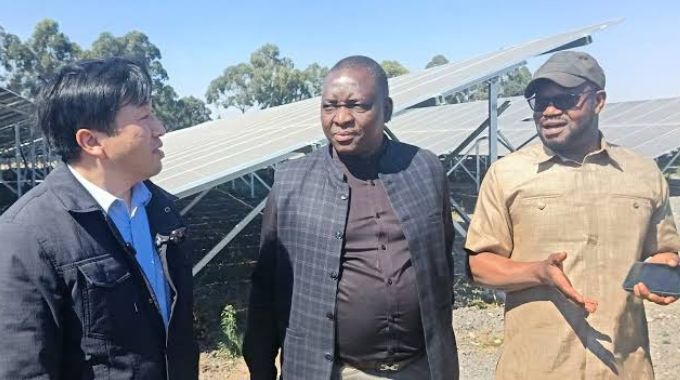
Patrick Chitumba, [email protected]
CONSTRUCTION of the US$6 million, 20-megawatt solar power plant at Almid Private Limited in Gweru has reached 60 percent completion, with the project expected to bolster electricity supplies for ferrochrome production and reduce pressure on the national grid.
The solar facility forms part of a broader US$140 million energy investment by Jin An Group, which also includes plans for a 100MW captive power station expected to be operational by the end of 2027.
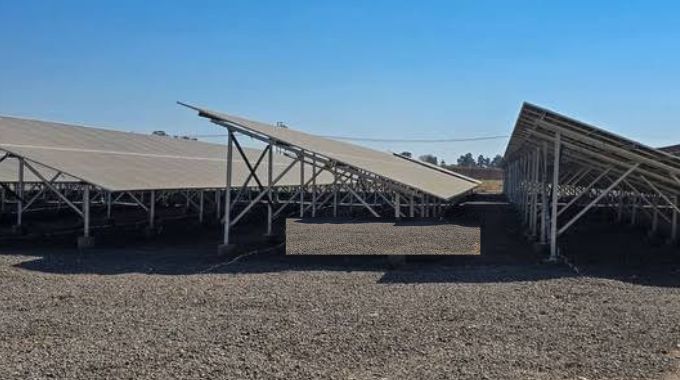
The investments are expected to improve power reliability for Jin An’s five furnaces, enabling the company to increase ferrochrome output, create jobs and support Government’s drive towards energy security in line with Vision 2030.
The development comes as the Second Republic continues to encourage energy-intensive industries to invest in independent power generation to complement supplies from the national grid.
Minister of Information, Publicity and Broadcasting Services Dr Zhemu Soda recently toured the project alongside the ministry’s Permanent Secretary, Mr Nick Mangwana, Secretary for Midlands
Provincial Affairs and Devolution Dr Edgar Seenza and other Government officials.
Dr Soda said the investment underscored the Second Republic’s commitment to industrialisation, energy security and economic growth.
“We were shown the smelting process taking place, and they indicated that they will be moving to their own power supply through a 20-megawatt solar plant.
“The Government is currently providing power to ferrochrome producers at a subsidised rate,” he said.
Dr Soda said independent power generation by heavy industries would help release electricity for other users while giving companies greater control over their energy requirements.
“By 2027, they will move to the commercial tariff, which is why they have moved to develop their own plant. They said their plant will be ready in a few months. The 20-megawatt plant will be available for use,” he said.
Dr Soda said Jin An was also developing a coal-fired 50MW power plant as part of efforts to secure adequate electricity for its operations.
“All of this is in line with the call by President Mnangagwa that by 2030 we should have enablers such as energy in place. These are transformative projects that demonstrate Government’s commitment to energy security and economic growth,” he said.
“Our responsibility is to ensure citizens receive factual information on the progress being made across the country.”
Dr Soda said Government was encouraging mining and manufacturing companies to invest in renewable energy projects to reduce pressure on the national grid and lower energy costs.
“Government is encouraging independent power generation through incentives such as duty-free solar imports and reduced tariffs,” he said.
Jin An finance manager Mr Munyaradzi Matanyaire said construction of the solar facility was progressing steadily, with major equipment already being transported to the site.
“We are at about 60 percent completion of the solar programme. Major equipment for the solar plant was already en route and would soon be installed, along with transmission infrastructure to connect directly to the company’s furnaces,” he said.
Mr Matanyaire said the investment was critical to meeting the company’s substantial electricity requirements.
Jin An operates five furnaces that require approximately 50 megawatts of power to run at full capacity.
The 20MW solar plant will supplement electricity supplied through the national grid, providing a more stable and reliable power source for the company’s operations.
The push for alternative energy sources comes amid rising demand for dependable and affordable electricity from Zimbabwe’s mining and manufacturing sectors.
Meanwhile, the Government delegation also assessed progress on other development projects in the Midlands Province.
In Zvishavane, the team toured Midlands Park Flats, a housing development aimed at increasing access to decent accommodation and helping to reduce the national housing backlog.
Midlands Park Flats housing manager Mr Michael Kanengoni said the project was providing affordable accommodation without compromising quality.
“We have housing that is both low cost and of high quality. It is serving people in terms of quality and proper standards,” he said.
The delegation also visited Nkatazo Rural Clinic, which has since been upgraded to hospital status.
District Medical Officer Dr Tapiwa Mavurayi said the upgraded facility had improved access to
healthcare for surrounding communities by reducing the distances residents travelled to access treatment.
“Currently, we have been operating to serve a community that used to travel over five kilometres.
“We are now serving about 20 patients per day,” he said.
The projects align with Government’s broader development agenda under National Development Strategy 2, which seeks to accelerate economic transformation and improve citizens’ quality of life as Zimbabwe works towards attaining upper-middle-income economy status by 2030.