Sikhumbuzo Moyo,Check Point Desk
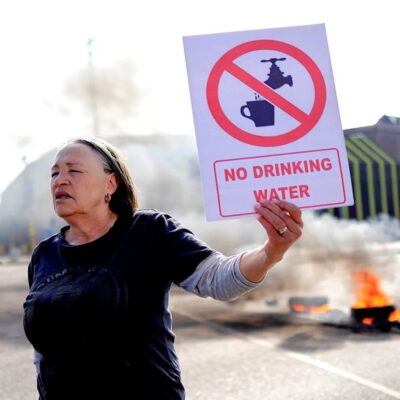
WHILE Bulawayo City Council has resolved to send a bloated delegation of 29 on a water utility fact-finding mission to the City of Johannesburg, it has emerged that Johannesburg’s water system is in crisis.
According to a March report by dailymaverick.co.za almost all areas of the city have experienced water outages over the past few years, and some are regularly without water for days, even weeks.
The publication says that despite the decline in service quality, water tariffs have increased by almost 200 percent over the past 10 years – far ahead of inflation.
“The situation is worsening for multiple reasons, but the single most important is the dilapidated and leaking Johannesburg Water infrastructure. This not only contributes directly to service interruptions, but also to the rapidly rising cost of water.
Non-revenue water losses in the city are at 46 percent, and 25 percent of all the water that the City of Johannesburg buys from Rand Water disappears out of the dilapidated system through leaks. Those leaks waste 400 million litres of water each day, for which Johannesburg Water is paying R6-million – every day. That lost R2.2-billion a year is recovered through higher water tariffs,” writes the publication.
It noted that repairing old and broken infrastructure is, therefore, critical to improving services and reducing costs. Johannesburg Water says it needs R3-billion each year for the next 10 years to replace and upgrade infrastructure, but doesn’t have the money. Instead, it has managed to budget for only around R900-million in the current financial year.
“The difference between budgeted maintenance and actual requirements is almost the same as the value lost to leaks. The faster that infrastructure is repaired, the faster Johannesburg Water will become financially sustainable.
Johannesburg Water is a separate municipal entity, with all its revenue and expenditure ringfenced from the rest of the city. That is, it is intended to operate entirely within its own revenue and expenditure, and to rely on its own resources for infrastructure maintenance and upgrading,” reads the article.
In consultations that have been done so far on the water utility project, four out of the six wards rejected the proposals.
Wards that rejected the proposal are 16, 17, 19 and 24, while wards 25 and 26 agreed to the project.