Online Reporter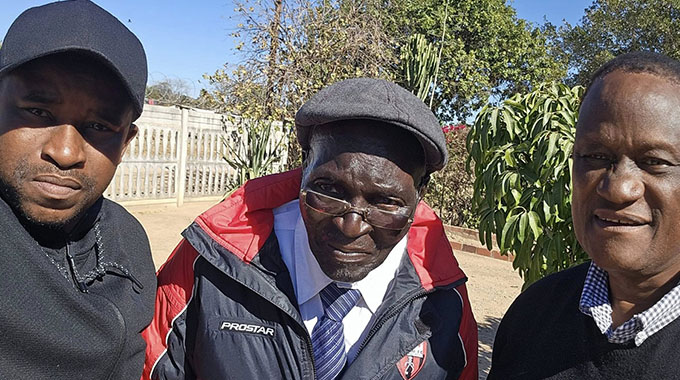
Limukani Ncube
Obituary
“SO that call won’t come again.”
“Mzukulu ngisendleleni. Sihlangane ngaphi sibambe inkomitsho yetiye ubusungiphelekezela kengibone abangekhaya?” (My nephew, I’m on the way. Where do we meet for a cup of tea, then you accompany me to see relatives?)
That was John Masuku’s trademark call each time he travelled from Harare to Bulawayo. Masuku, a veteran journalist, broadcaster, evangelist, mentor and cultural custodian was promoted to glory on Friday morning.
It was no coincidence that this fell on World Radio Day, a craft that shaped his life. Well into Thursday night, he had been marking the day on social media and had submitted a commemorative article to The Herald, celebrating a profession that was dear to his heart.
Though he lived in the capital for most of his life, Masuku’s roots and relationships stretched across Bulawayo and the wider Matabeleland region. Simply put, he was everyone’s relative and everyone’s friend at ease with the pioneers of journalism and equally comfortable with the young generation finding its voice.
I called him malume; he called me mzukulu. Even when delivering a formal presentation, he would casually say, “people like my mzukulu uLimukani.” It sounded informal, but it was deeply rooted. Malume and mzukulu were titles of respect, bound by blood through my maternal family (where his mother was also born) strongly anchored in what family elders fondly called Fort Rixon Makhandeni, before some family members, including my grandfather, moved to Mzinyathini in Umzingwane District. Keeping with tradition, Masuku would travel all the way from Harare to join the family whenever an elder of the Khumalo clan was laid to rest.
Masuku was a living library of Zimbabwean broadcasting history. He began his career in 1974, just after completing his O-levels. During one of his research trips for his book, Memoirs of a Cross-Generational Zimbabwean Broadcaster (launched last year), he took me to Luveve Five to interview veteran broadcaster Amon “Maqhulayibambe” Nyamambi.
“Mzukulu, this is the man who auditioned me at Mbare Studios,” he said.
“They wanted someone fluent in both isiNdebele and Shona that gave me a head start. From day one, umdala lo coached me in the studio.”
For hours at Nyamambi’s house, I listened to rich, first-hand accounts of how the national broadcaster was shaped before and after independence and the role it played in nation-building during politically turbulent times.
Much has been written about Masuku — and rightly so. He was a man of the people, able to move seamlessly from social issues to current affairs, sport, Christianity and culture, always grounding his insights in lived journalistic experience.
What stood out most to me, however, was his passion for preserving isiNdebele. He insisted on linguistic integrity and often cautioned that youth slang was eroding the language. This commitment led him to work with the Barbara Makhalisa Clara Nkala Literary Trust, which published isiNdebele novels alongside leading writers and language custodians of the time.
A devoted Christian, Masuku took this passion further by contributing to the translation and review of the Living Bible and New International Version (NIV) from isiZulu into everyday isiNdebele. In his memoirs, he recalled the joy of working with fellow journalists, authors and linguists to simplify Scripture into living, spoken isiNdebele:
“My fellow journalist Pius Wakatama, then director of Living Bibles International, which later became International Bible Society Zimbabwe (IBSZ) and now Biblica invited me to be part of the Ndebele translation and review team comprised of well-established authors and language experts like Ndabezinhle Sigogo, Isaac Mpofu, Amon Nyamambi, Barbara Makhalisa Nkala, later to be joined by David Ndoda and Joana Sibanda. One of our team members was the late Rev Godfrey Mpofu (Mazaranhanga) who was one of Mpofu’s best Ndebele students during his teaching life somewhere in the Mzingwane area in Matabeleland South Province.
Our task was to simplify the predominantly isiZulu Ndebele Bible into everyday spoken and written isiNdebele. Around our translation table, we spoke undiluted Ndebele- and I loved it more during meal times when Mpofu would say “Ake ungiqhubele iziyoliso lezo lami ngiyolise” (Please pass me those spices so that I can add them to my food),” he wrote in one of his memoirs.
Writing was another of Masuku’s great loves. Editors knew that if he promised an article, it would arrive on time and rich in substance. His pieces were published not out of deference to seniority, but because they carried depth, memory and rare personal testimony from broadcasting’s golden generations.
With over 50 years in broadcasting, Masuku never slowed down. He hosted a current affairs programme on ZBC TV, wrote regularly for newspapers and curated JM Archives on social media chronicling the history of broadcasting and honouring its legends.
“I move with the times,” he once said. “When things change, I change. When digital came, I learned and came on board.”
Despite holding influential national and international roles including serving as Unesco’s 2023 World Radio Day Coordinator and spokesperson for the Kgalema Motlanthe Commission after the 2018 elections, Masuku remained humble, accessible and warm.
Born on 10 December 1955 in Harare, he trained with the BBC (UK) and Radio Deutsche (Germany), held a BA (Hons) in Politics and Administration from the University of Zimbabwe, and an MPhil in Journalism from Stellenbosch University. He joined the national broadcaster in 1974, reading isiNdebele novels on air, later producing Abalobi Bakusasa (Tomorrow’s Writers) and helping establish the first private journalism college in Bulawayo.
And yes — Masuku loved his Kodak moments. I can still hear his laughter as he handed me his phone:
“Mzukulu, sebenzisa leyi iPhone. It’s state-of-the-art — ngiyithengelwe khathesi ngumzawakho…” (Use this phone.
It’s a state of the art. It was bought recently by your cousin…)
Fare thee well, Malume.
Hamba kahle. Rest in Power and long live JM Archives