Chronicle Editor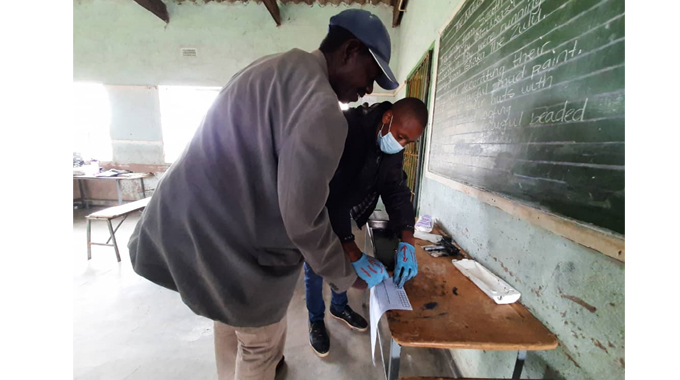
Yoliswa Dube-Moyo, Matabeleland South Bureau Chief
IT was heart-tugging watching Gogo Salami na Sibanda (70) receiving her grandchild’s birth certificate at Ntepe Primary School in Gwanda District where the Civil Registry Department had set up a mobile registration centre.
Her wrinkled hands etched with lines and sun spots shook as she carefully held the document and verified the information on it.
It was as though a brick of precious metal had been placed in her hands as her face beamed with joy.
She smiled from ear to ear and it was evident she could not believe she finally had the birth certificate in her hands, some nine odd years later.
The child was left in her care by her daughter who had made the great trek to South Africa when she was 18 months old and now doing her Grade 4, the girl still didn’t have a birth certificate.
Gogo Sibanda couldn’t hide her joy as she savoured this surreal moment and could finally heave a sigh of relief.
“My daughter just left her child with me when she was 18 months old and went to South Africa. The child is now in Grade 4 and still didn’t have a birth certificate. I had been failing to get the document for her because I couldn’t afford to travel to Gwanda to get her registered,” said Gogo Sibanda.
She said the process was smooth and she didn’t encounter any challenges with the processing teams.
“I didn’t expect to get the birth certificate so easily and in such a short space of time. I’m so grateful for this opportunity as it has made life so much easier for me. We were failing to acquire these documents because we couldn’t afford the bus fares to go to Gwanda,” said Gogo Sibanda.
Her daughter, she said, has been gone for years and she has had to raise her grandchild single-handedly.
“These children just dump their children on us and leave. It is thanks to this programme that I was allowed to obtain a birth certificate for my grandchild,” said Gogo Sibanda.
The mobile registration exercise aims at issuing more than two million birth and death certificates as well as national identity documents.
The exercise is part of efforts by the Government to ensure all citizens have access to primary documents.
The Civil Registry offices including the mobile centres are open from 7AM to 7PM between Monday and Friday and 7AM to 4PM during weekends and public holidays.
The exercise, which will run until September 30, is expected to clear the backlog in document issues that have been accumulating during the Covid-19 lockdowns, when the Civil Registry was only processing burial orders.
For Ms Sibonginkosi Moyo, it took a constant nudge from her son’s school teacher for her to finally make her way to Ntepe Primary School to acquire birth certificates for her three children aged six, four and two.
“My son’s school teacher would constantly tell me that my child needed a birth certificate and it would be unfair for him to be chased away from school for not having one,” said Ms Moyo.
She said they had been failing to obtain birth certificates for their three children as they did not have money to travel to Gwanda or Manama where the Civil Registry Department offices are located.
“We were failing to raise the bus fares but I’m happy that we finally have the birth certificates. We’re really thankful to the Government for this initiative and for bringing the facility to our doorstep. Having a birth certificate also allows the child to learn freely,” said Ms Moyo.
She said the birth certificates had been processed within two hours in a seamless and convenient process.
The exercise is also set to benefit thousands of people in the Matabeleland region who have complained that they were failing to get the documents.
For those affected by the Gukurahundi episode, the Civil Registry department will work under the guidance of traditional leaders to ensure that they are documented.
In January, chiefs in the region indicated that they had started compiling a database of community members who had no IDs as part of efforts to address challenges that were rooted in the post-Independence disturbances.
This was after President Mnangagwa mandated traditional leaders to take a leading role in addressing the problems that were caused by Gukurahundi.
Families that were affected by the Gukurahundi episode had been complaining that they were failing to acquire the necessary documents since in some cases their parents died.
People with various issues such as lack of birth certificates, IDs and errors on their documents were being attended to at Ntepe Primary School.
The mobile registration centre’s team leader and processing officer Mr Isaiah Ngwenya said his team had been at the school for nine days and the turnout was overwhelming.
“People have been coming in large numbers and no one was turned away. We’ve managed to register a significant number of people as there are a lot of waivers on registrations. For example, there are so many people who are born outside this district but we’ve been doing instant registration regardless of where you’re from. When there’s a birth card and a birth confirmation, we register that person right away,” said Mr Ngwenya.
He said no one will be left behind as they ensure that everyone who visits the centre leaves with the required documentation.
“This process has really helped the community because people have been failing to travel to Gwanda to access these documents. We’ve also been to Garanyemba and I know as we go further to remote areas like Silonga, even more people will turn up for registration,” said Mr Ngwenya.
Lack of critical national documents had seen some people, especially in Matabeleland provinces, failing to register to vote during the first phase of the voter registration exercise, which was rolled out by the Zimbabwe Electoral Commission (Zec) between February 1 to February 28.
The mobile registration exercise will therefore provide an opportunity for citizens to obtain national identity documents which enable them to register to vote in next year’s harmonised elections.
Civil Registry Offices across the country have been saddled with a backlog of documents for some time as Zimbabweans try to get identification documents.
In an effort to eliminate corruption, foster efficiency, effectiveness and to enhance revenue collection in the Civil Registry, Government has adopted a five-year strategy that seeks to automate and modernise work processes in the relevant departments.
This will see continued decentralisation of offices to complement existing ones.
The Civil Registry Department has 10 provincial registries, 62 district offices and 207 sub-offices throughout the country. — @Yolisswa


 Online Reporter