Chronicle Editor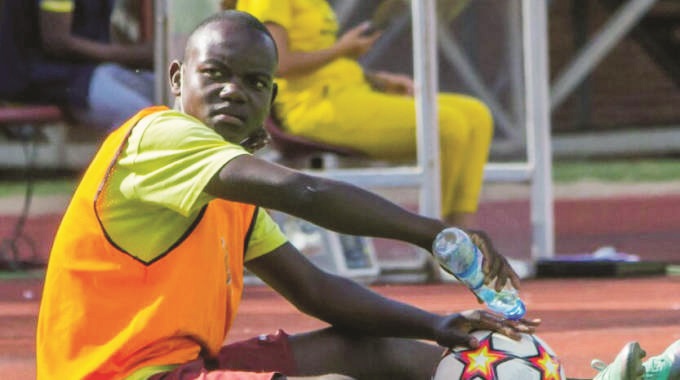
Innocent Kurira
[email protected]
IT’S a story that has been told a thousand times in football, some believe it, some don’t.
Some think it is mere mind games to psychologically defeat opponents while others swear by everything they hold dear that a team cannot win a championship without the help of magical charms.
It could be more divisive than even the issue of fanatical following of football clubs where fans give their all for a team and may be intolerant of negative comments about the club they support.
The issue of juju or the use of “supernatural forces” to influence the outcome of matches has been whispered about from the time the first teams kicked a football in the country, just after the First World War in the 1920s.
It has stood the test of time and even today, fans oft erupt in a roar of anger when an opposing team does pre-match rituals perceived to be some form of juju that would put their team at a disadvantage.
Who will ever forget the Bosso ritual that weakened the knees of opponents? Then manager, arguably one of the best managers the black and white outfit has ever had, the late Ernest Maphepha Sibanda would take the match ball, march to the centre of the pitch and bounce it emphatically in the centre circle, then turn around without a backward glance.
The Bosso fans would bring the house down with a deafening roar of appreciation as they believed their team had just got a “12th man.”
The opponents would get sucked into the mind games and their supporters would despair. Some would bring water bottles filled with “urine” which some think has the power to neutralise fetishes and pour it on the spot where the ball bounced.
Brief Skirmishes would then arise in the terraces among the supporters.
So powerful is the perceived effect of muthi that some fans take it as gospel truth that it can be used on the terraces to affect outcomes on the pitch.
The case of DeMbare’s Taribo West comes to mind.
The famous Dynamos supporter died from injuries sustained allegedly in an assault by Highlanders fans in 2006. A section of DeMbare fans swore Bosso would not beat Dynamos until the team formally apologised and compensated Taribo’s family.
Bosso fans dismissed the threat as hogwash. However, their team failed to beat Dynamos for the next 10 years and up to today many football fanatics believe in the “Taribo Jinx.”
Some football teams in the country refuse to go into stadia or the pitch through designated entrances and prefer to jump over perimeter walls or fences. The reason; they believe the home team would have planted muthi that would “lock them” and prevent them from playing the game to the best of their ability.
Just as the new generation of football fans thought the juju stories were myths made up by old-timers, the muthi antics that had somewhat gone low-key have resurfaced.
Fresh in mind is the Dynamos manager Richard Chihoro who was recently found guilty of misconduct after being spotted sprinkling an unknown substance on the pitch.
The incident re-ignited the juju debate and raised that silent question often asked in hushed tones.
Does juju or superstition in football exist or it is a figment of the imagination?
Another “freaking” incident that raised suspicion involved Hwange FC goalminder Nedrick Madeya, who has been the talk of town with his clear white towel which some believe is “laced” with black magic.
During Dynamos’ opening match of the season against Hwange at Barbourfields Stadium, Chihoro was filmed sprinkling an unknown substance on the opponent’s goal line area during half-time of the clash in a suspected case of “juju.”
The PSL was not amused.
Dynamos and Chihoro are set to be fined by the Premier Soccer League after they were found guilty of bringing the game into disrepute for the controversial half-time “juju exorcism” incident.
Dynamos had failed to break the deadlock in the first half, despite creating a lot of chances.
The incident which occurred just before the start of the second-half led to disturbances after Hwange goalkeeper Madeya was confronted by a Dynamos supporter who grabbed his white towel before setting it ablaze.
DeMbare went on to score soon after the towel was removed.
Last Sunday an overzealous Bosso fan also jumped onto the pitch and grabbed Madeya’s towel.
Unfortunately for him, Bosso fans were in no mood to tolerate such nonsense and he received instant mob justice.
However, Amahlolanyama scored after the towel was removed.
Word on the street has it the Dynamos fan who took the towel was hit by a car the same day and died on the spot. However, no police record proves the rumour to be true. The story just adds to the myths regarding the use of juju.
Experts still opine juju antics are all mind games.
Sport science expert Joseph Sibindi who also happens to be a qualified football coach says juju is a belief that doesn’t work.
“The use of juju is all but a myth and superstition. From a scientific point of view, it doesn’t work. It’s all a matter of trying to get a psychological advantage over your opponent. As a coach, it’s outside your control if the opponent decides to play those antics.
“Because we are Africans, players can actually believe that it works but as a coach in that scenario, you have to talk to the boys and convince them whatever the opponent is doing does not work.
“For me, focusing on juju is focusing on the wrong things rather than doing the proper thing which is to train and work hard to get results. If juju worked more than training then why should teams go for training?” asked Sibindi.
A former football player who spoke on condition of anonymity said: “It was there most of the time, although it was not public and you were not forced to be part of any ritual. Those who were willing would be sprinkled with liquids before a match or given charms to wear during a match would. Some would get all sorts of concoctions smeared on their bodies. We believed in it so much that morale would shoot up and we would play like we were possessed and often win.
“Nowadays I see teams and officials do their things in the glaring eyes of the supporters,” he said.
In his autobiography, Soul of Seven Million Dreams, former Dynamos midfielder Memory Mucherahowa wrote: “Every week before a game the team would consult a traditional healer.
I, as the team captain, would be the one to execute whatever the sangoma (juju-man) had said. Whether it actually aided us, I do not know.”
“The team believed more in juju than players’ ability. We believed in the collective use of the juju and consulted one traditional healer as a team.
“In most cases, we had the team’s traditional healers who were on the team’s payroll.
“The belief was so high at the club that coach (Peter) Nyama lost his job in 1990 after being fingered by a traditional healer as being guilty of jinxing the team.”
Dr Lyton Ncube, an academic who has penned numerous articles centred on Zimbabwean football views the “juju” debate in a different light.
“The issue of juju is a highly contested discourse. Let me start by reminding you that sport and football in particular is a microcosm of society. Football is a critical space for viewing the religious, political and cultural dimensions of most societies across the globe.
“Football in Zimbabwe is entangled with diverse religious rituals and myths, beyond the more obvious Zimbabwe is a multi-religious country. The majority of the population practice religious syncretism — fusion of different beliefs or practices or practices from different religions,” said Ncube.
“The nexus of football and Christianity dates back 3 000 years ago. This is viewed in a positive light. But with regards to juju, anthropological research on football on the African continent especially in Western Africa locates juju in witchcraft, sorcery, magic discourse etc.
In Zimbabwe, I have problematised and challenged the narrative. My argument is that discrediting the so-called juju practices requires a decolonial reading.
“The Biblification of stadiums is unproblematic and hegemonic. Kneeling and praying on the pitch are acceptable. But juju whose roots are strongly linked to African Traditional Religion (ATR) is lampooned.
“Sprinkling of juju or attempts to neutralise opponents creates controversy. In ATR urine can be sprinkled to neutralise evil spirits or you can drink it to neutralise poison. It’s part of our indigenous knowledge systems. However, this is attacked for allegedly bringing the so-called beautiful game into disrepute.
“However, with regards to football, I must admit that it’s very difficult to authenticate some of the beliefs and myths, hence they remain claims. I would say it’s also difficult to prove whether prayer rituals before matches and Christianity songs performed at the terraces will result in victory.
“I would sum up by saying football is an important space where the profane and sacred mix and contest. There is a lot of religious syncretism or hybridity of the everyday. Proving the efficacy of juju in winning matches is a herculean task.”
Khulu Mlambo, a traditional healer from Njube suburb said: “Without juju, a team is nothing!”
He said he has helped many teams, especially from the southern part of the country to win matches through juju and said any team can disregard the power of juju at their own peril.
Football fan Sineke Maseko completely ruled out the effect of juju.
“I am Christian and I know these things do not work. If there was juju in football I would not go to watch any football match,” said Maseko.
Sithokozile Dube who is also a fan said: “We must never rule these things out because some of these things emanate from our culture.”
The muthi-in-football debate could be a version of the chicken and egg conundrum and may rage eternally.
Does juju work in football?
Your guess is as good as mine . . .
— @innocentskizoe



 Online Reporter