Chronicle Editor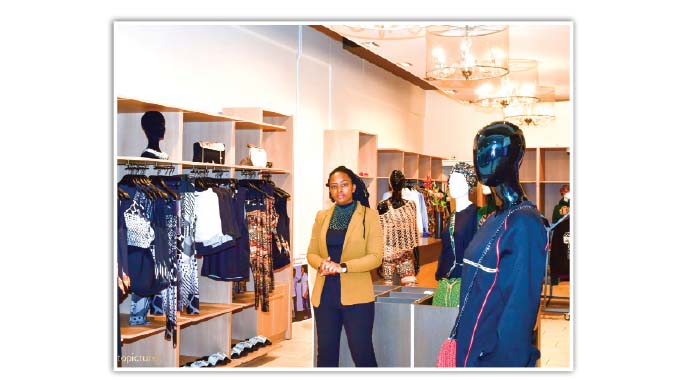
Sikhulekelani Moyo
[email protected]
INSPIRED by her desire for uniqueness and preserving identity, Eglet Mtengwa Nyabvure (42) the founder of Pfeka Fashion House has managed to defy the odds, which has seen her brand penetrate the international world.
Based in the Netherlands, Nyabvure, who worked as a telecommunications engineer, said she always wanted to dress in a way that would preserve her identity.
“While working in the corporate world and being one of the few women in the Engineering and Marine Industry, which is my original profession, I always wanted a unique wardrobe, especially after moving to Europe. I always made it a point to dress to represent. I then grew a deep desire to have valuable clothes with a statement, uniqueness, and an identity,” she said.
This is how her passion for designing clothes with an African touch developed in 2017 and she never looked back.
“I wanted a wardrobe speaking for me and showing off my identity. These were clothes with an African touch, suitable for everyday wear as well as in the office and corporate meetings without being ‘too much’.
“Because I couldn’t quite find what I wanted in the market then, that is high-quality modern wear with a touch of the African print, I had to do something about it, so I started to draw/design how I wanted my pieces to be.
I really enjoyed the whole process of designing and professionally producing clothes and I knew I had found my passion and calling.”
She managed to register her company in 2018.
“Pfeka, a modern and premium Africa-inspired clothing brand was inspired by the need to tell the African story by embedding meaningful African stories in our collection,” she said.
The clothing range includes sportswear, active wear, casual as well as formal shirts.
“Basically, when I started the brand, it was mainly for myself as I would make things that I would wear every day, yet carrying powerful stories of Africa, specifically Zimbabwe. As such, everything that we make is around the things I loved like working out, sports, my corporate life as well as leisure.”
To buttress her desires to sell African and Zimbabwean stories, Nyabvure who hails from Mberengwa designed the Masvingo print, a fabric inspired by Great Zimbabwe to have a true representation of Zimbabwe through the clothes.
Every business has some encounters at some point, but Pfeka Fashion House has managed to outflow the challenges by meeting international standards, something which has brought credibility and trust for her products.
“Being a new brand, it’s always difficult for people to embrace as they aren’t used to you and your products. When most people hear of African prints, they immediately think of traditional dresses, low-quality fabric, and not-so-nice finishes, so they tend to be slow to engage with your brand,” said Nyabvure.
“What we then did was to work on making the brand meet different international standards. We registered it as a clothing brand in Europe as well so that it becomes an option alongside other known brands.
We have also trademarked the brand name Pfeka and protected some of our designs and patterns.
“We believed in our brand and we did all we could to make sure we have the people see and feel our work. We took part in festivals and opened a physical shop where people could come, touch, feel, and fall in love with our brand.”
She said they also embraced a solid digital presence, which allowed them to get reviews from clients to build confidence in new and potential clients.
“Unfortunately, shipping and courier to and from Zimbabwe is quite expensive, maybe because we don’t have direct flights from Europe.
“So you find that some of our orders get to be expensive if they’re ordered as single items, so we encourage multiple orders or bulk shipments to try to make the landing price cheaper.”
Designing and manufacturing for sports clubs such as the Zimbabwean tennis team, Nyabvure said exposed her brand to the international audience.
“When they do play against other countries, we get a chance to have our name shown even on TV and in big tournaments such as the Davis Cup.”
“Future plans are to create more storytelling fabrics and patterns which we can then use in other collections. We have come to be known as an African brand, so other than telling just the Zimbabwean stories, we need to grow into touching other African stories too, so we also research and compile other stories to become a truly African brand,” she said.
Nyabvure said the fashion designing sector has a very huge potential to grow and contribute to the growth of the economy. To achieve that, she urged those in the sector to register their businesses and brands so as to contribute to the economy through tax and returns.
“There’s so much limitation in terms of fabric variations. Great quality fabric is scarce to find, so there’s a lot of importing which, however, isn’t easy for many designers and tailors. This leaves them settling for cheap and poor-quality materials and ending up with low-quality end products.
“So, for the young and local designers to think of growing feels so far-fetched. In that regard, I do advise the Government and those responsible, to kindly assist in making the imports of textiles and accessories come with little to no tax, and for the local fabric and textile manufacturers to come up with a variety of fabrics and accessories that the locals can easily access.”
In 2021, Nyabvure made history after she was recognised by the Archives Centre of the City of Almere in Holland because of her fashion design exploits in a project highlighting immigrant women.
Last month, she was one of the experts who were brought into Bulawayo by ZimTrade to offer capacity-building training to budding fashion designers, where she advised the start-up to ride on their culture and heritage to grow.
She said by leveraging cultural diversity, the designers will create a niche market for their products as the market is now interested in buying stories behind each product. -@SikhulekelaniM1



 Online Reporter