Chronicle Editor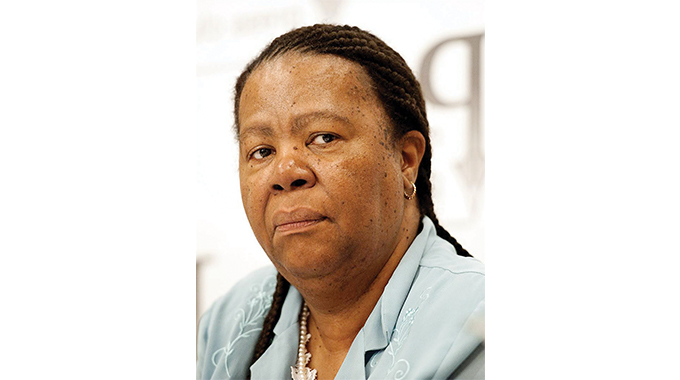
Prosper Ndlovu, Chronicle Reporter
THE South African government has revealed how it commissioned its own anti-sanctions research study on Zimbabwe as part of efforts to lobby for the lifting of the hurtful economic restrictions against the country.
Zimbabwe continues to suffer the adverse impact of illegal sanctions, which have constrained foreign direct investment and denied the productive sector access to fresh lines of credit.
Western countries, at the instigation of Britain, imposed the sanctions at the turn of the millennium after the country embarked on the land reform programme.
South Africa has been bold in calling for the removal of the sanctions against Zimbabwe with regional leaders under the Southern African Development Community (Sadc) and the African Union, also joining in solidarity.
During a meeting with Foreign Affairs and International Trade Minister, Dr Frederick Shava in Cape Town on Friday, South Africa’s Minister of International Affairs and Cooperation, Dr Naledi Pandor, reiterated that sanctions against Zimbabwe must be lifted to enable the country to progress like its peers.
“Let me reaffirm our support for our regional body, Sadc and its objectives as well as our support for the African Union’s advocacy for the lifting of sanctions imposed by the United Kingdom, the United States of American and the European Union on Zimbabwe,” said Minister Pandor.
She revealed that during a recent G7 meeting, representatives from the three concerned bodies (UK, US and EU) pulled her aside to enquire more on the regional anti-sanctions drive and the gist of what has caused “us to speak in this way” about the issue.
“They pulled me aside at the G7 meeting recently. I was happy I was able to say to them that I have assigned a researcher to do a paper for me on sanctions on Zimbabwe, and I have got a very good paper that actually spells out the issues and what should be done to change the situation,” said Dr Pandor.
“I’ve promised each of them that as soon as I have time to look through my papers, I’ll send them a copy so that if they don’t know what it is that is causing this concern on sanctions, they will learn from that research paper.”
The embargo has remained a thorn in the flesh for the economy as it negatively impacts on the country’s risk profile and frustrates private sector efforts but Zimbabweans, as President Mnangagwa has said, cannot continue to wail over sanctions at the expense of development.
President Mnangagwa has said that sanctions have made Zimbabweans bolder and more innovative to look for internal solutions to drive development, with the on-going re-engagement with the international community also opening up new avenues for renewed global partnerships. Dr Pandor has also commended Zimbabwe for taking the lead in rolling out a well-coordinated Covid-19 vaccination programme in Southern Africa, admitting that her country was a laggard in this area.
“I must congratulate the Government and the people of Zimbabwe for having begun your own vaccination programme,” she said.
“We are still laggards in the area having had the difficulties of a variant that the vaccine we had ordered was not responsive to but we are now underway.”
Among other issues, Minister Shava and Dr Pandor discussed the South Africa-Zimbabwe Bi-National Commission and the mid-term review in preparation for the next BNC.


 Online Reporter