admin
admin
Sifelani Tsiko Agric, Environment & Innovations Editor
The Plant Protection Research Institute said on Thursday it had detected an outbreak of a local type of locust species in the central, eastern and southern regions of the country and had sent pest control teams to the affected areas.
Shingirai Nyamutukwa, head of the Institute told the Herald that there was an outbreak of three indigenous species which do not spread over long distances unlike the African migratory locust.
Farmers in Masvingo, Chiredzi and parts of Manicaland were now battling a new round of locust outbreaks with swarms of a local type of specie damaging their sorghum and maize crops
“We are experiencing an increase in the number of local locust species which have been sighted in Masvingo and Chiredzi and parts of Manicaland,” he said.
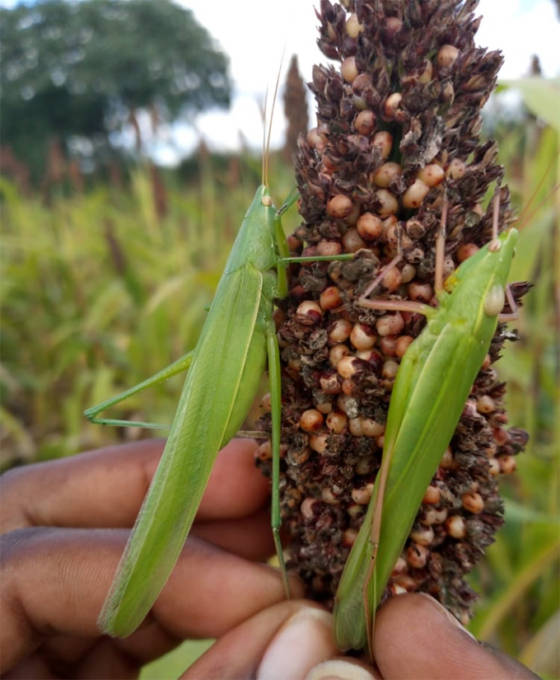
“We are currently in the field doing assessments of the locust outbreaks. So far we have identified three types of locust species – the Ruspolia differens, commonly known as “madhumbudya,” the Cytacanthacris (green locusts) and the Cataloipus oberthuli known locally as ‘njeru’ which are all edible.”
The most affected areas were Chiredzi wards 1 – 12 and 22 where more than 2 457 households had their crops damaged while in Mwenezi some 2 440 households in BJB, Chikokoto and Masangula.
“Madhumbudya are causing serious damage to sorghum, maize and pastures. Armoured crickets are also causing serious damage too. We are currently collecting information on outbreaks of the local locusts across the country,” said Nyamutukwa.
“These do not migrate over long distances like the African migratory locusts. These are localised and often consumed by local communities.”
Local communities were consuming the locusts which were damaging their crops and pastures. The latest locust invasion follows a similar outbreak in January in the Zambezi region of Namibia and Botswana.
Last year, there were locust outbreaks in Zimbabwe, Zambia, Namibia and Botswana.



 Online Reporter