Online Reporter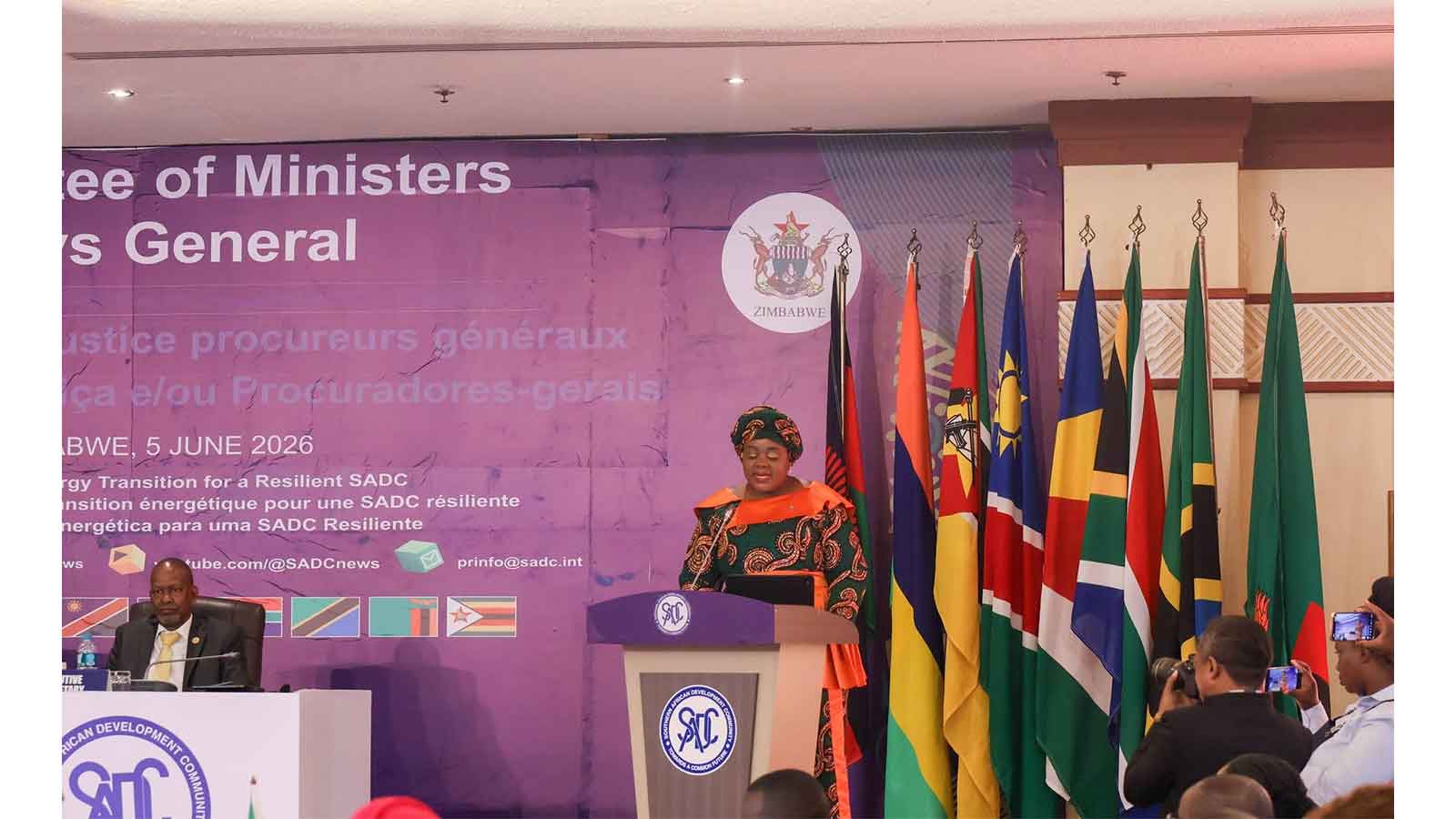
Ivan Zhakata recently in VICTORIA FALLS
AGAINST the backdrop of the thunderous Victoria Falls and the growing aspirations of a region seeking deeper integration, Southern Africa’s top legal minds last week gathered to tackle one of the most important, yet often overlooked pillars of regional development, the law.
For several days, Ministers of Justice, Attorneys-General, senior legal officials and policy experts from across the Southern African Development Community (SADC) met in Victoria Falls to deliberate on legal instruments that could shape the future of the region’s governance, trade, tourism, health systems and judicial institutions.
While discussions were technical in nature, the issues under consideration carry far-reaching implications for the everyday lives of millions of people across Southern Africa.
South Africa’s Minister of Justice and Constitutional Development and chairperson of the Committee of Ministers of Justice and Attorneys-General, Ms Mmamoloko Kubayi captured the significance of the gathering when she said the legal sector remained central to advancing regional integration, good governance and sustainable development.
“Over the course of our discussion, we have demonstrated once again the importance of this meeting in advancing the legal and institutional framework necessary to support regional integration, good governance, the rule of law and sustainable development within the sub-region,” she said at the close of the meeting.
The meeting ended with ministers successfully adopting all agenda items, an outcome that reflected broad consensus among member States on the direction the region should take.
Among the most significant proposals discussed was the establishment of a SADC Tourism UniVisa.
For decades, Southern Africa has been marketed as one of the world’s most attractive tourism destinations, boasting iconic attractions ranging from Victoria Falls and the Okavango Delta to the beaches of Mozambique and the wildlife-rich national parks of Botswana, Zambia, Zimbabwe, Namibia and South Africa.
Yet, tourists often face the challenge of obtaining multiple visas when travelling between countries.
The proposed UniVisa seeks to address that challenge by allowing visitors to move more freely across participating member States.
SADC Executive Secretary, Mr Elias Magosi described the initiative as one designed to unlock the immense tourism potential of the region.
“The draft agreement for the establishment of the Tourism UniVisa is designed to unlock the immense potential of our region’s tourism sector and facilitate seamless movement across borders,” he said.
Another major area of focus was healthcare.
The meeting considered a draft charter establishing SADC Pharmaceuticals Pooled Procurement Services, a regional mechanism intended to coordinate the purchasing of medicines on behalf of member States.
The proposal comes at a time when many African countries are grappling with rising healthcare costs, supply chain disruptions and increasing demand for affordable medicines.
By pooling procurement, SADC countries could leverage their collective purchasing power to negotiate better prices and ensure more reliable access to essential medicines.
The initiative also aligns with broader continental efforts to strengthen health security and reduce dependence on external suppliers. Equally important was the discussion around amendments to Article 33 of the SADC Treaty.
While less visible to ordinary citizens, the proposed changes are intended to strengthen compliance by member States with their financial obligations to the regional bloc.
For regional institutions to function effectively, predictable and sustainable funding remains critical.
The discussions highlighted the growing need for member States to match political commitments with financial support.
Perhaps the most symbolic issue before the meeting was the re-operationalisation of the SADC Tribunal.
Once regarded as a cornerstone of regional justice, the tribunal has remained dormant for years following decisions that limited its jurisdiction.
For legal experts, the tribunal represents more than a court.
It symbolises the rule of law, accountability and the credibility of regional institutions.
Minister Kubayi urged member States to maintain momentum on the matter.
“The agenda item on the re-operationalisation of the SADC Tribunal has been under consideration by our committee as far back as July 2022. As member States, we must accelerate our national consultations in order to enrich this process,” she said.
Mr Magosi was particularly candid on this issue.
“It is important that we do not only prepare these documents and have them signed by our leaders, but that we ensure they are ratified and implemented,” he said.
Attorney-General, Mrs Virginia Mabiza echoed similar sentiments and said successful regional integration depended on legal certainty and trust among member States.
“Regional integration is often discussed in terms of trade, infrastructure, industrialisation and economic development,” she said.
“Yet behind every successful regional initiative lies a legal framework that provides certainty, predictability and trust among member States. Without sound legal instruments and effective implementation mechanisms, even the most ambitious regional programmes cannot achieve their intended outcomes.”
As delegates departed Victoria Falls, there was a sense that the meeting had achieved more than simply clearing legal documents.
It reinforced a shared understanding that regional integration is ultimately about improving lives — creating opportunities for businesses, facilitating travel, strengthening healthcare systems and ensuring justice and good governance.
The agreements reached in Victoria Falls will now move through various SADC processes, including ratification and implementation by member States.
Whether the meeting becomes a turning point for regional integration will depend largely on what happens after the delegates return home.
For now, however, the gathering has sent a strong signal that Southern Africa remains committed to building a more integrated, prosperous and rules-based regional community.
And in a world increasingly defined by uncertainty and geopolitical shifts, that commitment may prove more important than ever.