Online Reporter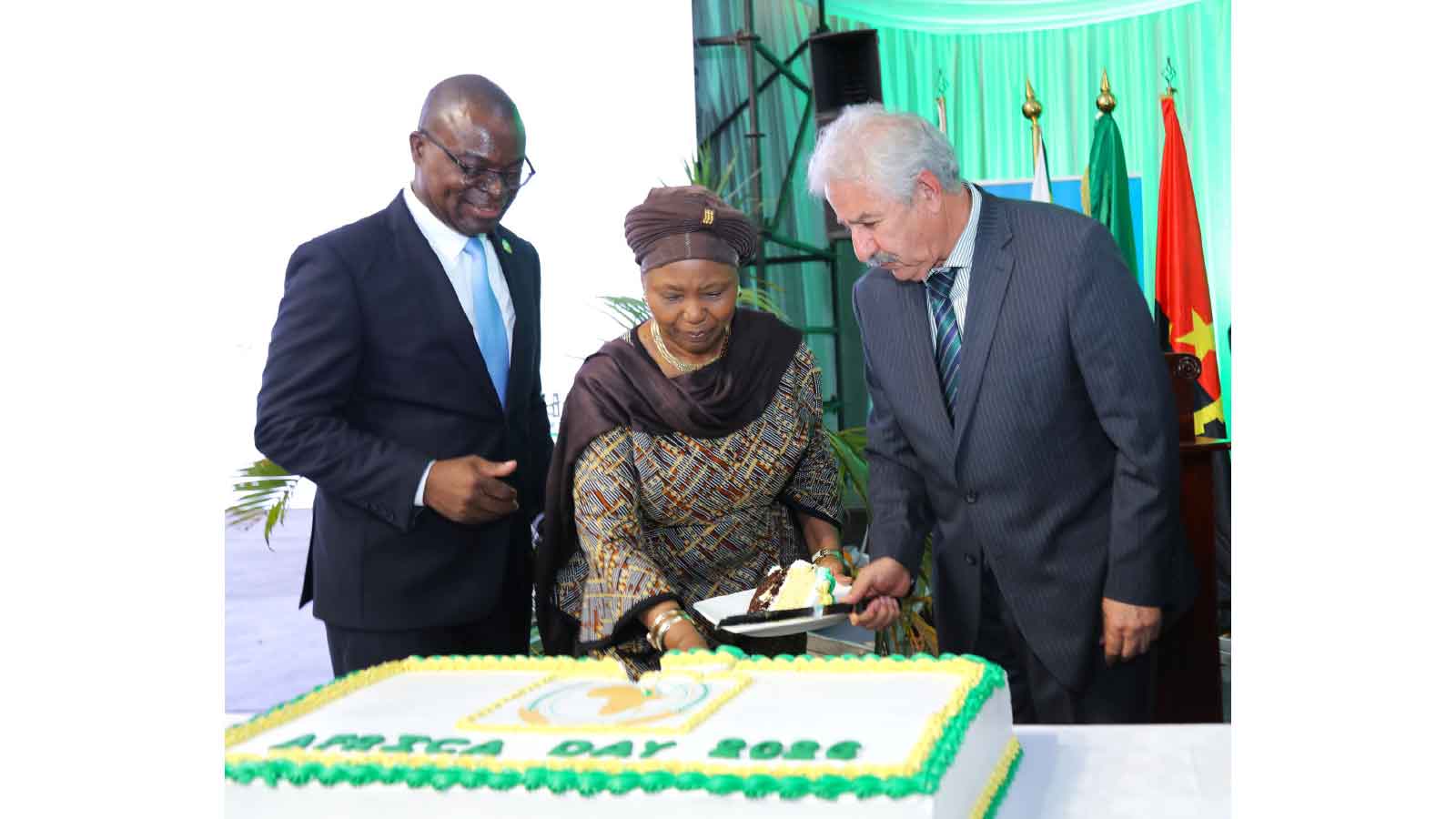
Oliver Kazunga-Senior Reporter
FIRST Lady Dr Auxillia Mnangagwa has called for stronger cooperation among African countries and increased investment in infrastructure to address the continent’s growing water challenges, warning that millions of people continue to face chronic water insecurity despite Africa’s vast freshwater resources.
In a speech read on her behalf by Defence Minister Oppah Muchinguri-Kashiri at the belated Africa Day commemorations in Harare yesterday, the First Lady said the continent’s development aspirations under the African Union’s Agenda 2063 could not be achieved without guaranteeing sustainable water availability and safe sanitation systems.
Dr Mnangagwa said while Africa was endowed with major river basins, including the Congo, Nile and Zambezi, as well as extensive groundwater reserves, many communities remained without reliable access to water.
“However, extreme uneven distribution, underdevelopment and climate change mean that hundreds of millions still face chronic water insecurity, demanding aggressive transboundary cooperation and innovative infrastructure investments,” she said.
The celebrations were held under the 2026 African Union theme, “Assuring sustainable water availability and safe sanitation systems to achieve the goals of Agenda 2063”.
Dr Mnangagwa described water and sanitation as fundamental pillars of development, arguing that no nation could attain prosperity without ensuring access to these basic services.
“A continent that cannot assure sanitation cannot fulfil the aspirations of its people to be happy, prosperous and have fulfilling lives,” she said.
The First Lady said access to safe water supply, sanitation and hygiene services remained central to public health, human dignity, economic growth, food security and climate resilience.
Dr Mnangagwa said water security was closely linked to agricultural transformation across Africa, where millions of livelihoods depend on farming.
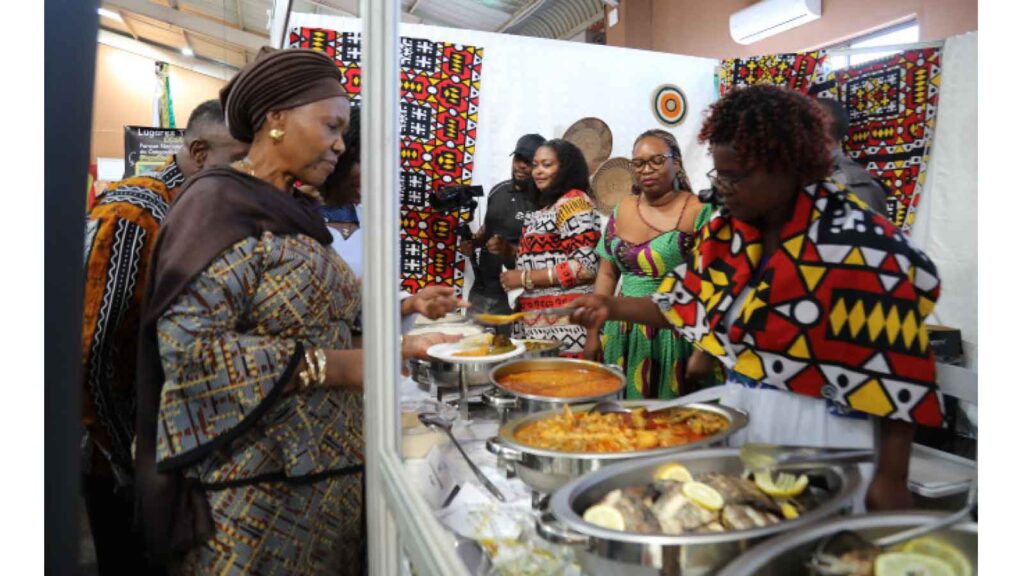
Minister Oppah Muchinguri Kashiri (left) gets a taste of traditional dishes from various countries at the colourful event.
“Sustainable water availability remains fundamental to agricultural productivity, rural industrialisation, irrigation development, climate resilience, nutrition security and overall economic transformation,” she said.
Dr Mnangagwa said the agricultural sector continued to rely heavily on reliable water resources and climate-smart water management systems to improve productivity and withstand the adverse effects of climate change.
Turning to Zimbabwe’s situation, she said the country had made significant progress in expanding access to potable water, sanitation and hygiene services in both urban and rural communities despite challenges posed by climate change, rapid urbanisation and population growth.
“I am pleased to inform this August gathering that Zimbabwe’s water security situation remains stable, with the available water in major dams capable of meeting the irrigation needs of our country,” she said.
Dr Mnangagwa highlighted the Government’s “Dam as an Economy” policy, which seeks to leverage water infrastructure to drive irrigation development, hydropower generation, fisheries, tourism, water supply and rural industrialisation.
The First Lady said strategic projects such as Gwayi-Shangani Dam and Kunzvi Dam were expected to strengthen the country’s water security, while supporting agricultural transformation and economic development.
Dr Mnangagwa also outlined interventions being undertaken through the Angel of Hope Foundation, including disease screening programmes, mobile clinics, environmental clean-up campaigns and the provision of clean water infrastructure, saying the initiatives complemented the African Union’s water and sanitation agenda.
Dr Mnangagwa urged African nations to remain committed to the aspirations of Agenda 2063, stressing that sustainable water management would be critical in building a prosperous, resilient and inclusive continent.
In his remarks, Foreign Affairs and International Trade Minister Professor Amon Murwira linked water security to national development and Africa’s broader aspirations under Agenda 2063.
He stressed that water security should be treated as a strategic issue for the continent.
“We must be clear; water security is national security. Sanitation is public health and sustainability is intergenerational justice.
“Water is life, water is dignity and water ensures continuity of civilisations,” said Prof Murwira.
He said water resources remained central to Africa’s agricultural and industrial transformation.
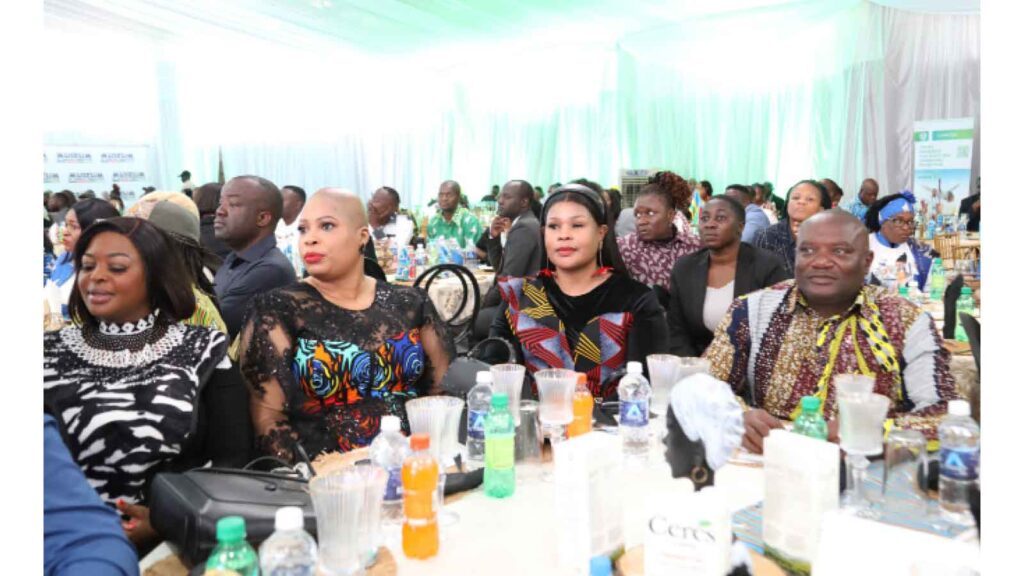
Stakeholders follow proceedings at the 63rd Africa Day celebrations held at Heritage village in Harare yesterday.
“From our great rivers to the smallest village wells, water is the resource of our agriculture, our industry. Without secure water and safe sanitation, there is no path to internationalisation, no path to health security and no achievement of the African Union Agenda by 2063.”
He called on African countries to embrace new development philosophies anchored in self-reliance, innovation and cooperation.
“True liberation requires that we move beyond the colonial legal aptitude. The colonial law is illegal; it is to adopt new aptitudes and philosophies that reflect ourselves, that reflect the land, that reflect cooperation, that reflect that to live in this world is possible,” said Prof Murwira.
He added that the continent’s future depended on leveraging local resources and knowledge systems.
“Our progress must be grounded in our creativity, ensuring that our production, our innovation, our technology are focused on our local economy.
“Everything that we require is here in Africa.”
Prof Murwira urged African nations to pursue policy coherence, collective action and greater economic sovereignty.
“A path forward demands policy coherence, collective action and a decolonised mind.
“We must prioritise domestic resource mobilisation to ensure we never compromise our sovereignty or our policy-making space.
“Sovereignty is basically policy-making space. We must be able to make our own policy,” he said.
Reflecting on Zimbabwe’s recent election to the United Nations Security Council, Prof Murwira said: “On 3 June 2026, Zimbabwe was elected as a non-permanent member, not only by a resounding 182 out of 190 votes, which stands as 96 percent of all member States.
“It is a powerful affirmation of the global community’s confidence in Africa and Zimbabwe’s commitment to international peace and security and that a world of mutual respect and peace is possible.
“It also means that Africa, a liberated Africa, is not a danger to anyone.”
Prof Murwira added that Zimbabwe’s presence on the Security Council would strengthen Africa’s voice on global issues.
“For Africa and the world, Zimbabwe’s presence on the Security Council ensures that the voice of the continent is heard with clarity and conviction,” he said.
Rwanda’s Ambassador to Zimbabwe, James Musoni, who is also the Dean of the African Group of Ambassadors, said Africa Day provided an opportunity for the continent to reflect on its journey and renew its commitment to addressing contemporary challenges affecting its people.
“Today, we commemorate the historic moment of the realisation of Africa union Day. Africa Day is a new celebration of Africa’s identities.
“The time to reflect on the previous strides of the continent has led to a more subliminal integration of the human race, and the struggle is not only the past, but the future is achieved in the light of the first and the most forthcoming system of change,” he said.
Amb Musoni said this year’s African union theme places renewed focus on water security, sanitation and climate resilience, which remain critical to the continent’s sustainable development agenda.
“This year, I think, challenges us to tackle one of the most critical issues facing African communities. To sustain our countries, it is impossible without clean water, clean sanitation, and robust climate solutions,” he said.