Online Reporter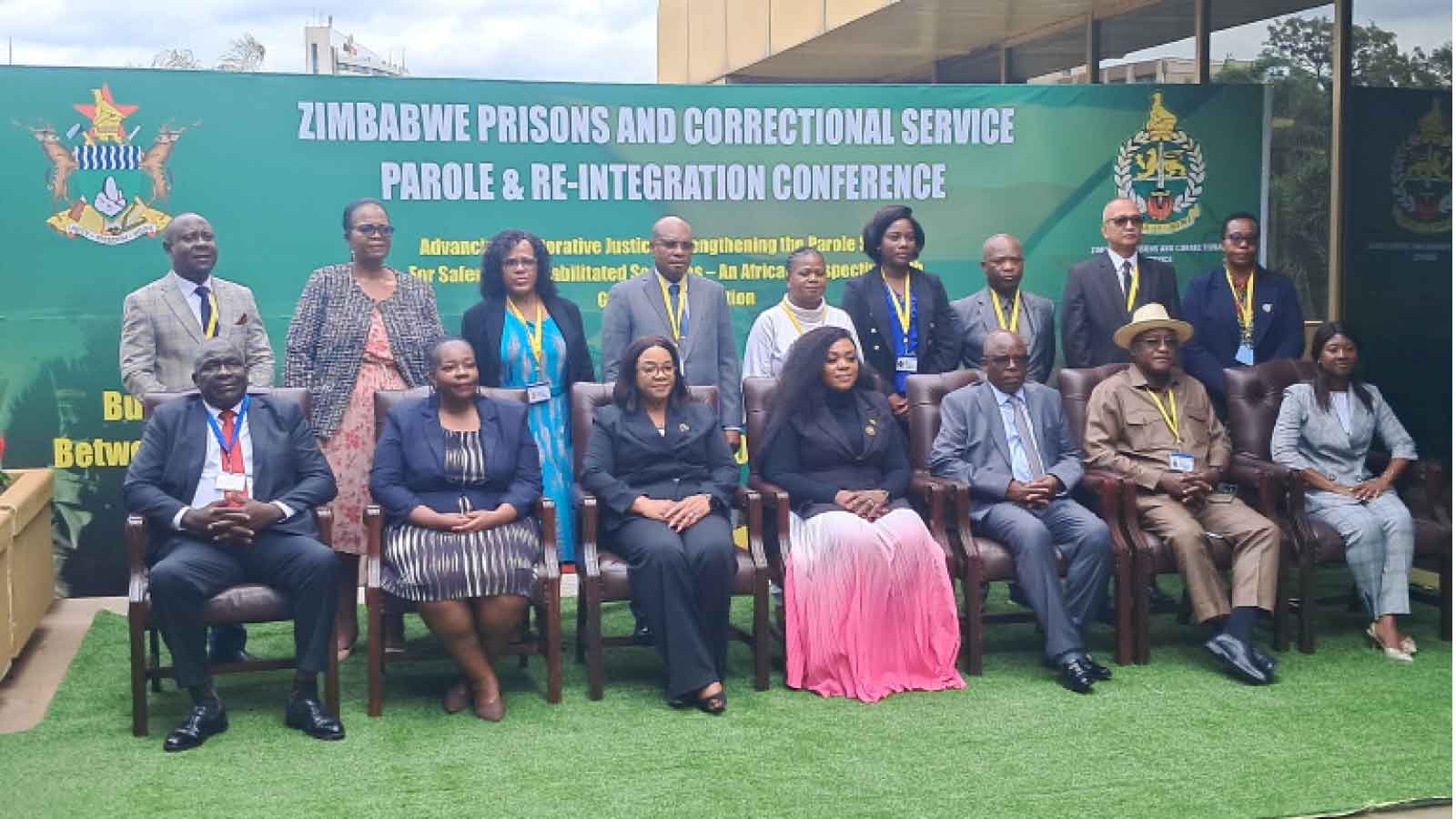
Arron Nyamayaro
JUSTICE Minister Ziyambi Ziyambi says the transition from incarceration to freedom requires careful management.
He was speaking at the Zimbabwe Prisons and Correctional Services Parole Conference which came out with guiding principles which will form the reform agenda.The speech was read on his behalf by Information Communication and Technology Minister, Tatenda Mavetera, in Harare yesterday.
The conference attracted participants from ten other countries.
“Our deliberations have produced a shared understanding, distilled into four guiding principles that will shape our reform agenda going forward,” said Min Ziyambi.
“We have noted, firstly, the crucial need for secure objective oversight mechanisms that rely on data and technology. We have observed that parole decisions should move beyond subjectivity. “Moreover, adopting advanced risk assessment tools, ensures that determinations are guided by objective criteria,” said Min Ziyambi.
He added:
“Therefore, the adoption of emerging technologies such as Artificial Intelligence (AI) and data analytics software becomes an essential ingredient to this process. “Secondly, we have also noted that reintegration requires structured supervision and community support.
“We have observed that the transition from incarceration to full citizenship requires careful management.
“Consequently, a key point in this regard is that effective supervision should balance accountability with respect for autonomy, fostering trust between parole officers and offenders.
“At the same time, community intervention programmes, engaging local organisations, faith-based groups and corporates are essential to create supportive environments where parolees can contribute positively to society.”
He said every parole decision is subject to legal scrutiny.
“This precaution ensures that constitutional rights, human dignity and protection from degrading treatment are upheld without compromise at all times. Last but not least, we have observed that systemic interconnection and adequate resources are indispensable to the successful implementation of parole.”
ZPCS Commissioner-General Moses Chihobvu said the conference has shown that a credible parole system rest on professionalism, integrity and innovation within correctional services.
“As custodians of corrections, this conference has reinforced the need for institutional readiness.
“As ZPCS, we recognise that the success of parole depends on well-trained officers, efficient internal processes and reliable information systems.
“The insights shared here have strengthened our resolve to invest more deliberately in capacity building, case management systems and consistent supervision practices.
“This conference has reaffirmed that parole is a correctional tool, not a release mechanism.”