admin
admin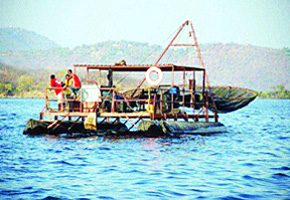
Well, whatever the reasons, the truth that does not need a rocket scientist to understand is that the catches of kapenta in Binga are definitely dwindling.
Kapenta stocks on the Zambezi River are falling at unprecedented volumes amid revelations of over-fishing especially by Zambians who have about 830 rigs against 364 run by Zimbabweans.
Zimbabwe Parks and Wildlife Management Authority (Zimparks) has proposed an annual three to four months’ moratorium on kapenta fishing in the river to ensure more sustainable fishery.
Zimparks public relations manager, Ms Carol Washaya-Moyo said the industry must be sustainable.
She said consultations with stakeholders and operators in the kapenta industry were ongoing following a sustained decline in catches.
Ms Washaya-Moyo added that operators were in agreement over the issue of stoppage of fishing for a certain duration but unanimously called for action to be taken by Zambia as well in addressing the imbalance that was shortchanging the Zimbabwe kapenta sector.
“Zimbabwe Parks and Wildlife Management Authority refutes claims that there is or was stoppage of kapenta fishing in Lake Kariba. What transpired is a wide consultative process with stakeholders or operators in the kapenta industry. This was after an outcry from them concerning the declining catches.
“Feedback was being given on research we had done on the kapenta stock. It was discovered that the issue behind the catch decline could be that of having too many fishing units (rigs) for the resource available,” she said.
Ms Washaya-Moyo said this was a mere consultative process and more deliberations needed to be done with Zambia before such action was taken.
“Their views were being collected so that the process would not be viewed as a unilateral one. The operators were in agreement over the issue of stoppage of fishing for a certain period but unanimously called for action to be taken by Zambia in addressing the imbalance that was shortchanging the Zimbabwe kapenta fishery. Article 6 of the protocol on economic and technical co-operation between the Government of the Republic of Zimbabwe and the Government of the Republic of Zambia concerning management and development of fisheries on Lake Kariba and trans-boundary waters of the Zambezi River signed in 1999 states that the resource was to be shared according to the percentage of the lake each country holds meaning Zimbabwe was entitled to 55 percent and Zambia, 45 percent). Currently the ratio is 70:30 in favour of Zambia which has approximately 830 rigs and Zimbabwe has approximately 364 rigs,” said Ms Washaya-Moyo.
At a time when tourism is still in the woods for this Zambezi Valley district, fishing has become the backbone of Binga’s economy. Therefore, the reduction in fish catches in the river becomes a cause for concern for the communities.
In separate interviews in Binga recently fishermen revealed that those who used to catch four tonnes per month were now catching two tonnes and those who used to catch 10 tonnes have seen their production down to about six tonnes.
Kapenta is a local delicacy, eaten as relish in many homes and is served as snacks and starters in hotels.
Visitors to Binga may notice the many lights that shine brightly on the river at night. Since kapenta fishing can only be done at night, every rig or fishing boat has to be equipped with lights that serve many purposes including facilitating navigation on the water, attracting the small fish into the nets and serving as beacons.
Over the years, the dip-net method has proved to be most productive, together with high-technology fish-finders, hydraulic winches and so on.
Dip nets are suspended into the water from a boom on the rigs. They are fitted onto a six or seven metre diameter ring — conical in shape they are some 10 or 12 metres long. To commence fishing at night, the nets and underwater lights are lowered into the water and the overhead lights switched on to attract kapenta into the vicinity of the rig.
After about half an hour or so, the overhead lights are switched off to concentrate the shoal around the underwater light just above the net.
The net is then lifted at least three or four times during the night, even more when the season is good. The kapenta thus caught are transferred on board into baskets and coarse salt is added to maintain freshness.
On return to harbour in the morning, the fish are placed onto drying racks where they are sun-dried losing two thirds of its wet weight. This dried, high-protein product has the benefit of having a long “shelf life” and of being easily transported to remote areas without refrigeration.
Many years ago kapenta catches were bountiful, according to Binga fishermen but in recent years the situation is different.
So the million-dollar question is: What is causing the fall in kapenta fish yield?
Scientists recently did a research on the effects of climate change on fishing on Lake Kariba and what is happening on the dam could also be happening on the upper side of the river in Binga.
The study, entitled, The implications of a changing climate on the Kapenta fish stocks of Lake Kariba, Zimbabwe, by Mzime Regina, Ndebele-Murisa, Emmanuel Mashonjowa and Trevor Hill showed that rainfall is decreasing at a rate of 0,63 mm per year around Lake Kariba, while evaporation rates have increased by 31 percent at an average rate of 2, 77 mm per year since 1963.
“The temperatures around the Kariba area have been rising since 1964; with the maximum range increasing at a faster rate than the minimum temperatures. kapenta fish production has decreased significantly since 1974 at an average rate of 24, 19 metric tonnes per year. This pattern of decrease was also observed in the artisanal fish catches that have declined at an average rate of 37, 26 metric tonnes per year between 1974 and 2003. All the climatic factors as well as the water levels could explain variations in the kapenta fish catches with the water levels exerting the greatest influence; followed by maximum temperature, evaporation and rainfall.
“In turn, water levels are largely influenced by climate with temperature and rainfall explaining a significant portion of the variation in the water levels in that order. This suggests that both climate (maximum temperature in particular) and nutrients, which are influenced by water levels, are the primary determinants of Lake Kariba’s kapenta production.
“Of concern are the possibilities that a changing climate in and around the lake may continue to adversely affect water levels, the stratification cycle, nutrient fluxes and the kapenta fish production in the lake,” reads part of the study.
Increased water temperature influences the thermal stratification and internal hydrodynamics of lakes. In warmer years, surface water temperatures are higher, evaporative water loss increases, summer stratification occurs earlier in the season, and thermo clines become shallower, thereby adversely affecting nutrient levels and availability and consequently the production chain in the lakes.
According to a Binga fishermen, another factor that is resulting in poorer kapenta yields is an influx of fishing rigs from both sides of the river.
Mr Obert John Katakula, a fisherman since 1993, said the river had been besieged by rigs. He believes that kapenta fish were no longer attracted by the underwater lights. He said even if it is at night, the kapenta “think” it is still day because of the flooding of rigs.
“Day and night, it is now the same to these kapenta. What needs to be done by National Parks and Wildlife Management Authority is further regulation of the fishing industry. This can come through limiting rigs on the river and stiffer penalties for rigs that fish in breeding places. As things stand now, catches are dwindling as a result of flooding of fishing rigs,” he said.
Mr Katakula said a possible way to boost catches was for fishermen to use fish-finders which tell where the kapenta will be located.
“These are expensive, but we have no choice. But still the problem remains, we are too many and if we all end up having the finders, we will run the lake dry of kapenta,” he said.
However, some fishermen believe that their Zambian counterparts use juju to attract fish to their rigs.
“How can you explain a situation where you are just a few metres apart but you see your fellow fisherman catching more kapenta and you go home empty-handed? Some use juju and it is not fair,” said a fisherman on condition of anonymity.
Some who unfortunately cannot prove their theory have said that “the white man” has created some fish that only eats kapenta, causing the fall in kapenta margins. There are more than 15 active fishing cooperatives in Binga area and each cooperative is only allowed to send out three rigs per night.
Members of the cooperatives are calling for the authorities to allow them to have at least four or five rigs so that they increase their yield per night.
“We are in consultation with National Parks so that they increase our permits because each rig is supposed to have a single permit,” said one fisherman.



 Online Reporter